Exclusive
Bidjar | Exclusivewith silk
299 × 101 cm
7.050 €
2.940 €
Incl. VAT
In Stock · Ready to Ship
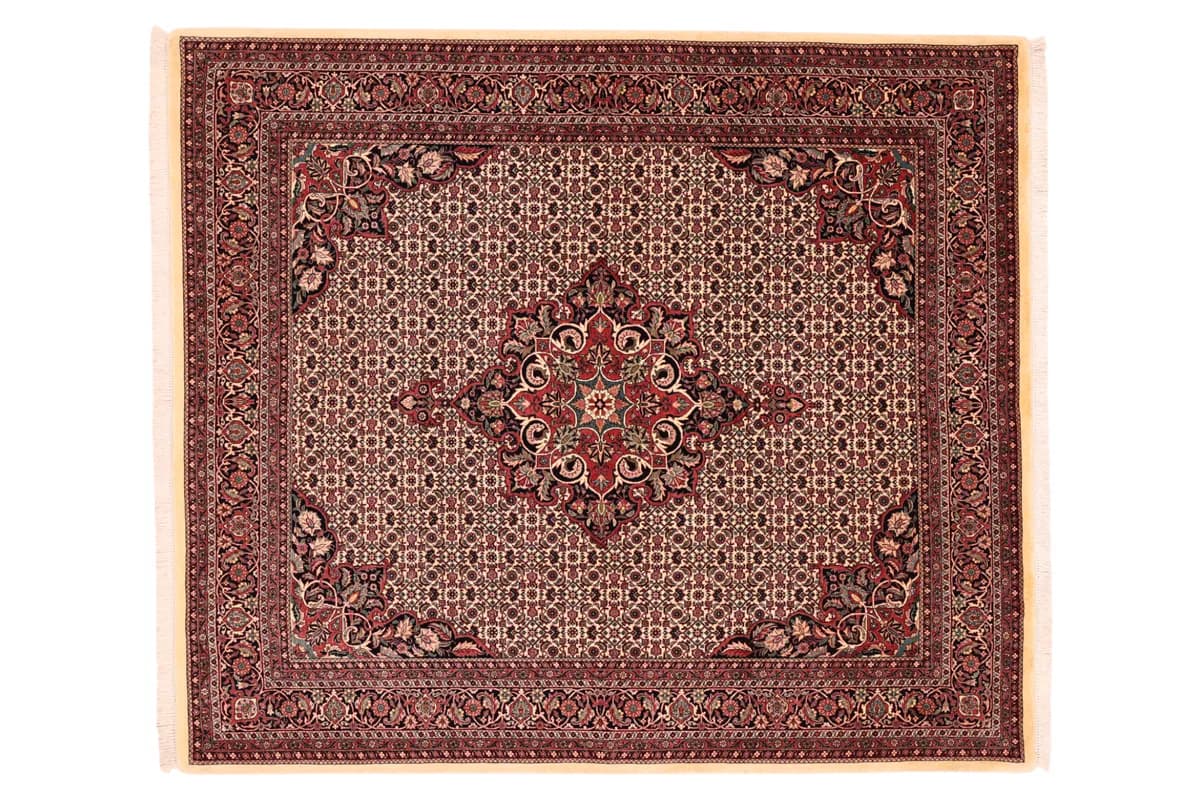
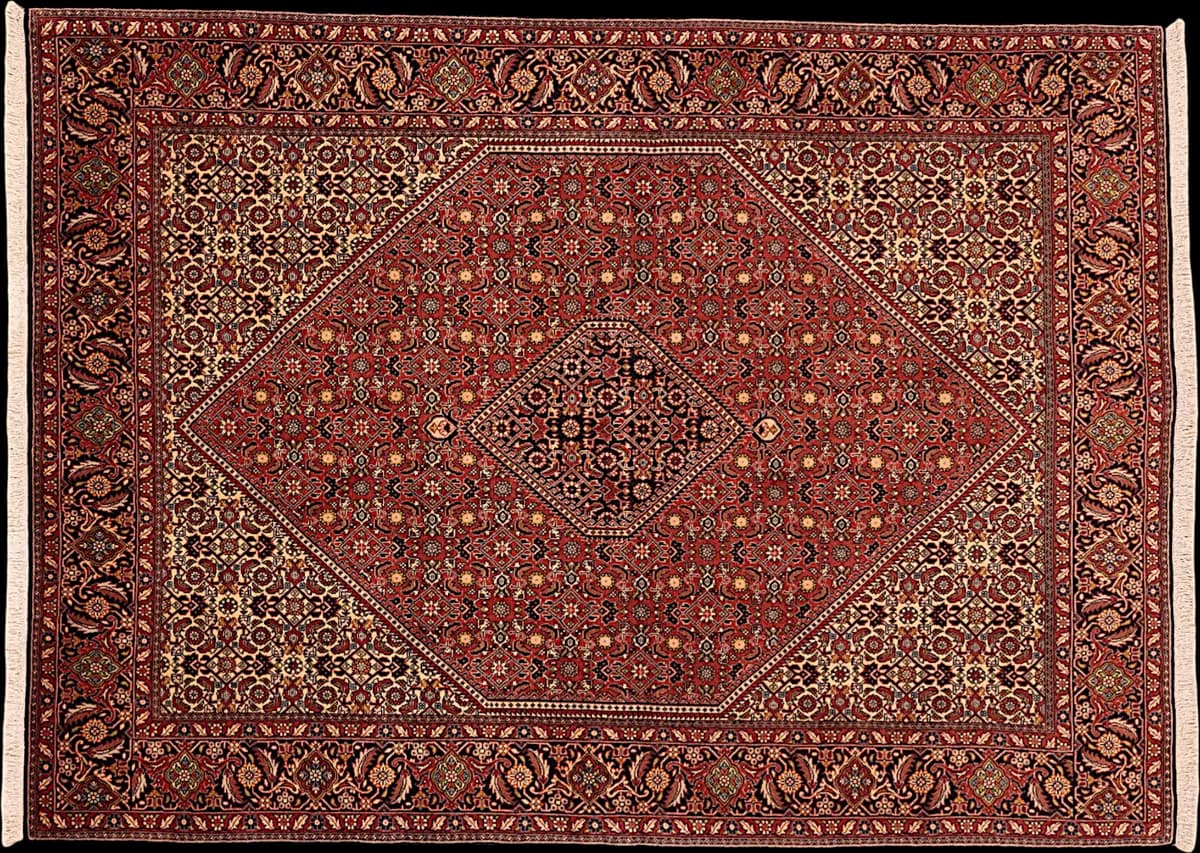
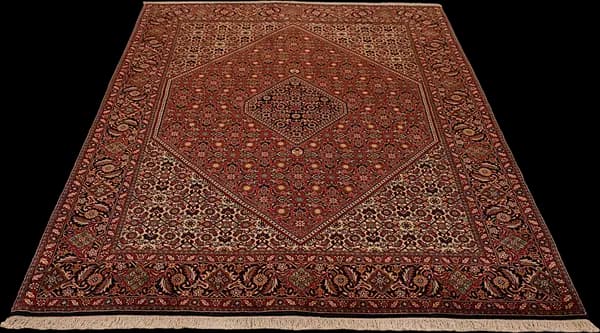
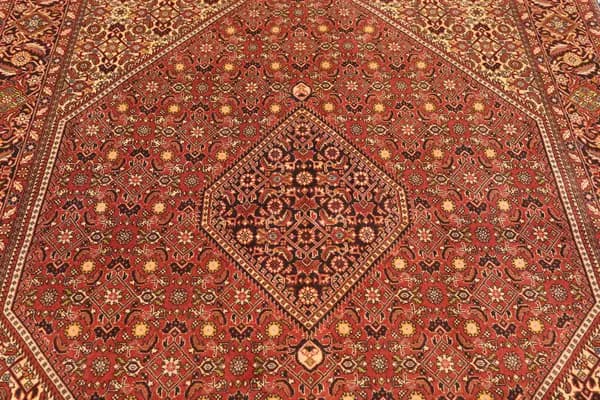
Bidjar rugs come from the Kurdish weaving regions of western Iran, and are known in the trade as the Iron Rugs of Persia for a density that outlasts almost anything else on a loom. This piece measures 233 x 168 cm (7'8" x 5'6"), hand-knotted from memory rather than from a drawn plan, in the manner of the region's village and tribal workshops.
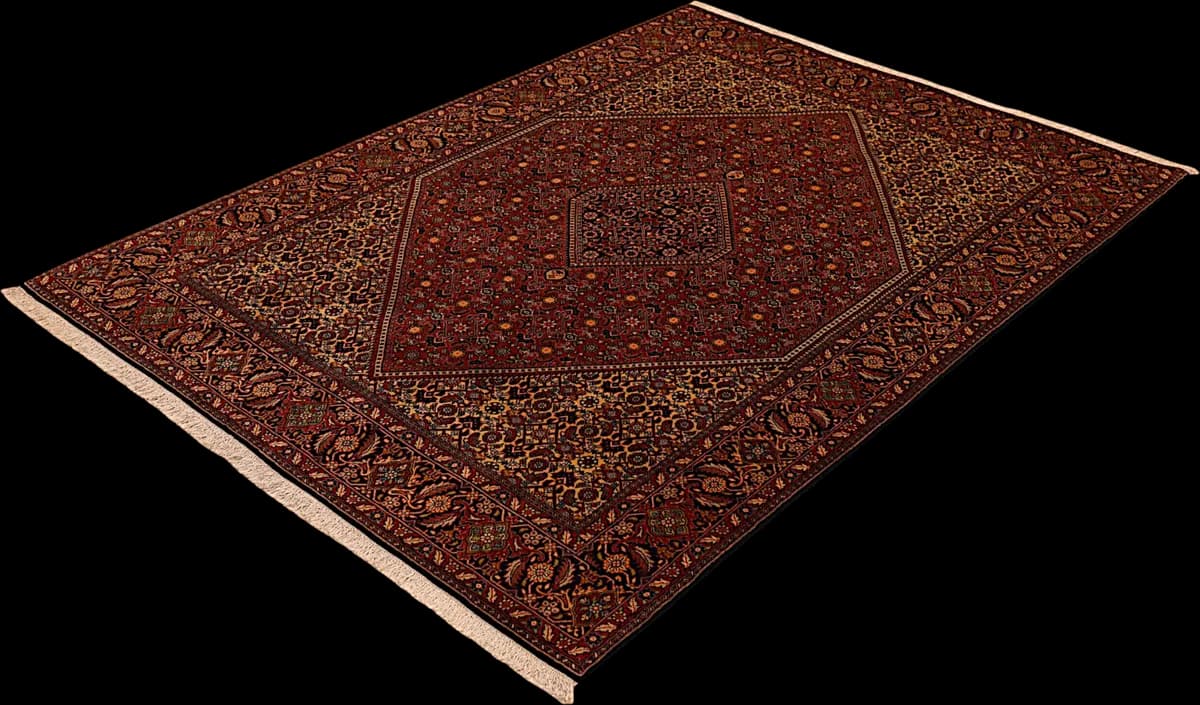
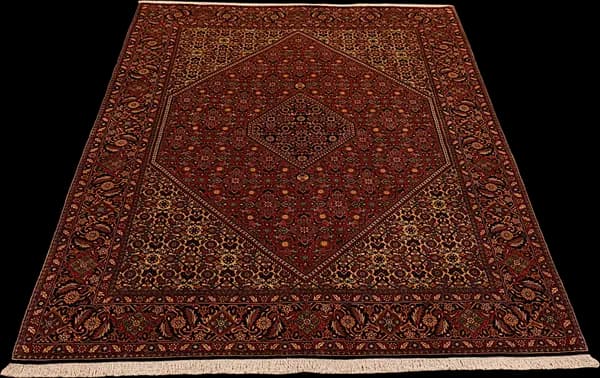
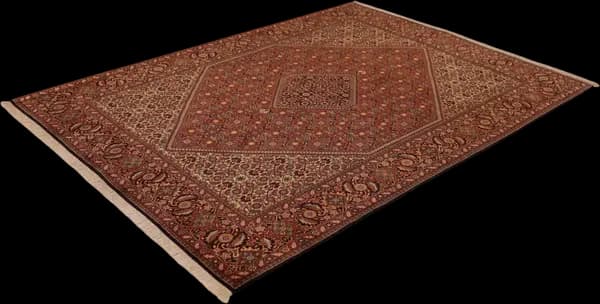
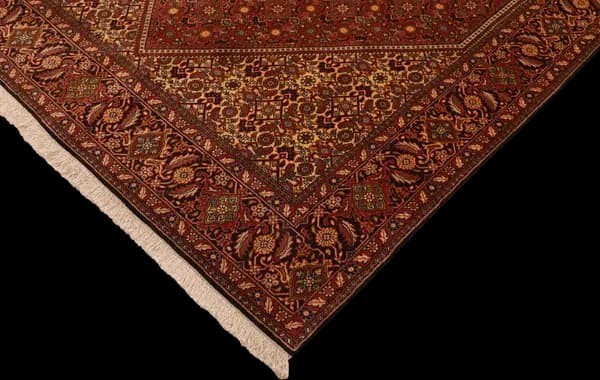
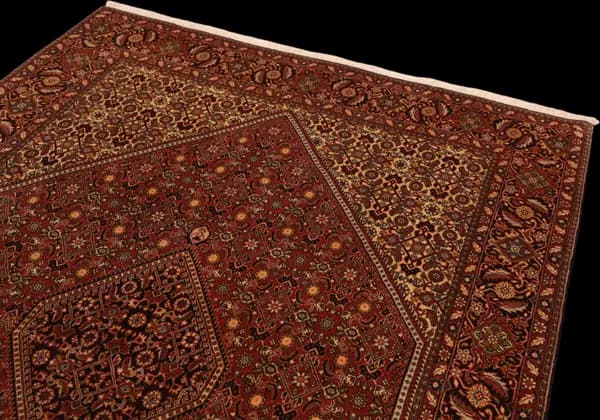
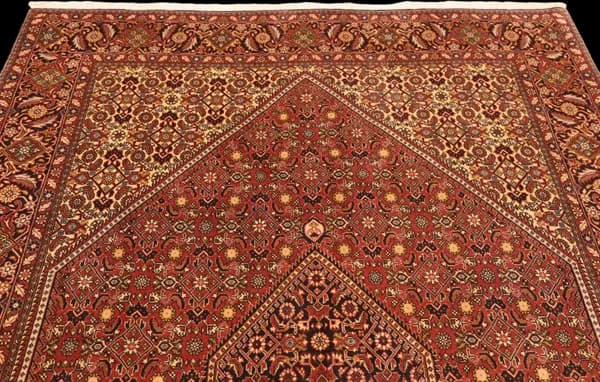
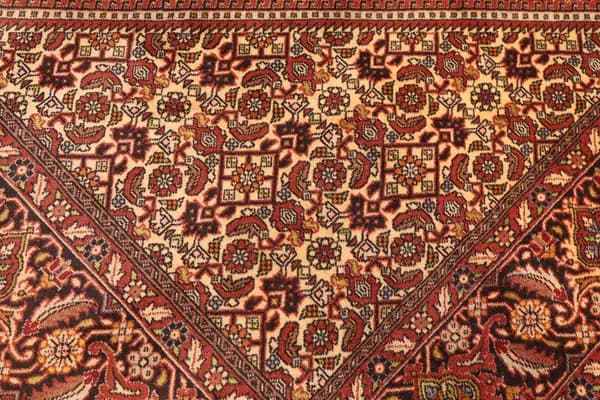
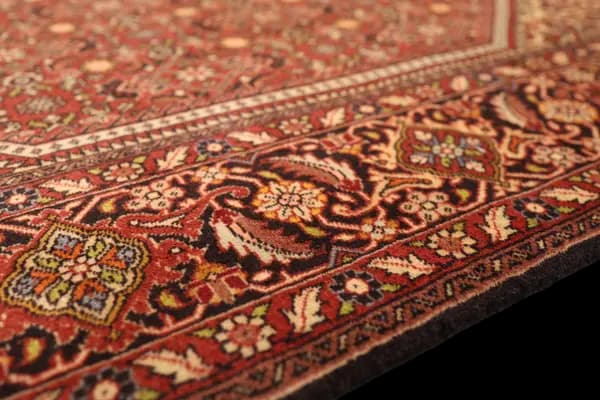
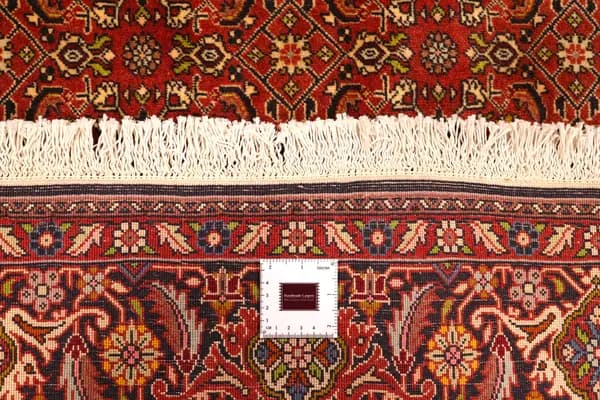
A deep brick red carries the field, calmed rather than crowded by ivory and navy. At the centre sits a lozenge medallion holding its own small dark diamond, a medallion within a medallion, set over a dense Mahi lattice of fine rosettes that runs edge to edge. The corners echo the same lattice in cream. Around it all runs a wide navy-black border of polychrome floral vine, held in by a narrow cream guard stripe, and against the red field it reads clean and sharp rather than busy.
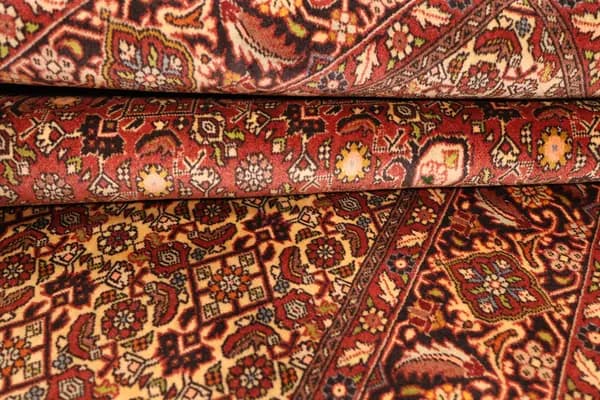
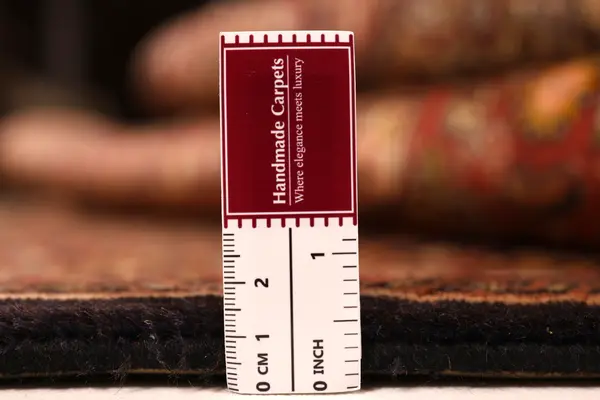
What makes this rug unusual for its type is the drawing itself: Bijar work is normally louder, its geometry and florals competing for attention, but here the palette holds to three colours and the pattern stays crisp and legible throughout. That crispness comes from the knotting, the densest in the Persian tradition, tied so tightly that a Bijar cannot be folded, only rolled. The pile itself is handspun wool over a cotton warp, giving the surface its weight and its slight, even sheen, and every line in the lattice keeps its edge instead of blurring into the next.
A rug this size sits well in a living room seating area or at the foot of a bed, and the red will hold its own against dark wood or warm a pale floor without ever looking heavy. Underfoot it is dense and firm, built for a room that gets used rather than one that gets protected. Left in the path of the afternoon sun, the lattice catches the light first, and the small dark medallion at its centre is the detail you keep coming back to.
More on Bidjar rugs: origin, making and how to recognise a genuine piece
At 233 × 168 cm (3.91 m²) this is a medium rug. It works in front of a sofa, in front of a bed or in a study. It is too small for a dining table — there you want about 80 cm of clearance so a chair does not tip over the edge when pushed back.
Yes, knotted by hand — knot by knot on a loom, not machine-made.
Hand-spun wool still carries its own lanolin, which keeps liquid sitting on the surface for a moment: blot quickly, with clear water and a light cloth, working inwards and without rubbing. Otherwise regular vacuuming along the pile is enough. Turn the rug once or twice a year so light and footfall reach it evenly.
We are in the Hamburg Speicherstadt. Come and see this rug in daylight, or write to us — a person answers.
Certificate included verifying origin, materials, and craftsmanship.
Ref: 223749