Exclusive
Belutsch
198 × 109 cm
745 €
828 €
Incl. VAT
In Stock · Ready to Ship
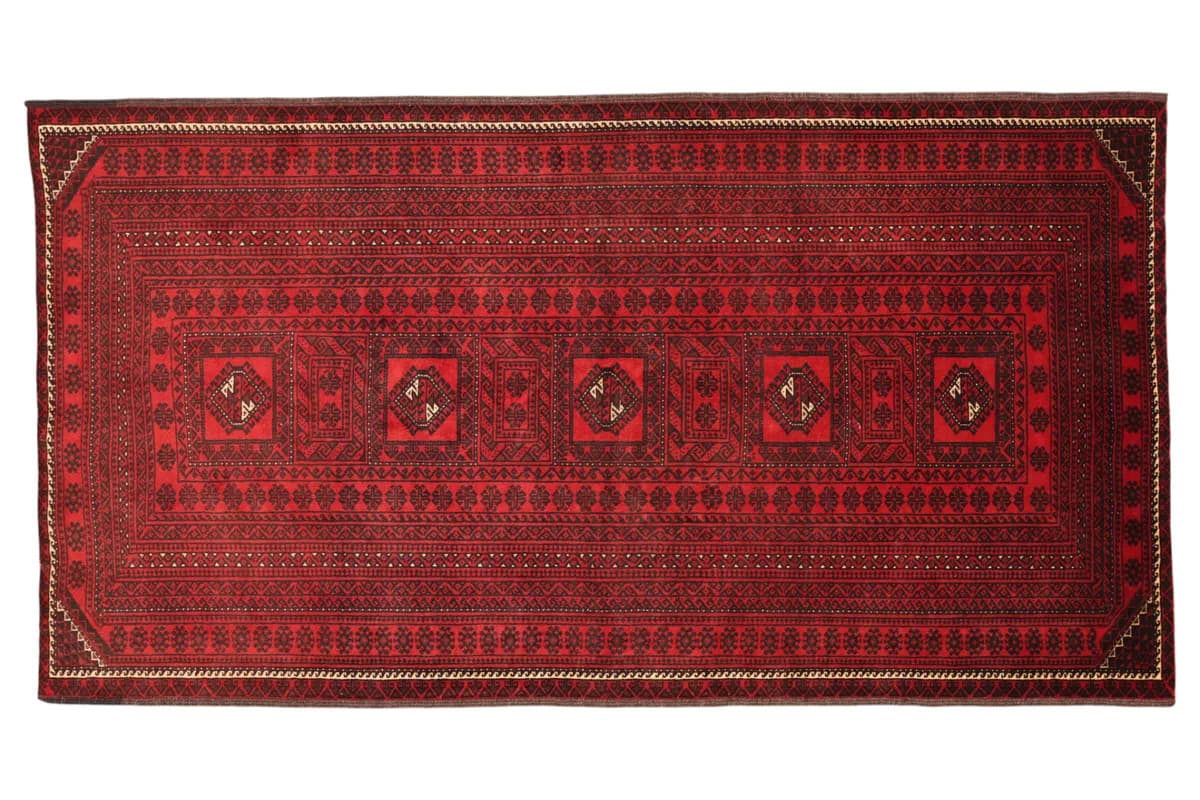
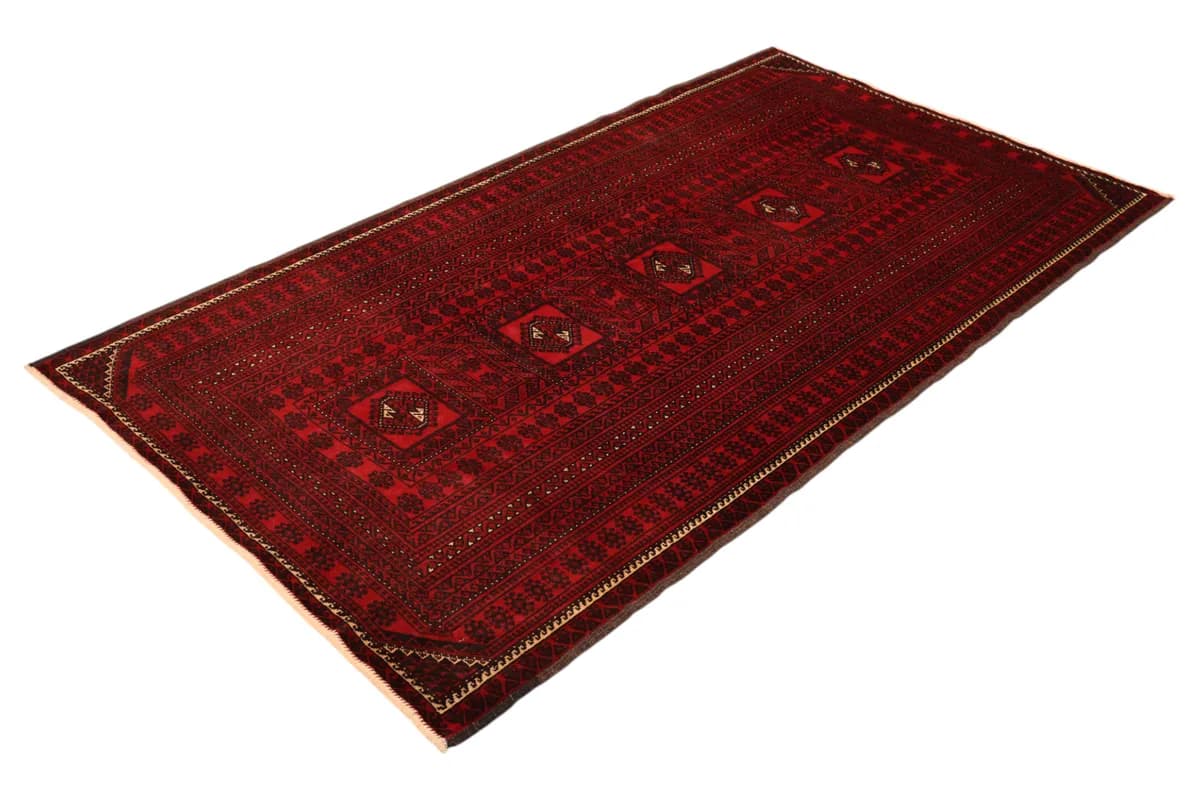
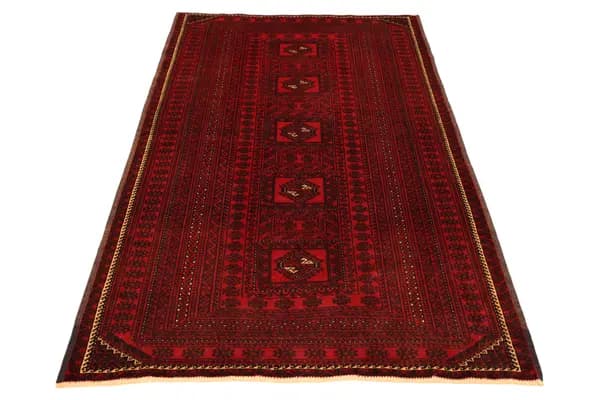
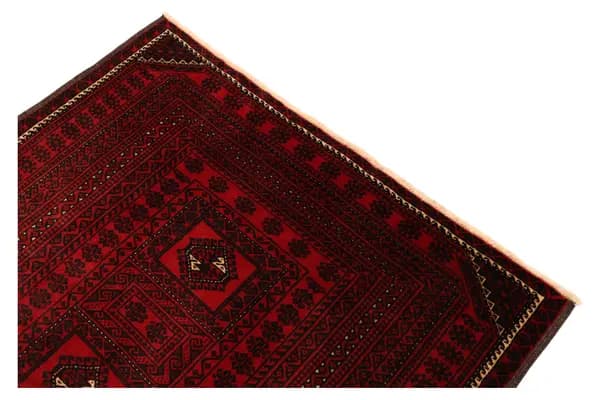
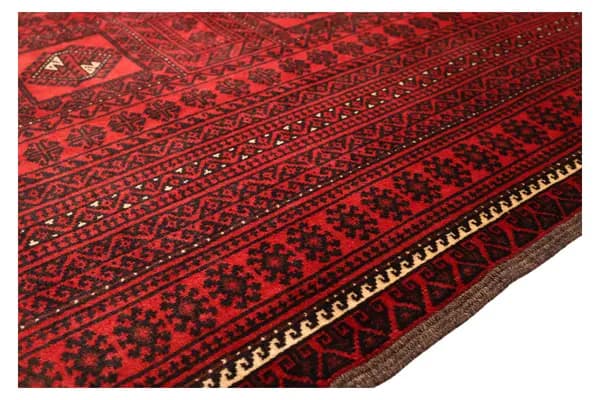
A Baluch runner, hand-knotted in the tribal borderlands of southeastern Iran, 214 x 112 cm (7'0" x 3'8"). Baluch weavers, working from memory rather than a drawn plan, are known above all for deep earthy reds and indigo, and for bold, angular geometry carried down through generations of a family rather than a workshop. Many classic pieces settle into a single prayer-niche design; this one moves instead, built as a chain rather than a fixed centre.
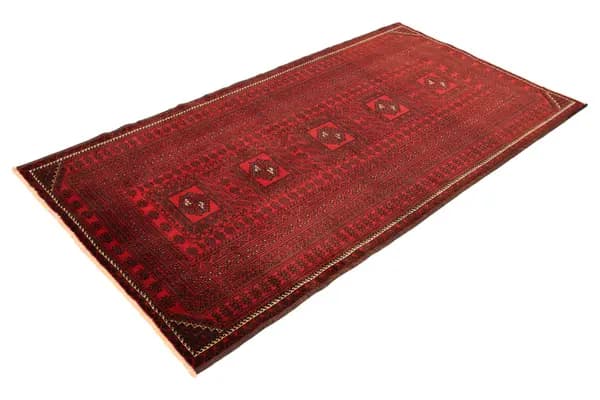
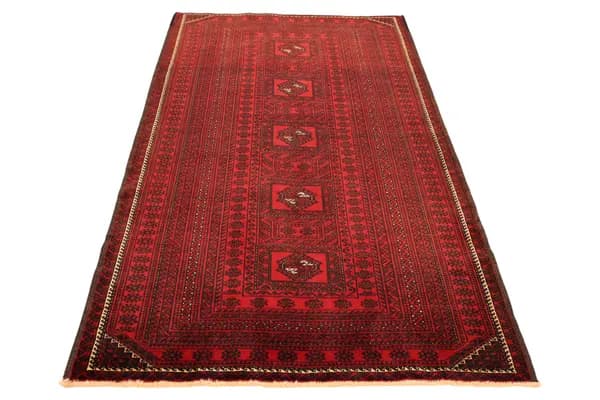
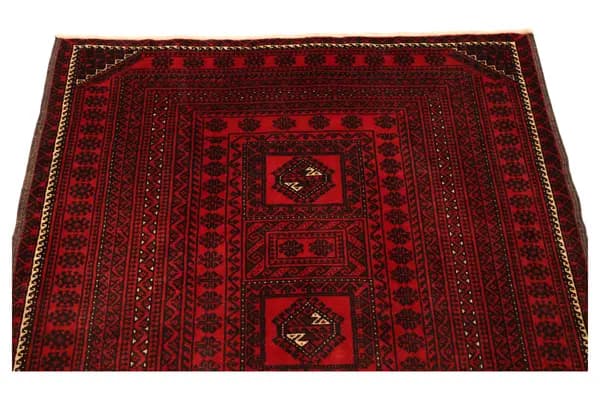
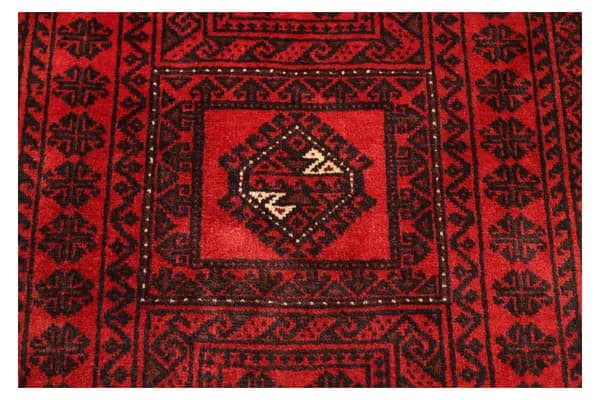
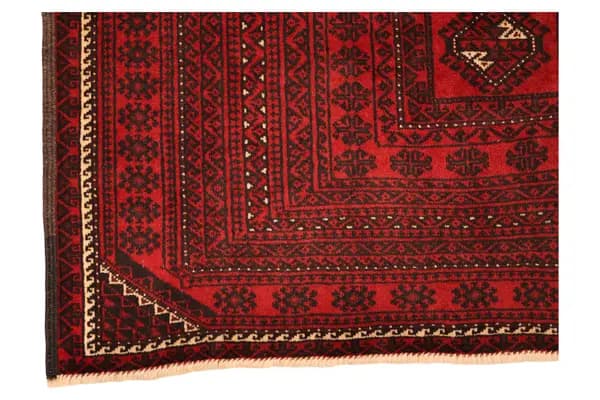
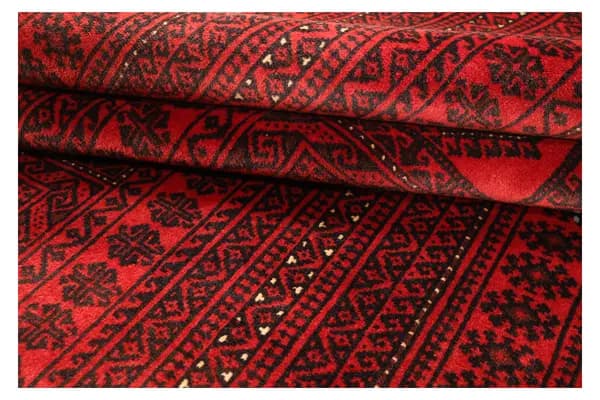
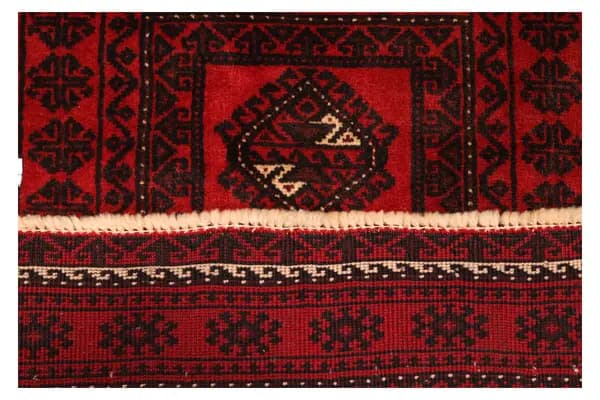
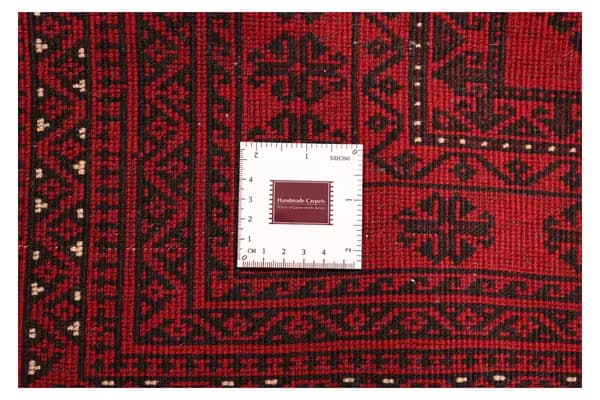
The field is a deep carmine red, dense and warm, and against it a column of small dark diamond medallions runs the length of the rug, each one outlined in near-black and touched with ivory at the centre. Between the medallions sit narrower panels of plain geometric filling, so the eye reads the rug not as one motif with a border but as a rhythm, medallion, panel, medallion, panel, moving steadily down the runner. Around it all a wide border, close to a fifth of the total width, gathers many narrow bands of red, dark brown and cream into a frame that holds the cadence in.
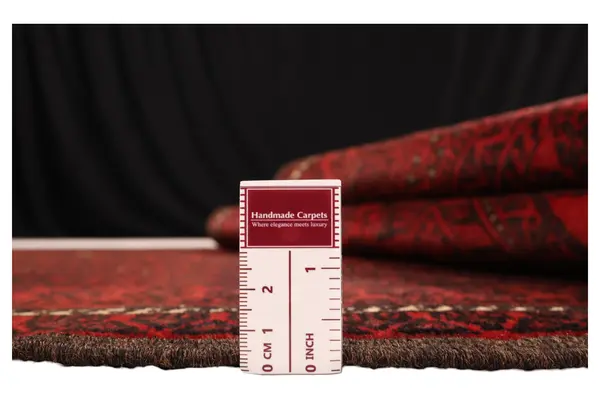
The wool is hand-spun, and it shows in the pile: a low, six-millimetre depth with a soft, slightly uneven hand rather than a sheared uniformity, set on a cotton warp. At a density of roughly 128,000 to 160,000 knots per square metre, it is looser than a city workshop weave, and this is exactly what gives the diamonds their slightly soft, hand-drawn edge rather than a crisp mechanical one. Twenty to forty years of settling has taken any stiffness out of the wool, so the surface underfoot is already at ease with itself.
At just over two metres by just over one, this is a runner for a hallway, a landing, or the floor beside a bed, and its narrow, moving pattern suits that kind of passage rather than a room meant to be looked at from one chair. The carmine red holds its own in a dim hallway with no daylight, warming the space rather than needing light to read. Underfoot it is dense and soft rather than plush, built for a floor that gets walked on daily. Morning or evening light along its length will catch the ivory accents in the medallions one at a time, so the rug seems to keep pace with whoever is walking it.
More on Baluch rugs: origin, making and how to recognise a genuine piece
Traditional weave
At 214 × 112 cm (2.40 m²) this is a small rug. It works beside a bed, in a reading corner, in front of a fireplace or as a mat by a door. It does not furnish a room; it makes a point in one.
Yes, knotted by hand — knot by knot on a loom, not machine-made. The density is 128,000 to 160,000 knots per square metre; across 2.40 m² that is roughly 310,000 to 380,000 individual knots, every one of them tied by hand.
Hand-spun wool still carries its own lanolin, which keeps liquid sitting on the surface for a moment: blot quickly, with clear water and a light cloth, working inwards and without rubbing. Otherwise regular vacuuming along the pile is enough. Turn the rug once or twice a year so light and footfall reach it evenly.
We are in the Hamburg Speicherstadt. Come and see this rug in daylight, or write to us — a person answers.
Certificate included verifying origin, materials, and craftsmanship.
Ref: 272245