Belutsch
194 × 103 cm
598 €




1.445 €
Incl. VAT
In Stock · Ready to Ship
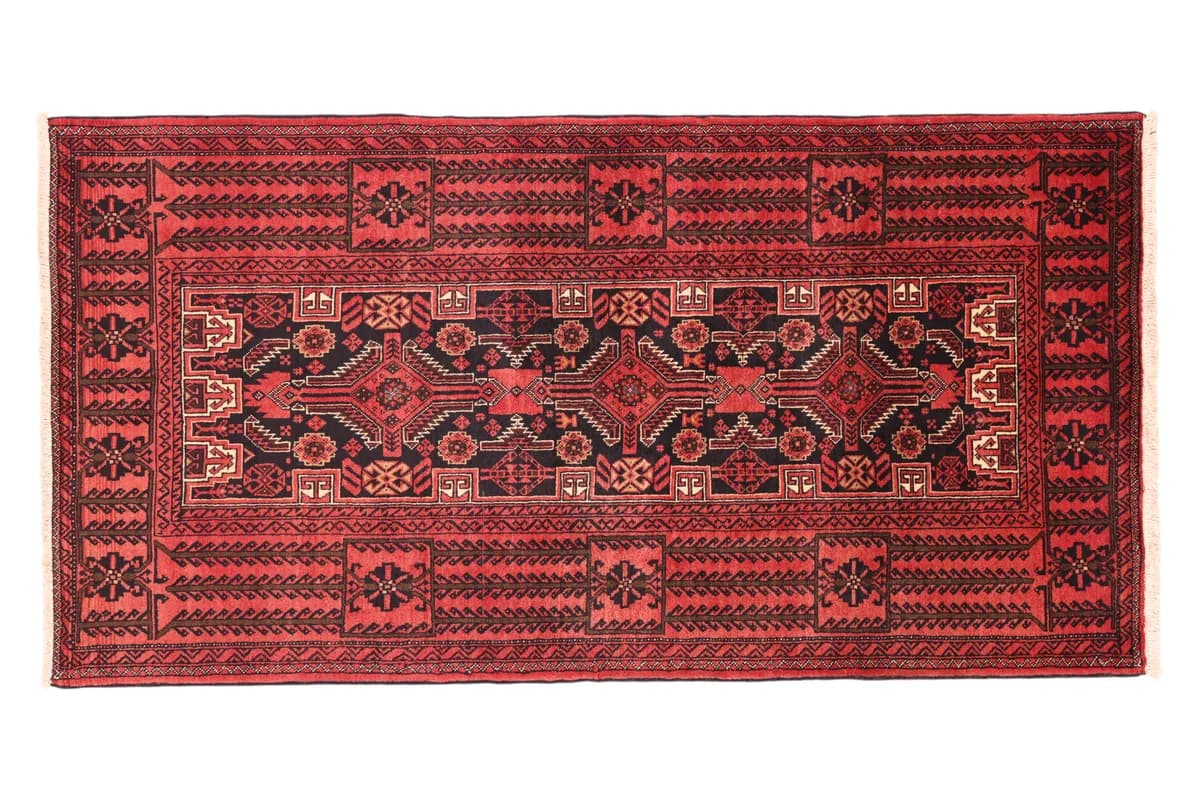
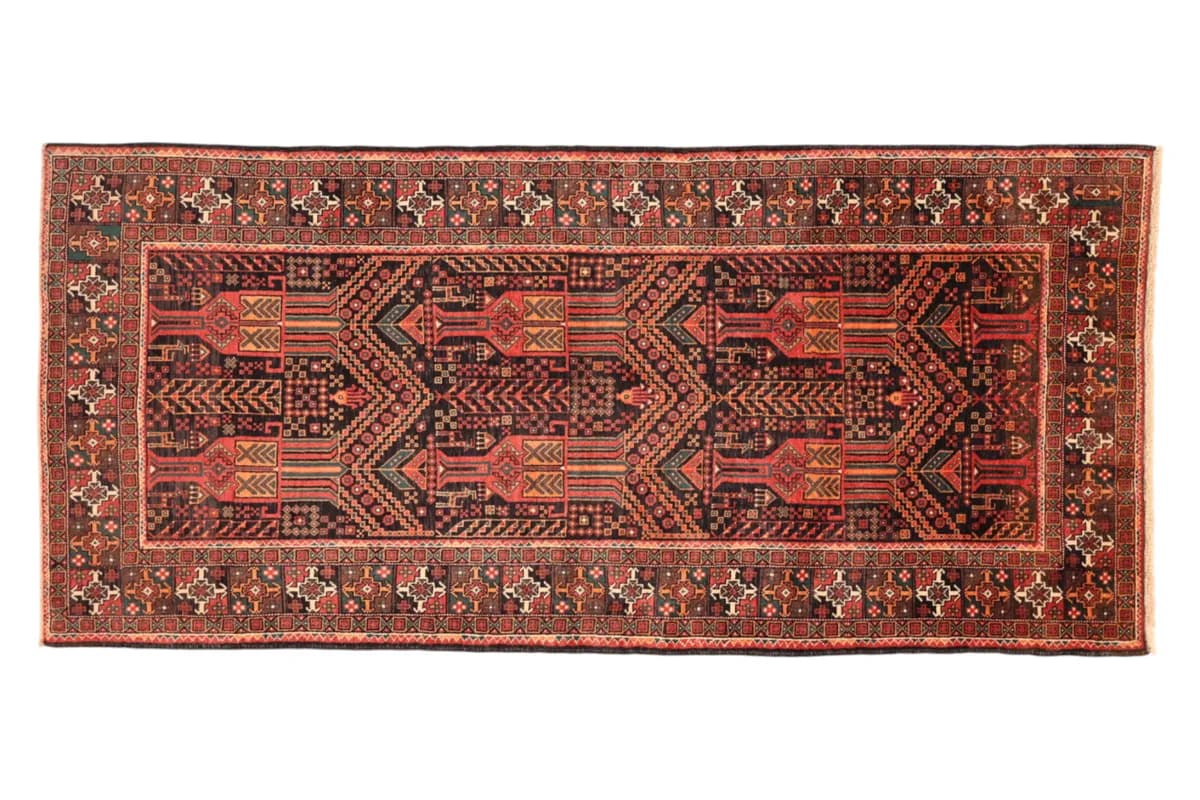
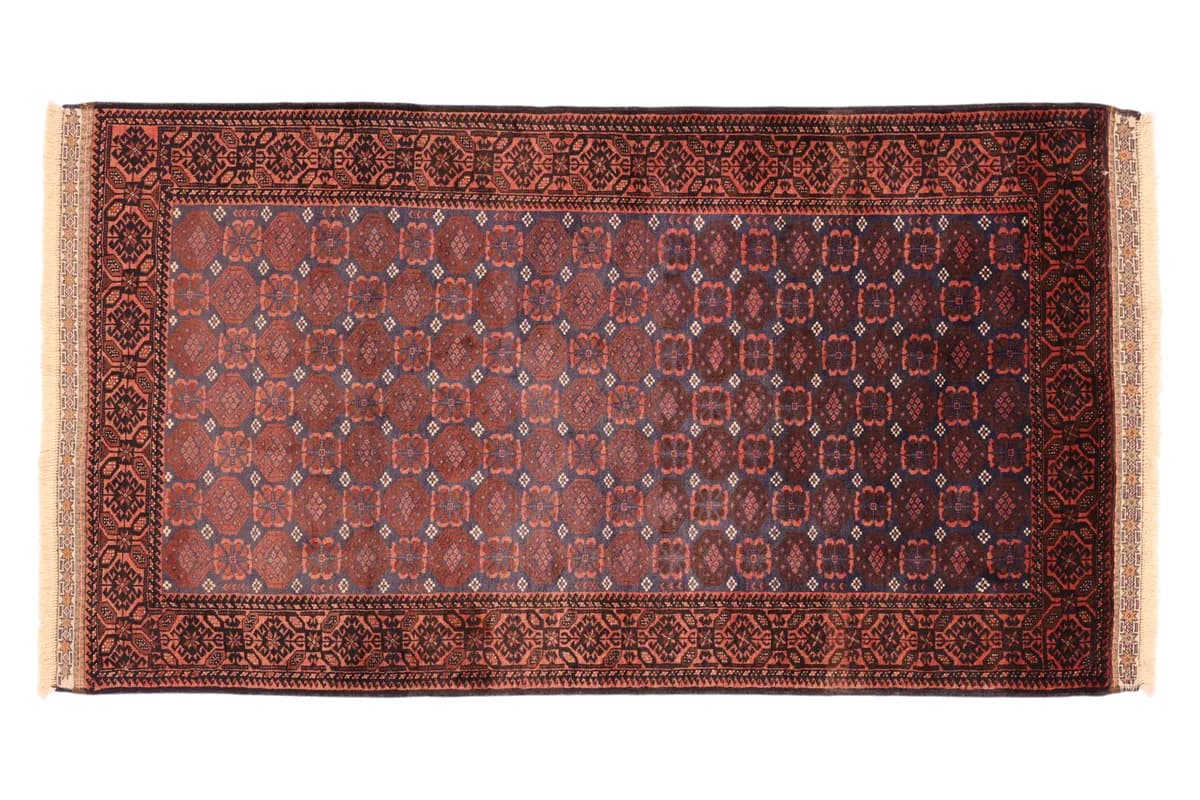
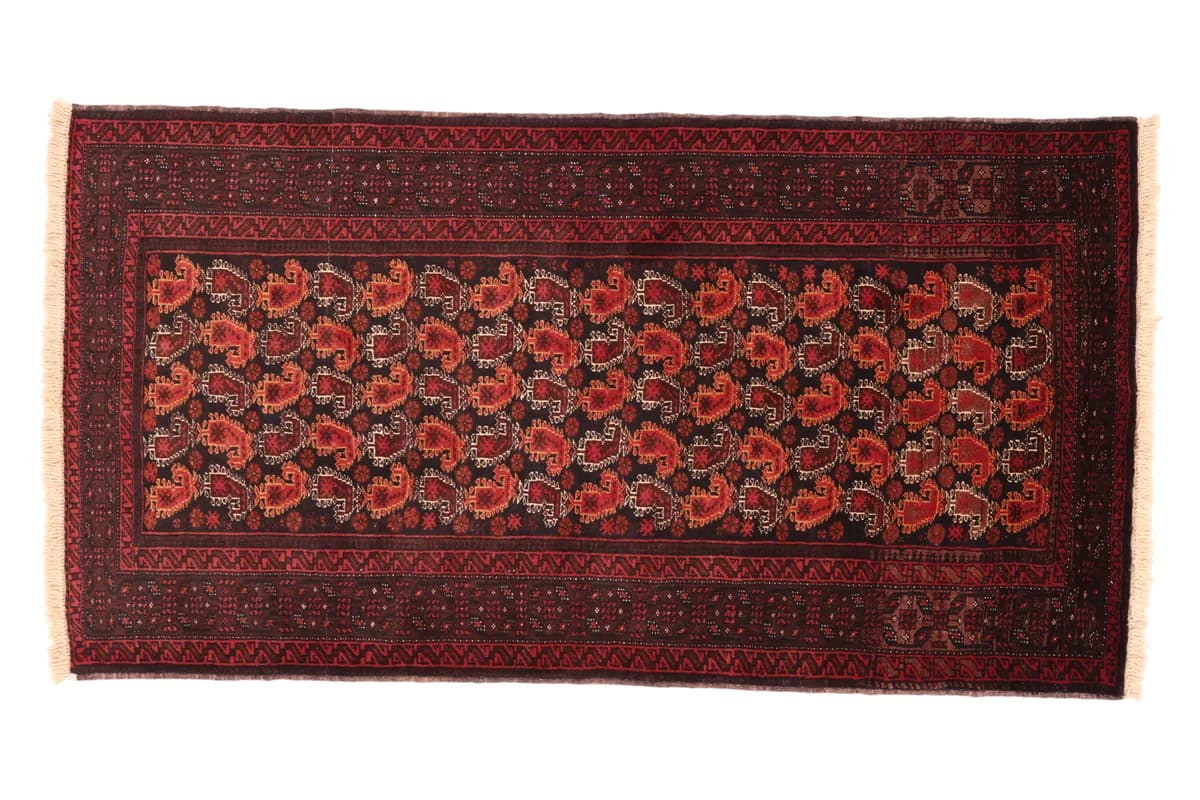
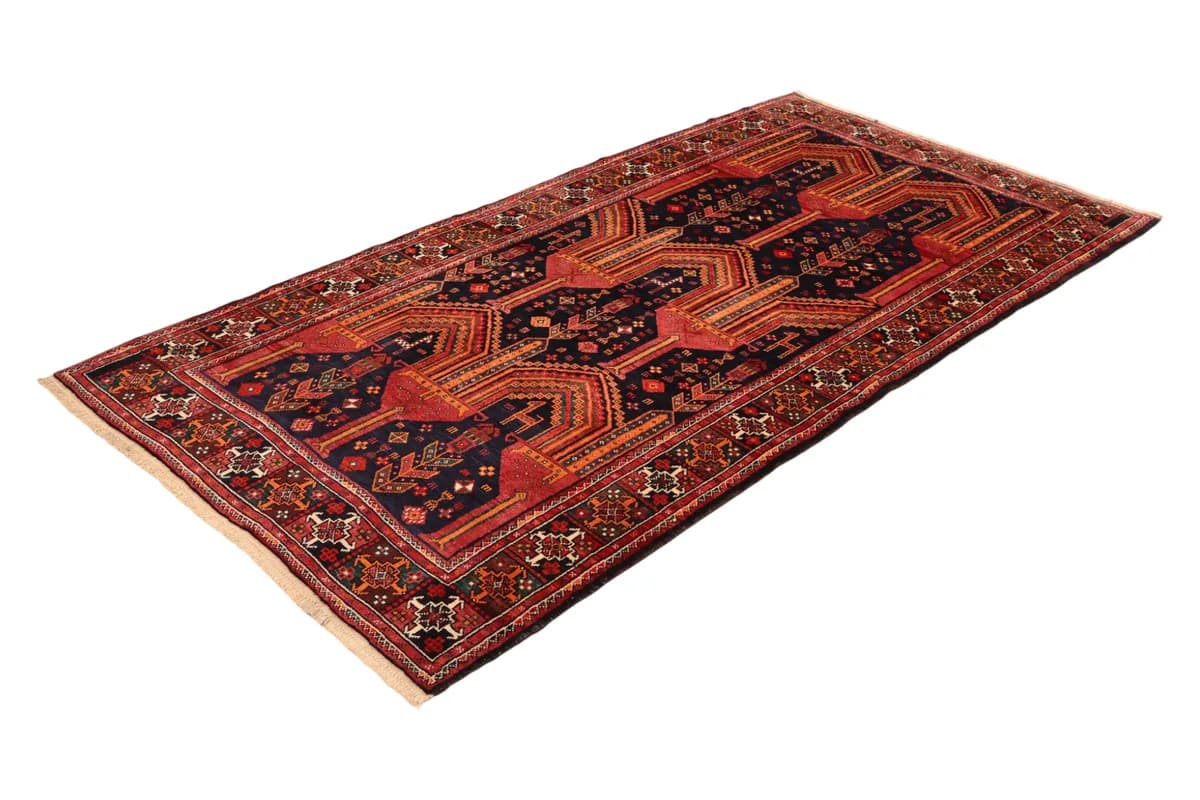
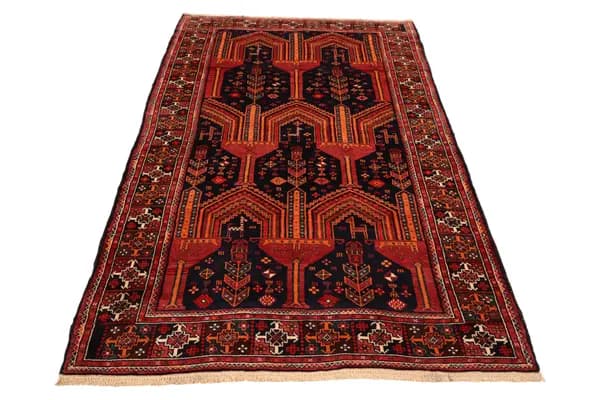
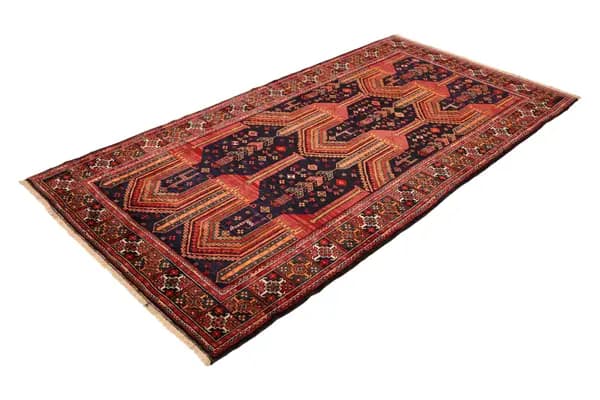
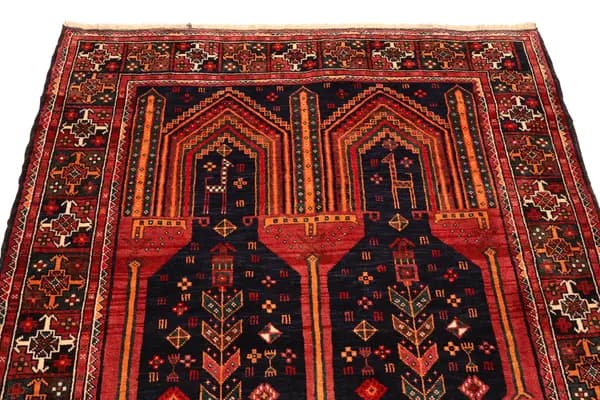
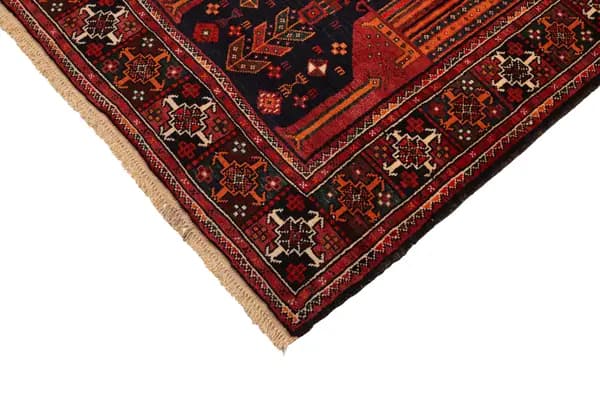
This is a Baluch runner — also written Baluchi — a tribal weaving from the borderlands of southeastern Iran, 251 x 128 cm (8'3" x 4'2"). The type is known for deep, earthy reds set against indigo, for bold angular geometry, and for compositions that recall the prayer niche of a mosque. Here the geometry does not simply repeat down the field; it runs, one shape drawing the eye to the next along the full length of the piece.
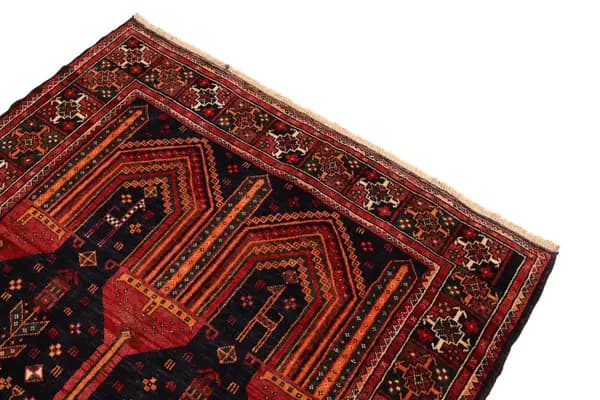
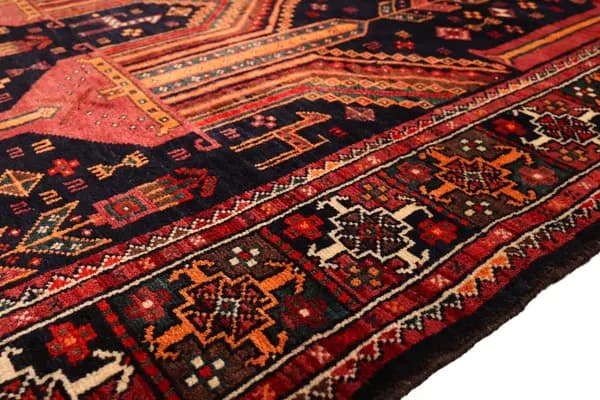
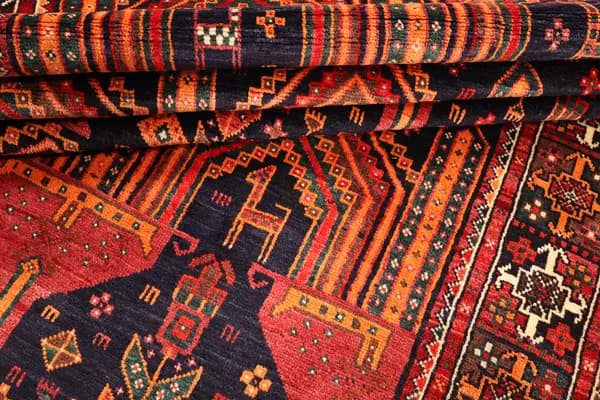
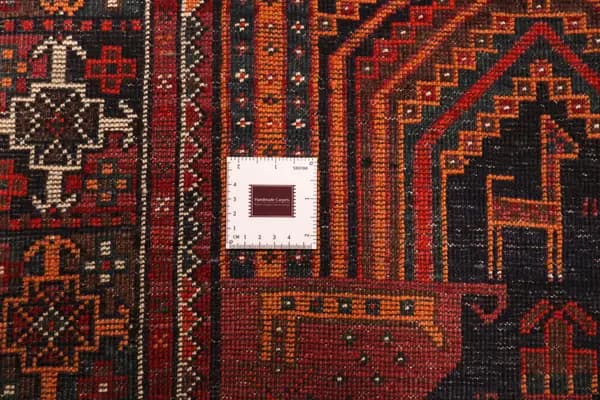
The field is a deep navy, and down its centre runs a chain of pole medallions in brick red and rust, each linked to the one before like beads on a cord. From every medallion, long serrated pendants reach outward toward the ends of the runner, tapering to points, so the eye is carried from shape to shape rather than settling on any one of them. Small touches of orange, apricot, cream, teal and dark green sit within the medallions. A wide border, close to a sixth of the total width, holds small cross and star cartouches in red, cream, orange and dark green, closing the navy field firmly along both sides.
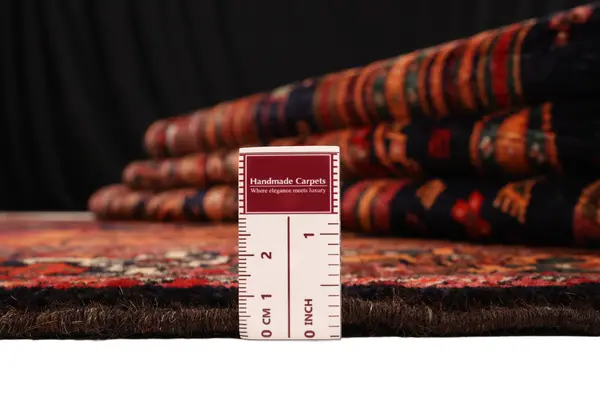
Baluch weavers knotted from memory rather than from a drawn plan, carrying a design such as this in the hand rather than on paper, which is why the sequence of medallions feels drawn rather than stamped — each one answering the last without repeating it exactly. The wool was spun by hand before it was dyed and knotted, and it is this that gives the pile its slightly uneven, matte face, with no sheen to catch the light. At a density of 128,000 to 160,000 knots per square metre, the crisp edges of each pendant and cartouche come from the weaver's hand at the loom, not from a fine yarn.
At 128 cm wide, this is a runner for a hallway, a landing, or the floor beside a bed, somewhere the eye and the foot both travel down its length rather than across it. The navy holds its own in a hallway with little daylight, and the reds and rust warm the space rather than compete with it. Underfoot the wool is dense and slightly springy, the kind of hand-spun pile that is made to be walked on rather than kept for best. As the light shifts through the day the reds move between brick and rust, and the chain of medallions keeps leading the eye onward, down the hall, toward whatever waits at the other end.
More on Baluch rugs: origin, making and how to recognise a genuine piece
Traditional weave
At 251 × 128 cm (3.21 m²) this is a medium rug. It works in front of a sofa, in front of a bed or in a study. It is too small for a dining table — there you want about 80 cm of clearance so a chair does not tip over the edge when pushed back.
Yes, knotted by hand — knot by knot on a loom, not machine-made. The density is 128,000 to 160,000 knots per square metre; across 3.21 m² that is roughly 410,000 to 510,000 individual knots, every one of them tied by hand.
Hand-spun wool still carries its own lanolin, which keeps liquid sitting on the surface for a moment: blot quickly, with clear water and a light cloth, working inwards and without rubbing. Otherwise regular vacuuming along the pile is enough. Turn the rug once or twice a year so light and footfall reach it evenly.
We are in the Hamburg Speicherstadt. Come and see this rug in daylight, or write to us — a person answers.
Certificate included verifying origin, materials, and craftsmanship.
Ref: 465103