ExclusiveSigned
Moud Dorokhshwith silk
293 × 207 cm
5.250 €
2.780 €
Incl. VAT
In Stock · Ready to Ship
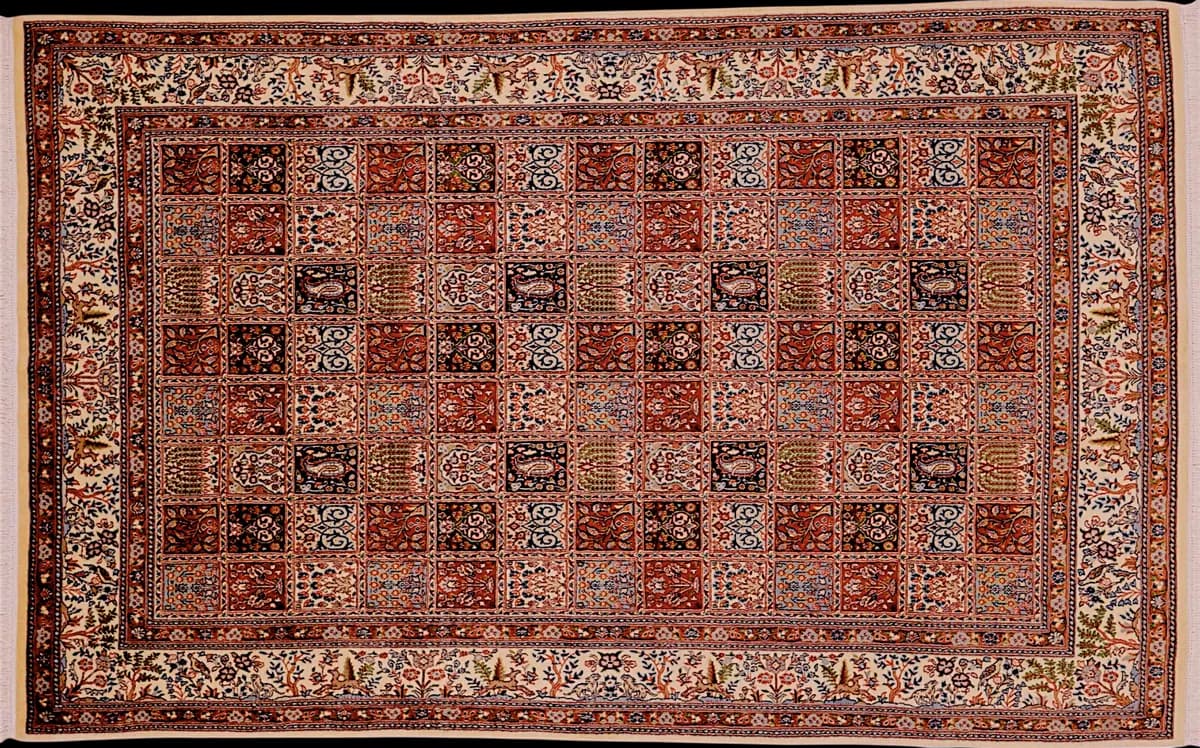
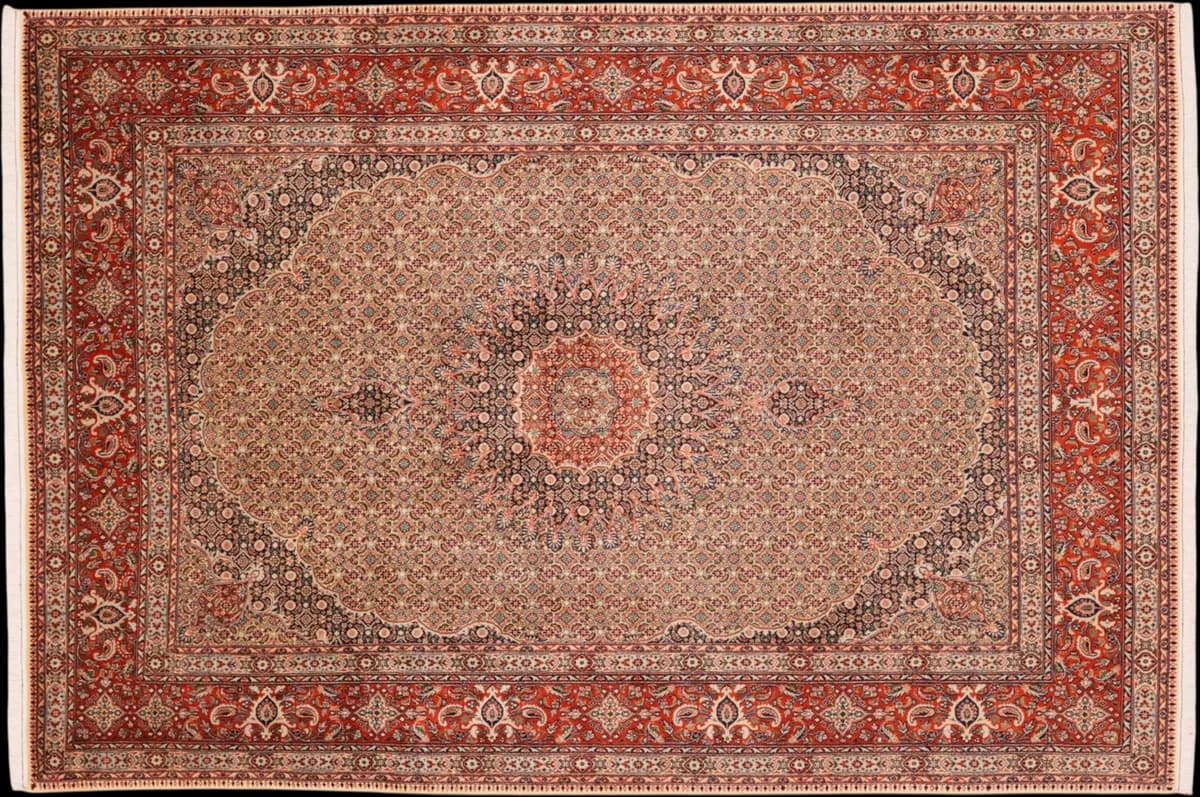
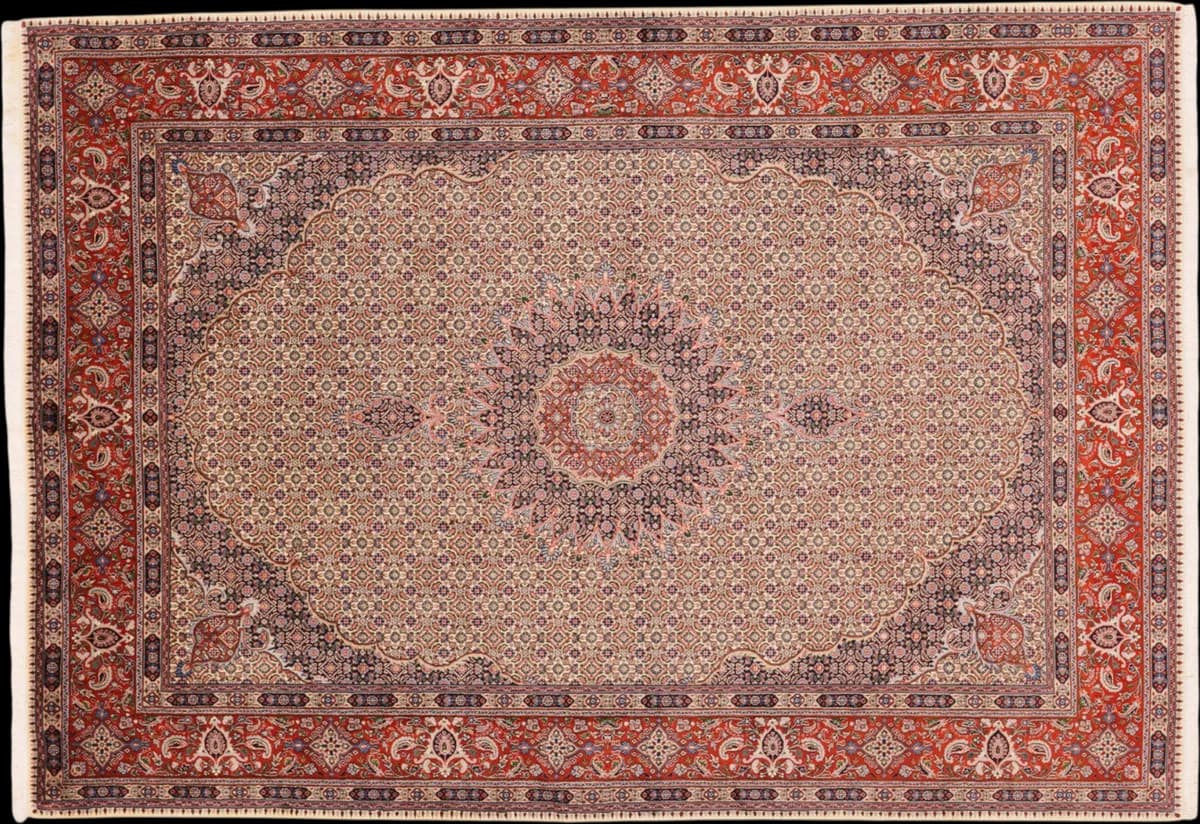
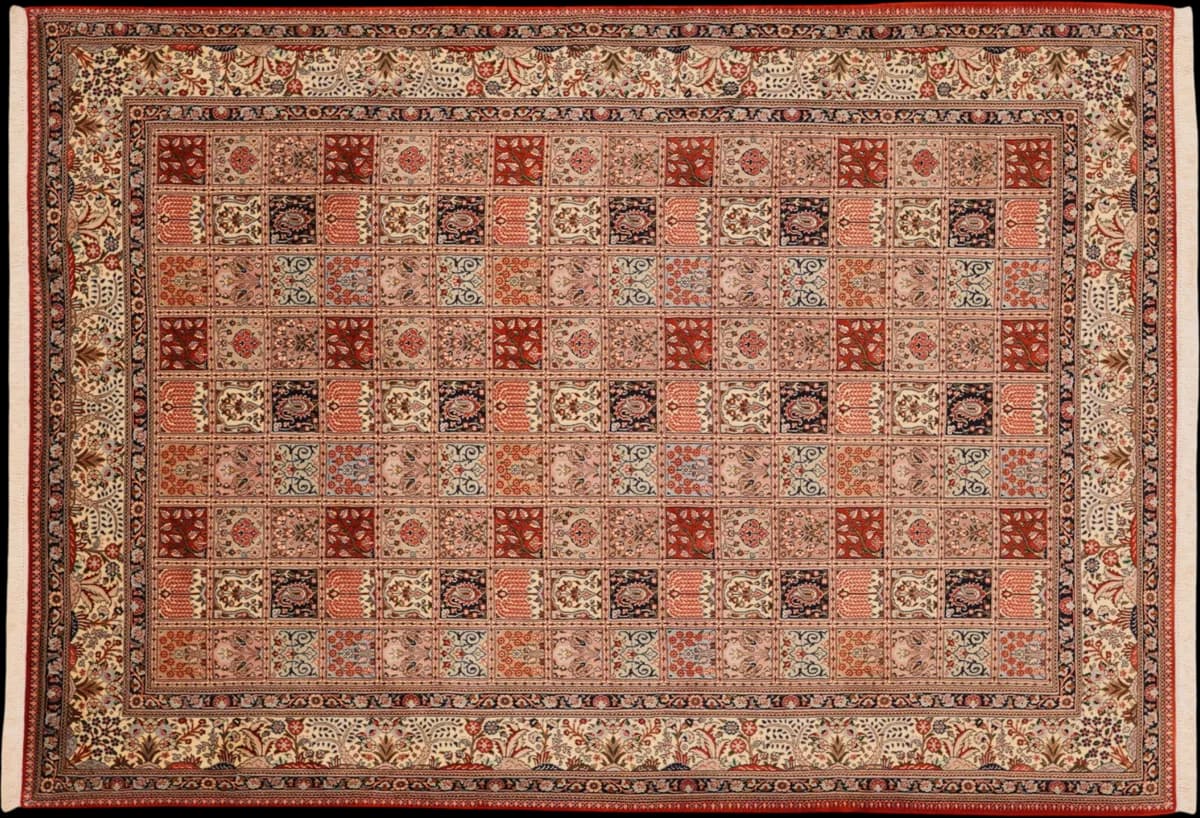
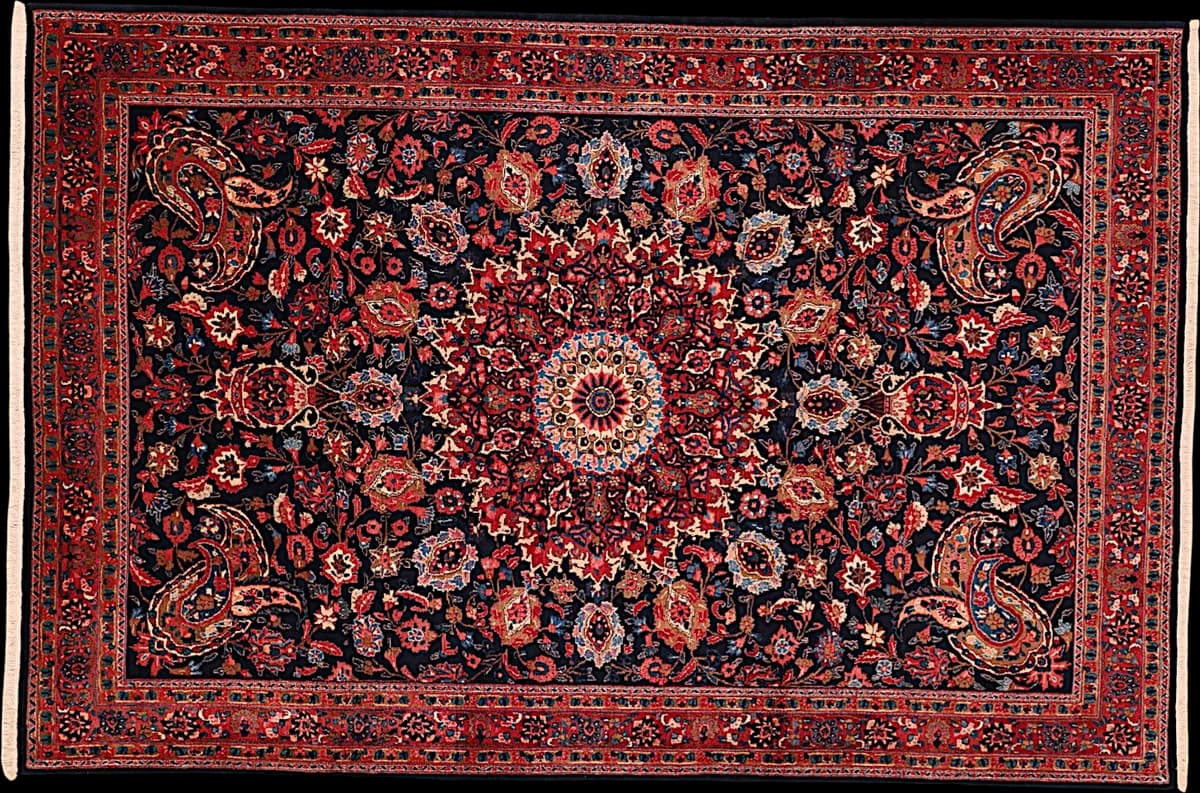
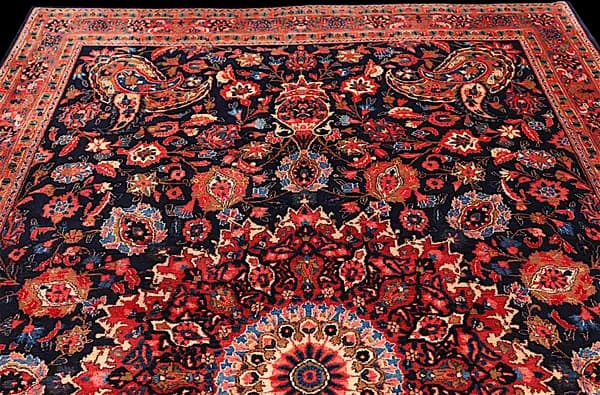
A Dorokhsh, 310 x 206 cm (10'2" x 6'9"), comes from the weaving villages around Birjand in South Khorasan, eastern Iran, close kin to the better-known Moud rugs from the same district. The type is prized for refined, disciplined drawing and a soft surface sheen rather than for boldness, which makes this particular piece something of an exception: its corners carry a motif far larger and more assertive than Khorasan weaving usually allows itself.
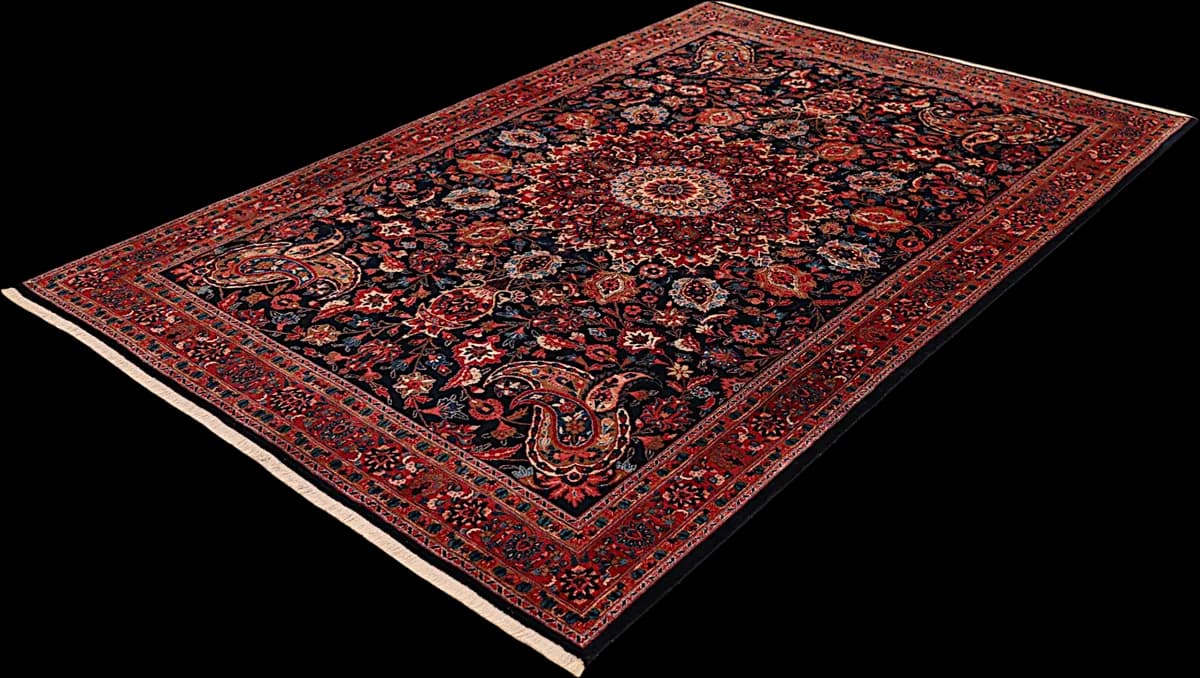
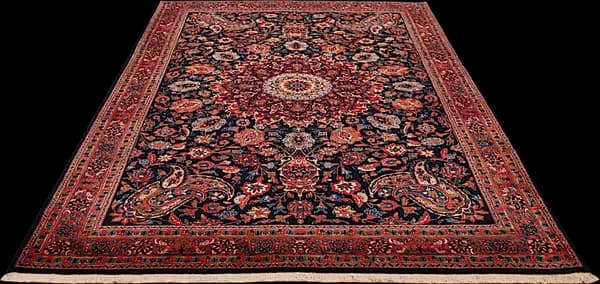
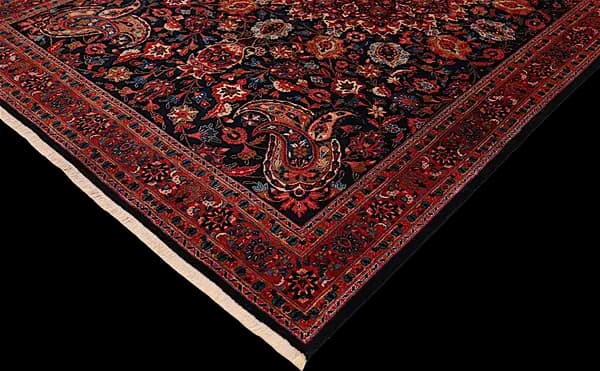
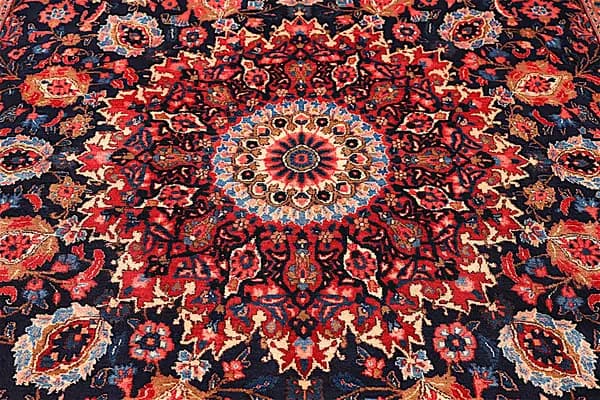
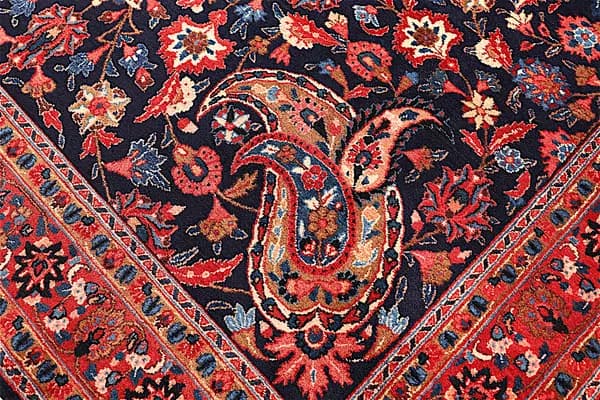
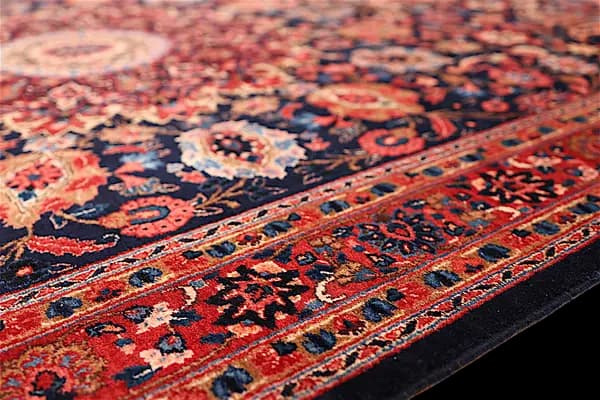
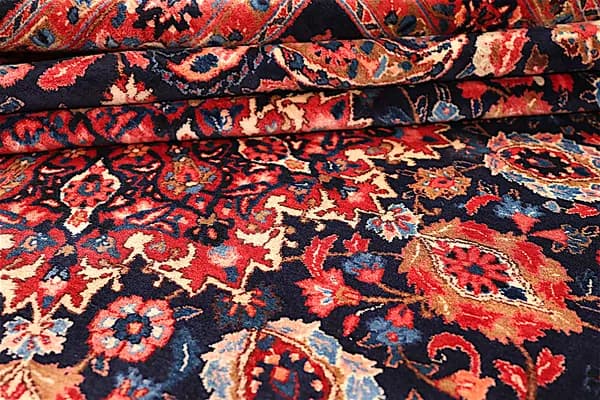
The field is a deep, almost black navy, and against it a round sunburst medallion sits at the centre, ringed by four cream-outlined petal pendants. It is the corners that hold the eye, though: oversized paisley shapes in pale cream and dusty pink, drawn boldly enough to anchor the whole composition rather than fade into the field, as this motif usually does. A broad brick-red border, carrying a dense floral vine, closes the design and gives the dark field somewhere to rest.
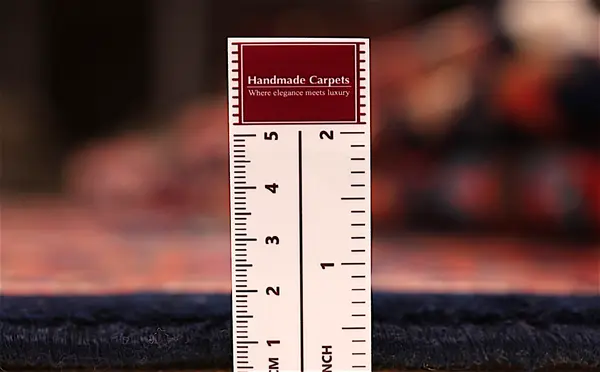
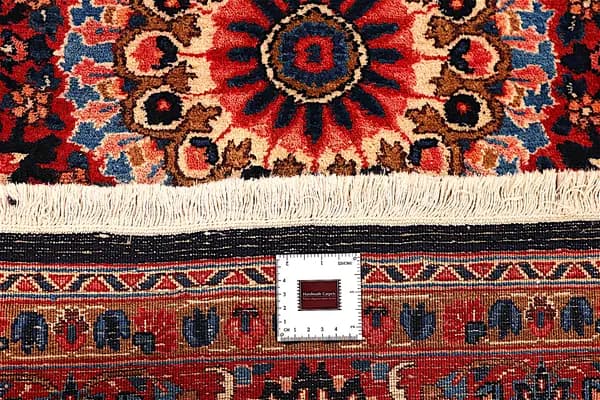
The knot count here runs to 321,000-380,000 per square metre, dense enough to carve the sunburst medallion and those paisleys with real precision rather than approximation. The pile is hand-spun wool, knotted by hand onto a cotton warp, and it is this hand-spun wool that carries the light unevenly across the surface, gathering into a faint sheen over the medallion and the pale motifs while the navy ground stays matte around it. At 12 millimetres the pile is kept low enough for the drawing to stay sharp, and forty to sixty years of use has settled it into itself rather than worn it thin.
A rug of this size and weight belongs under a dining table or at the centre of a seating group, and the near-black field will hold its own against dark wood or dark upholstery without disappearing into either. Against a paler floor it reads as a deep anchor rather than a shadow. Underfoot the wool sits dense and firm, built for a room that gets used rather than one that is kept for best. Move a lamp across it in the evening and the medallion and the corner paisleys catch first, the rest of the field staying quietly dark around them.
More on Dorokhsh rugs: origin, making and how to recognise a genuine piece
Superior craftsmanship
At 310 × 206 cm (6.39 m²) this is a large rug. It sits under a seating group with the front legs of sofa and chairs on it, or under a dining table for four. A table for six wants about 80 cm of clearance all round, and needs more.
Yes, knotted by hand — knot by knot on a loom, not machine-made. The density is 321,000 to 380,000 knots per square metre; across 6.39 m² that is roughly 2.0 to 2.4 million individual knots, every one of them tied by hand.
Hand-spun wool still carries its own lanolin, which keeps liquid sitting on the surface for a moment: blot quickly, with clear water and a light cloth, working inwards and without rubbing. Otherwise regular vacuuming along the pile is enough. Turn the rug once or twice a year so light and footfall reach it evenly.
We are in the Hamburg Speicherstadt. Come and see this rug in daylight, or write to us — a person answers.
Certificate included verifying origin, materials, and craftsmanship.
Ref: 510982