Bidjar
172 × 112 cm
1.013 €
11.400 €
Incl. VAT
In Stock · Ready to Ship
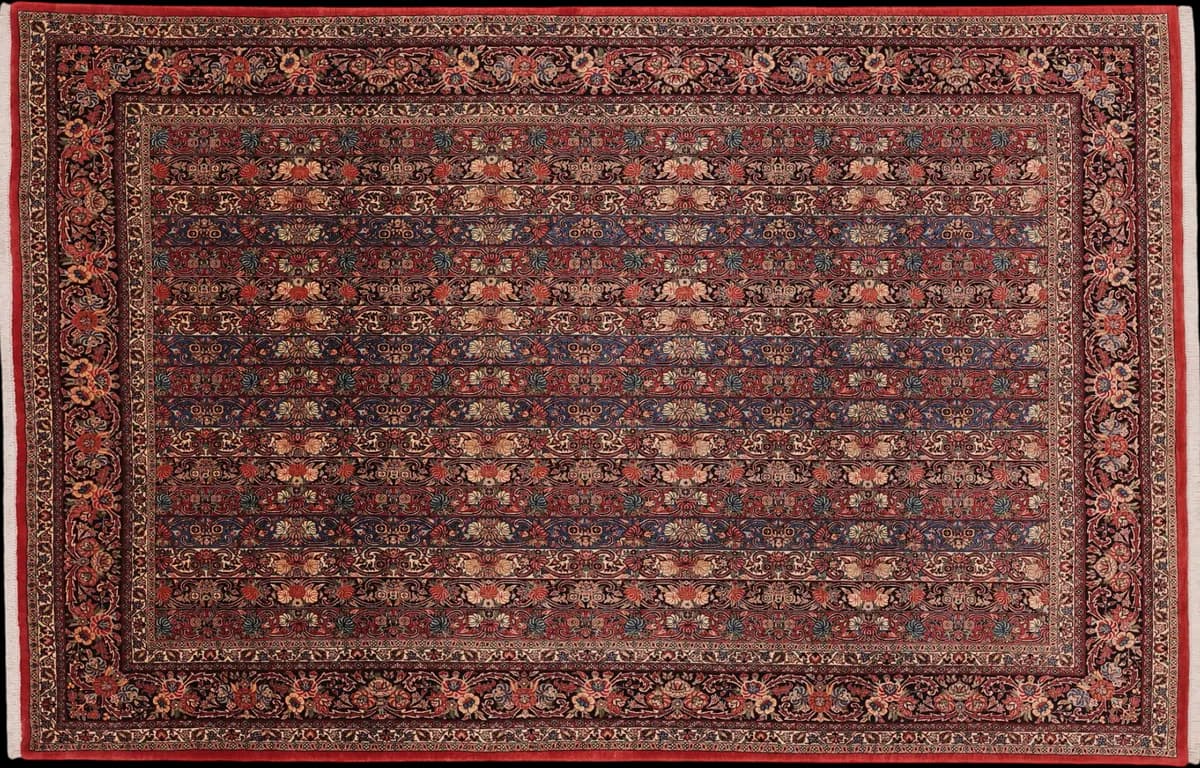
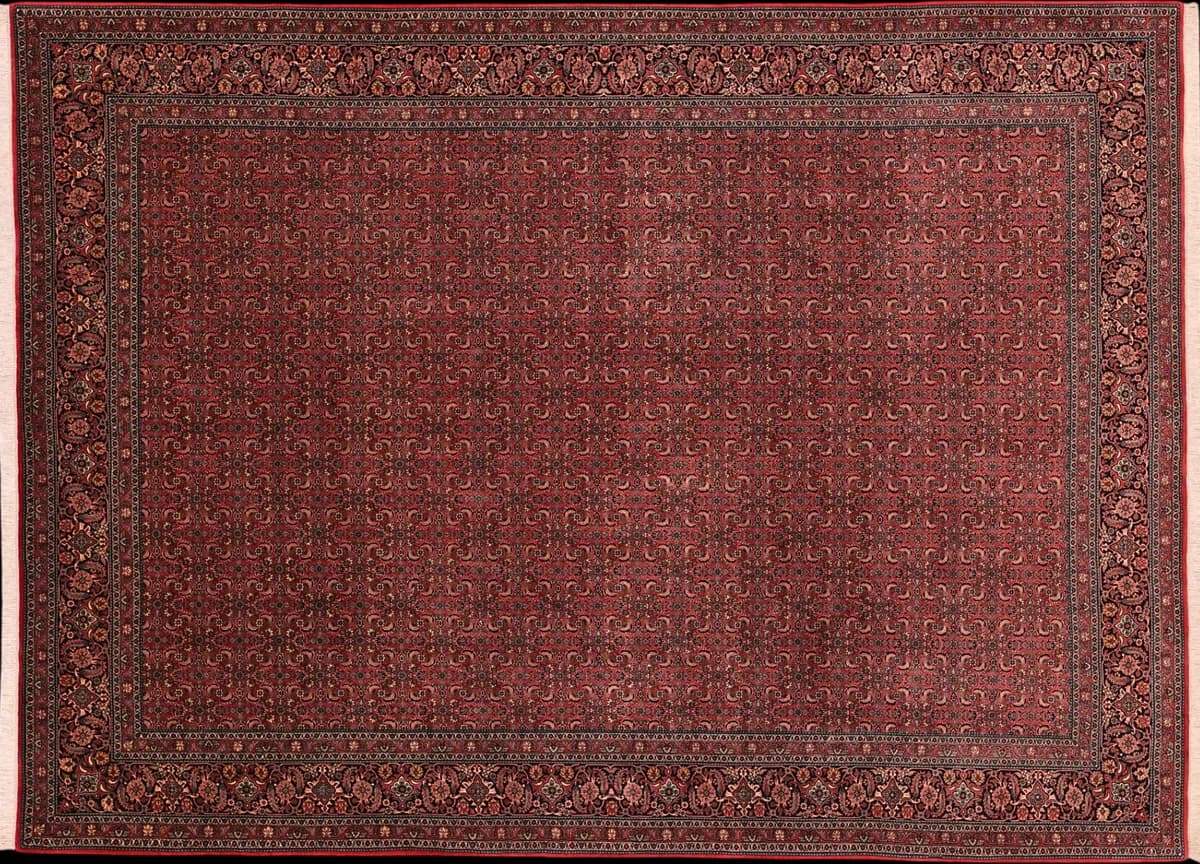
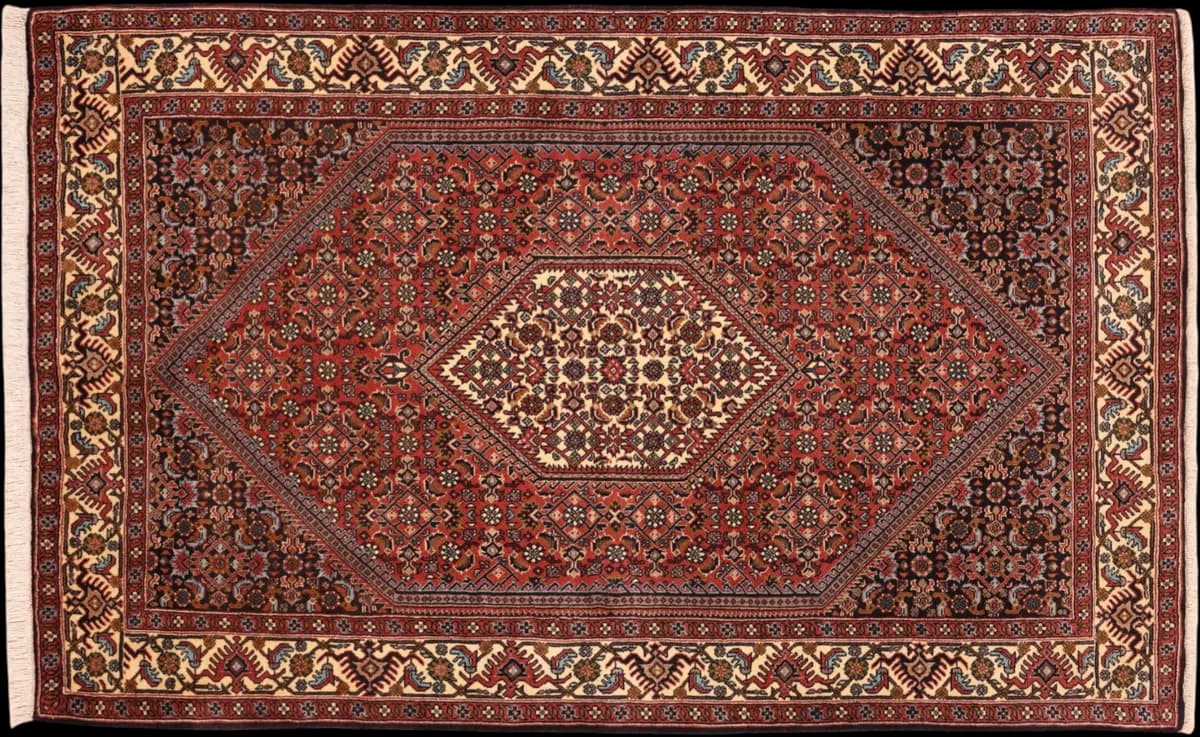
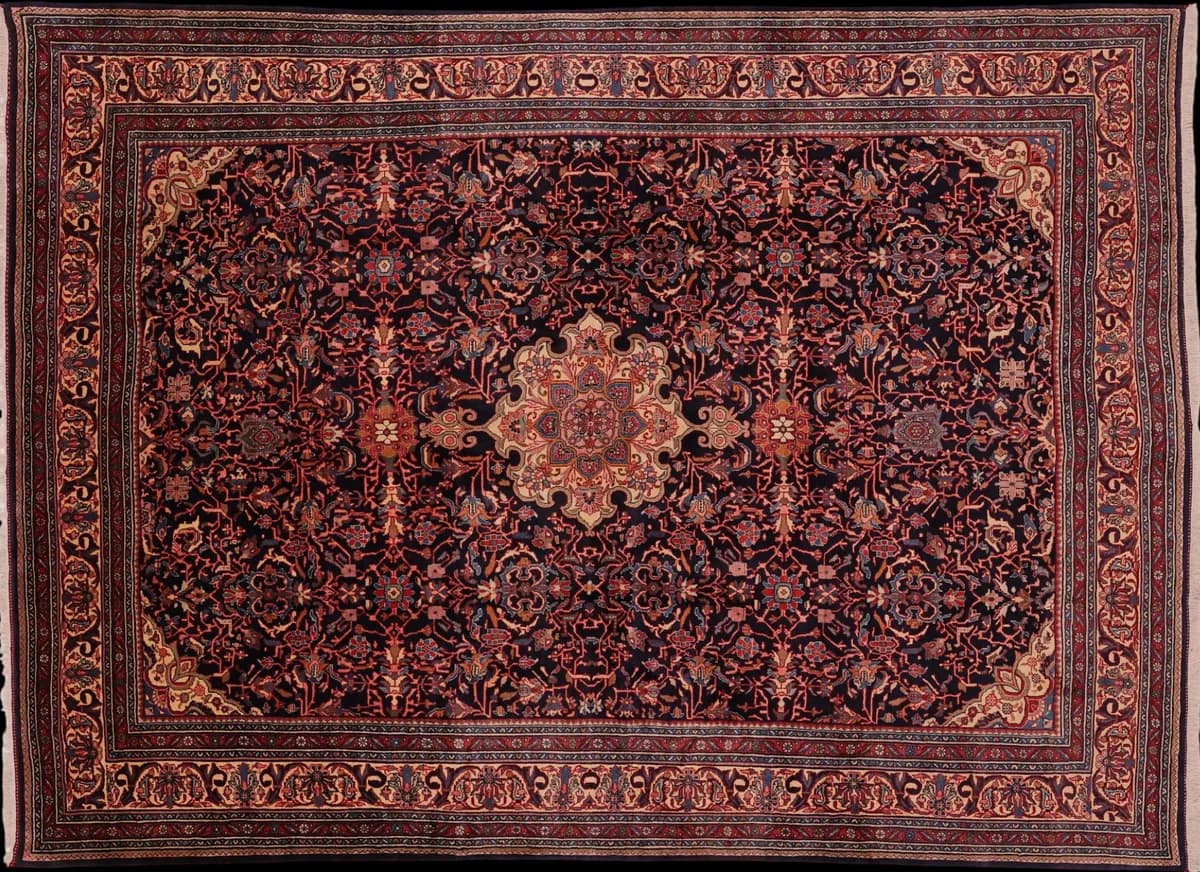
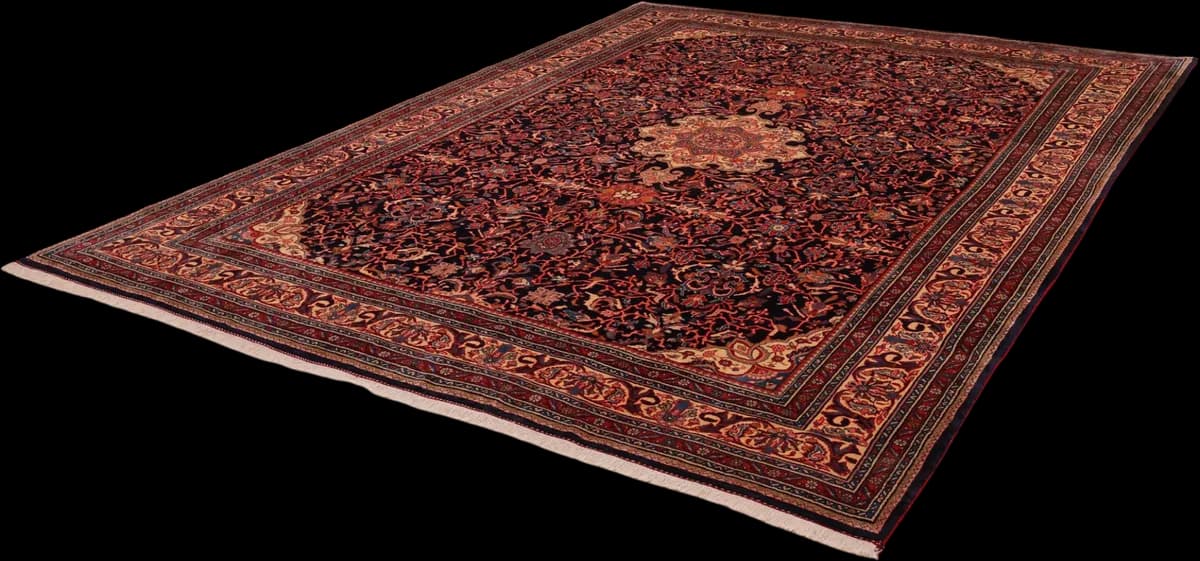
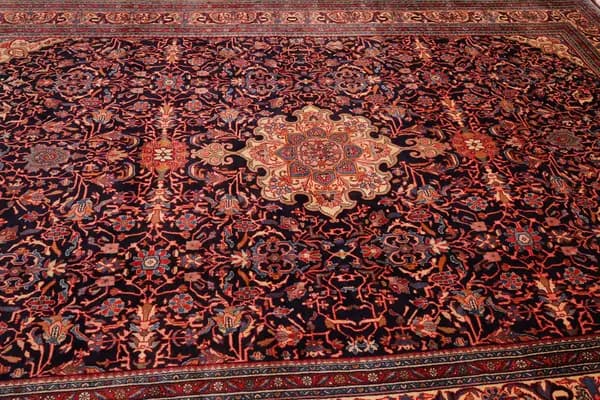
A Bijar, also written Bidjar, from the Kurdish weaving regions of western Iran, measuring 362 x 263 cm (11'11" x 8'8"). Bijars are nomadic and tribal work, knotted from memory rather than from a drawn plan, and they carry an old nickname among collectors: the Iron Rugs of Persia. The name refers to a structure pressed so densely that the rug can only be rolled, never folded flat.
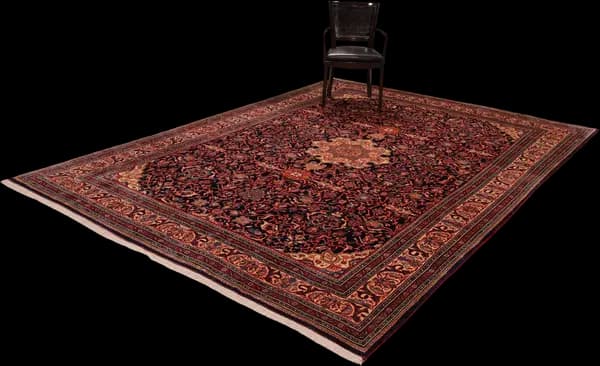
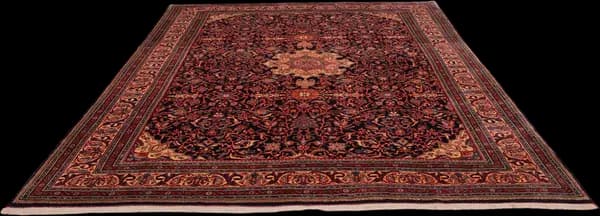
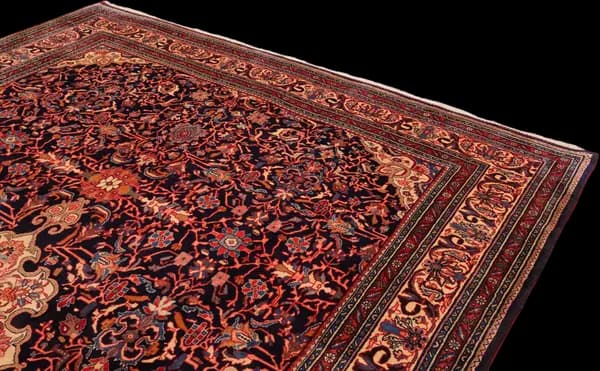
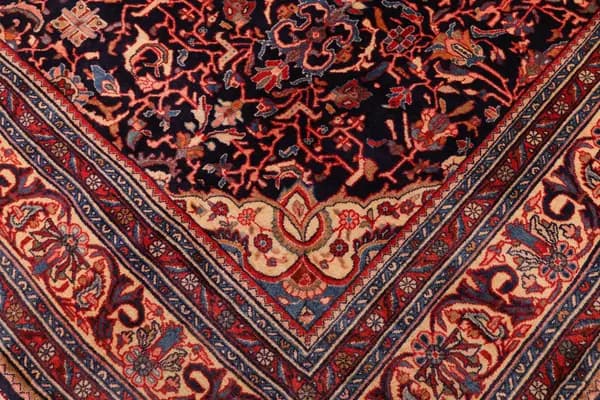
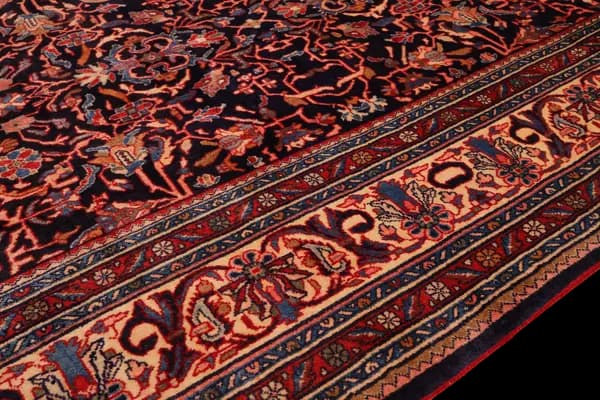
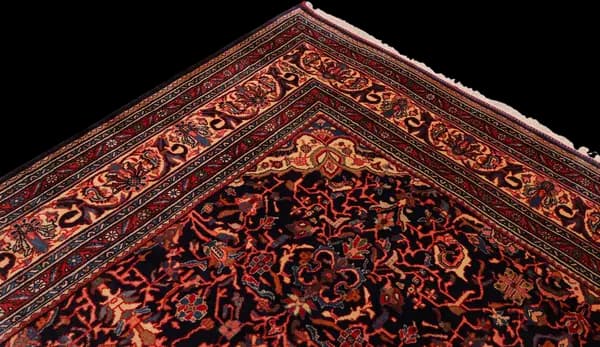
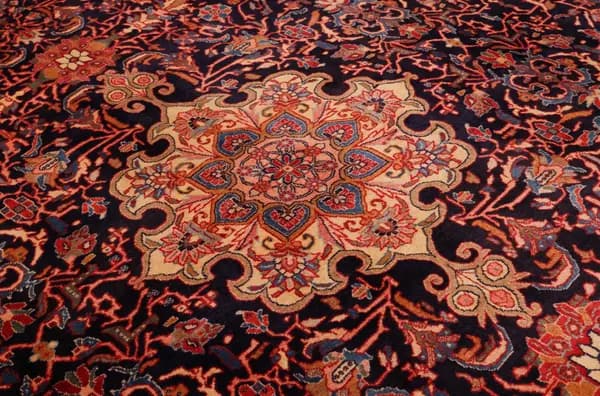
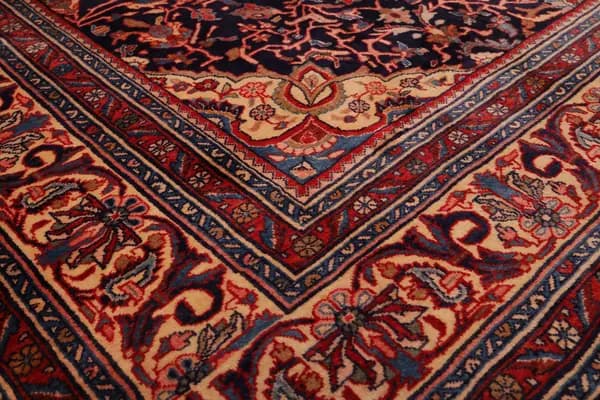
The field is a deep, almost black navy, dense with a fine trellis of small red and cream florals running edge to edge. Rising from that dark ground sits a large lobed medallion in ivory and brick red, its pale centre held in strong relief against the navy around it. The corner spandrels pick up the same cream and red, giving the composition a balanced, settled quality that is unusual for work knotted freehand rather than to a cartoon. A broad cream border, carrying a red and navy floral vine scroll and framed by several narrow guard stripes, closes the design and answers the medallion's pale tone at the rug's edge.
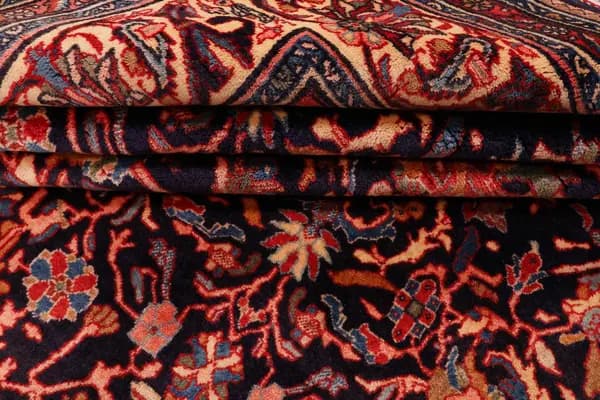
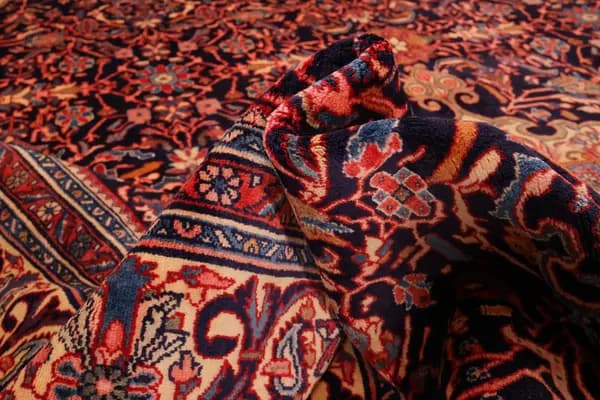
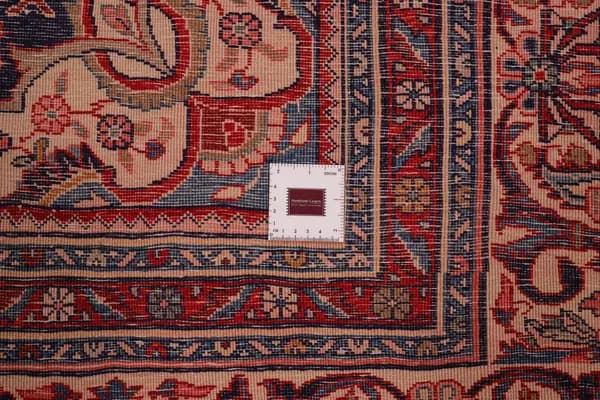
Knot density here runs to 201,000-250,000 per square metre, a figure well above what most rug traditions attempt and the reason Bijars carry their reputation for endurance. The wool is hand-spun rather than machine-spun, which gives the surface its slightly uneven, matte character instead of a uniform commercial sheen. Pressed onto a cotton warp to a pile height of 15 mm, the structure becomes so firm and compact that it will not fold, only roll, and forty to sixty years on, it still holds its edges sharp rather than soft.
A rug of this size sits naturally under a dining table or anchoring a sofa group in a living or dining room, and that near-black navy ground holds its own against dark wood or dark upholstery rather than disappearing beside it. Against a pale floor, the same navy grounds the room while the ivory medallion lifts and carries the light. Underfoot it is dense, firm and substantial, built for a room that gets used rather than one that is kept for best. As the sun moves across it through the day, the brick red in the trellis warms and the cream medallion catches the light in turn, so the surface never quite looks the same twice.
More on Bidjar rugs: origin, making and how to recognise a genuine piece
Fine quality weave
At 362 × 263 cm (9.52 m²) this is a very large rug. It carries a whole seating group with every furniture leg on it, or a dining table with the chairs pushed back. In a small room it becomes the floor rather than a rug.
Yes, knotted by hand — knot by knot on a loom, not machine-made. The density is 201,000 to 250,000 knots per square metre; across 9.52 m² that is roughly 1.9 to 2.4 million individual knots, every one of them tied by hand.
Hand-spun wool still carries its own lanolin, which keeps liquid sitting on the surface for a moment: blot quickly, with clear water and a light cloth, working inwards and without rubbing. Otherwise regular vacuuming along the pile is enough. Turn the rug once or twice a year so light and footfall reach it evenly.
We are in the Hamburg Speicherstadt. Come and see this rug in daylight, or write to us — a person answers.
Certificate included verifying origin, materials, and craftsmanship.
Ref: 541930