Bidjar
181 × 114 cm
1.082 €






3.750 €
Incl. VAT
In Stock · Ready to Ship
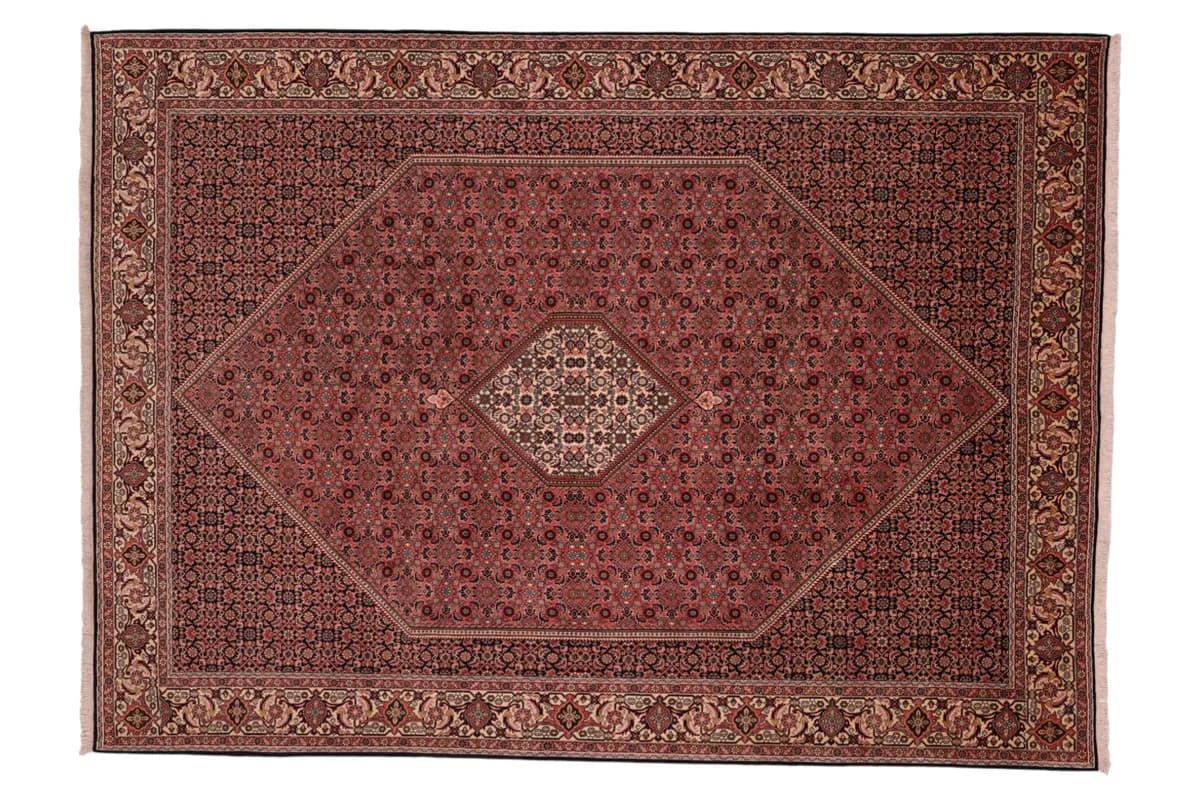
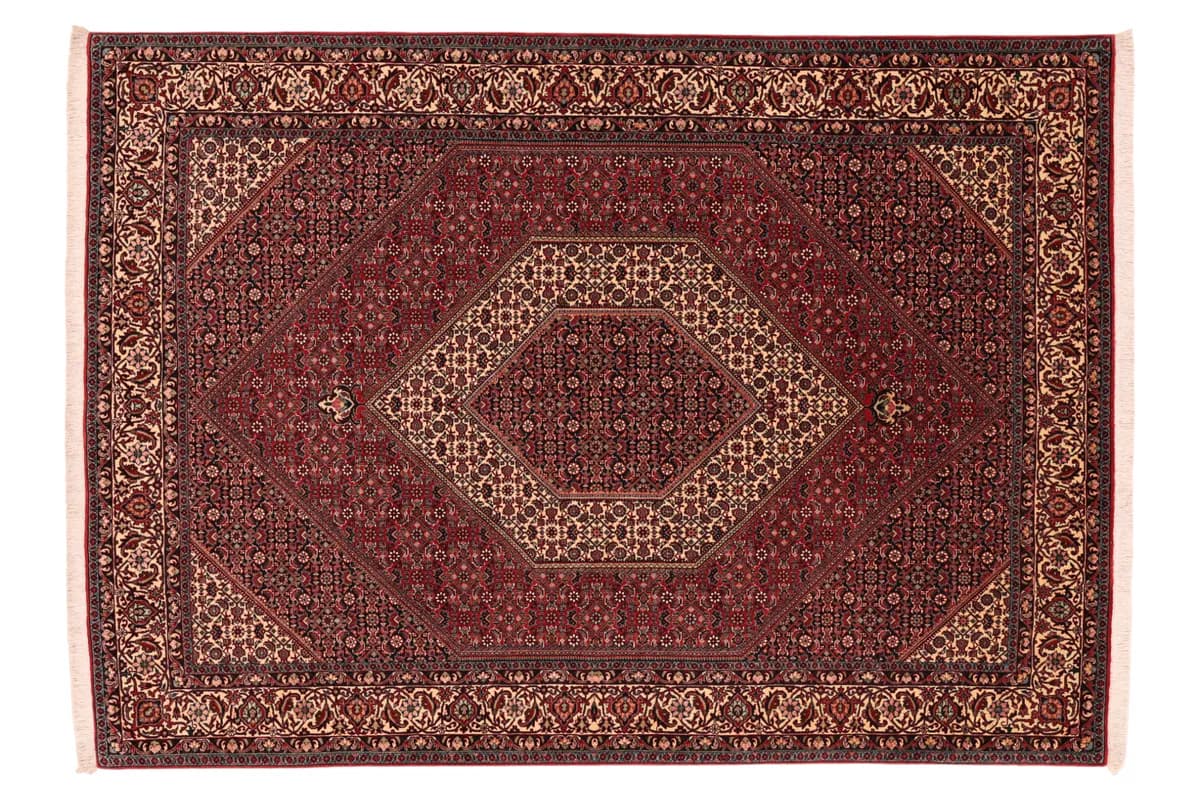
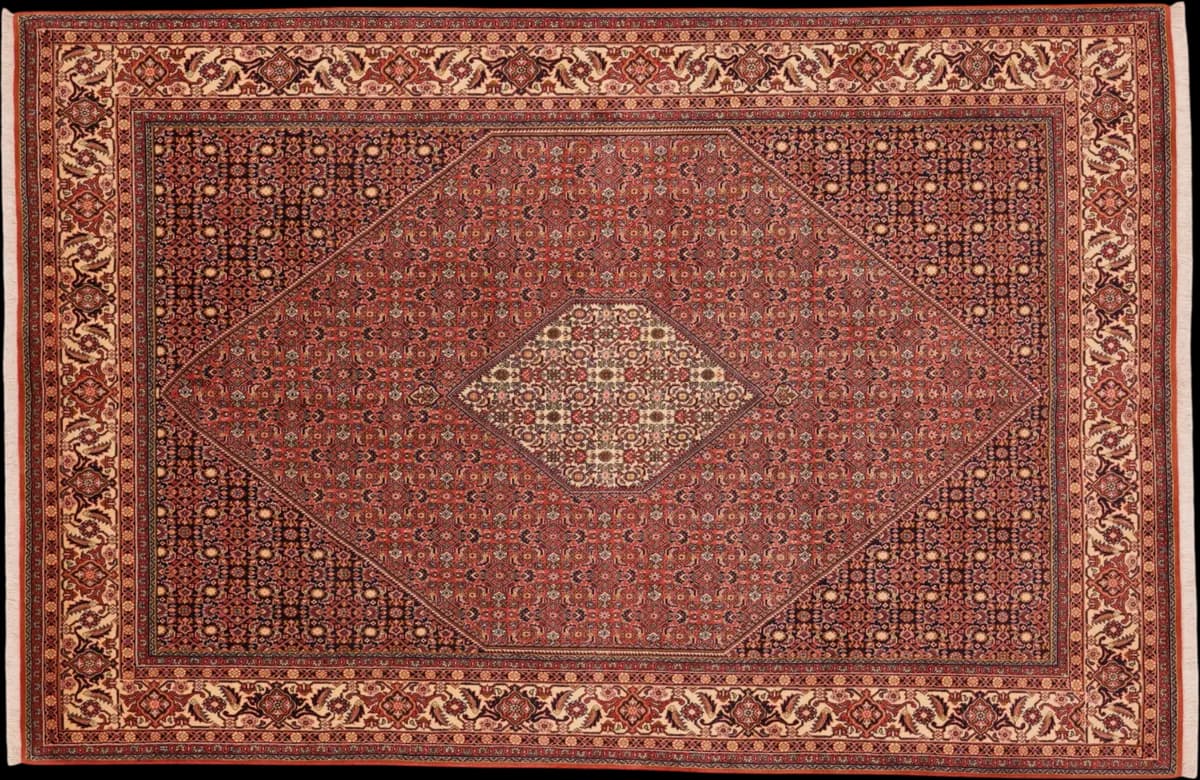
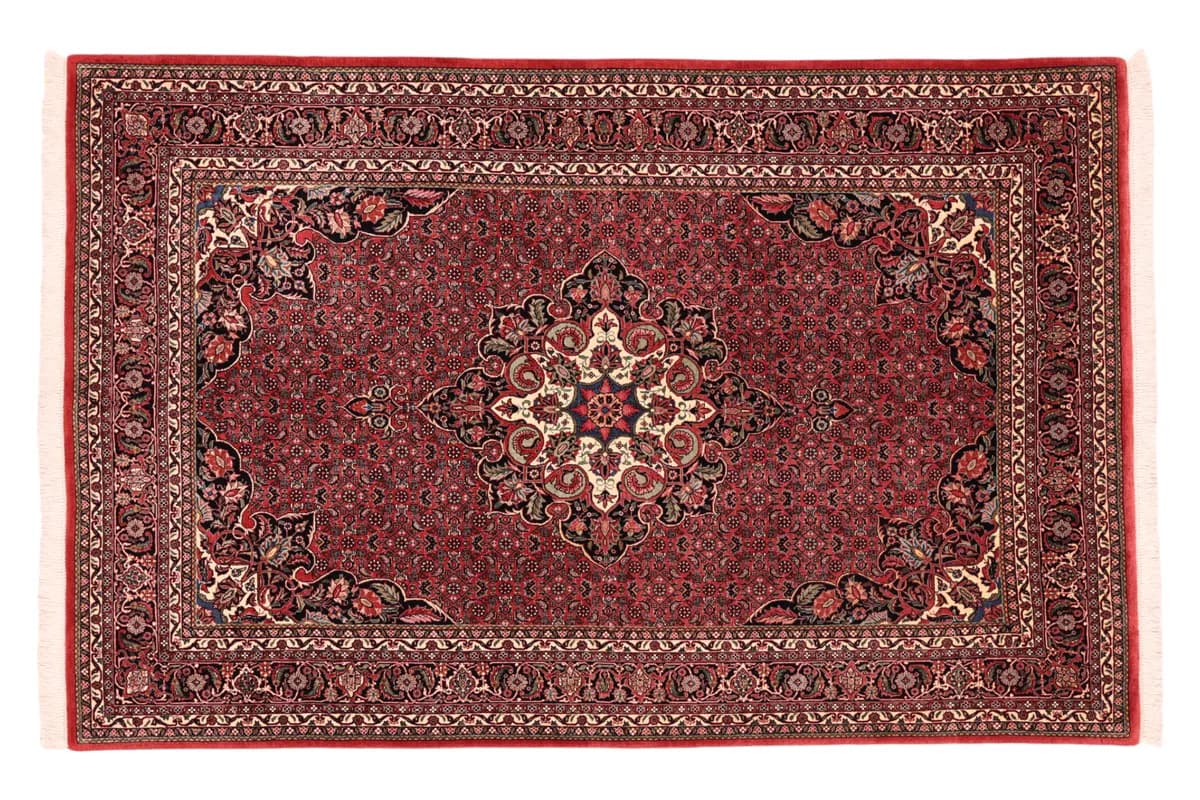
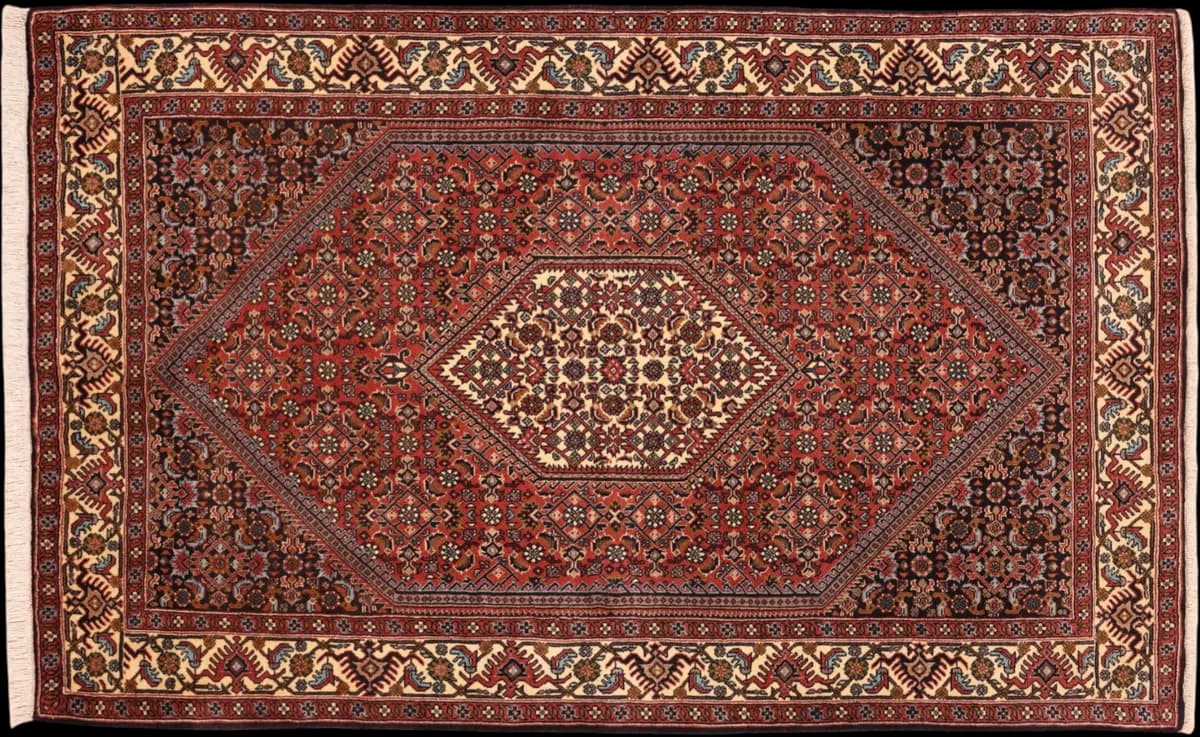
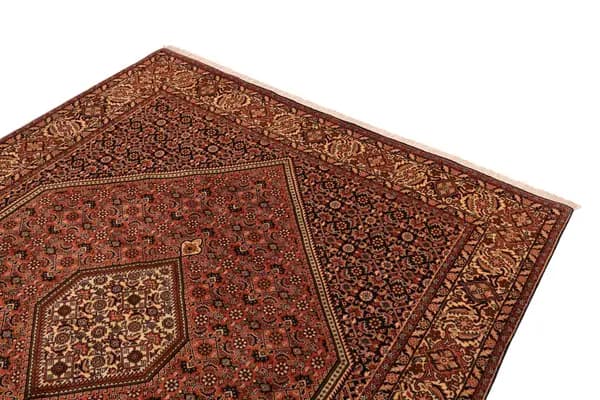
This is a Bidjar, also written Bijar, hand-knotted in the Kurdish west of Iran, measuring 244 x 199 cm (8'0" x 6'6"). The type has earned the name "the iron rugs of Persia": a construction so dense and firmly pressed that a Bidjar cannot be folded, only rolled, and holds its shape and edge for decades underfoot.
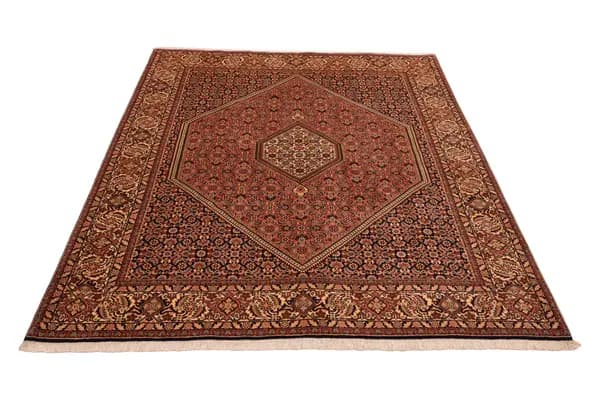
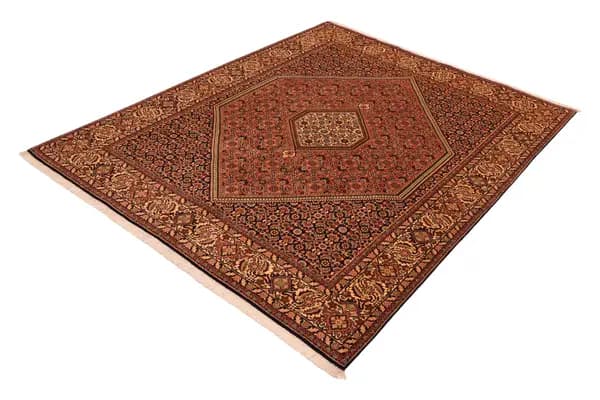
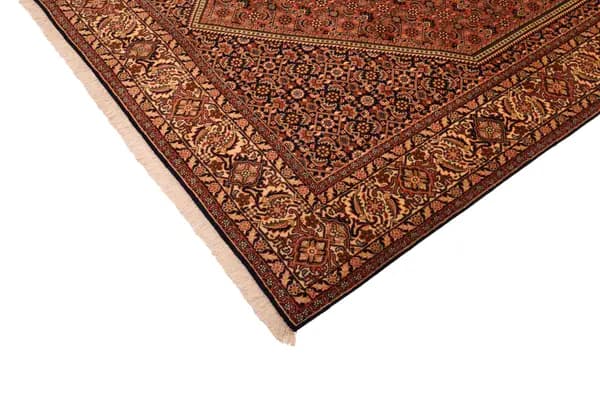
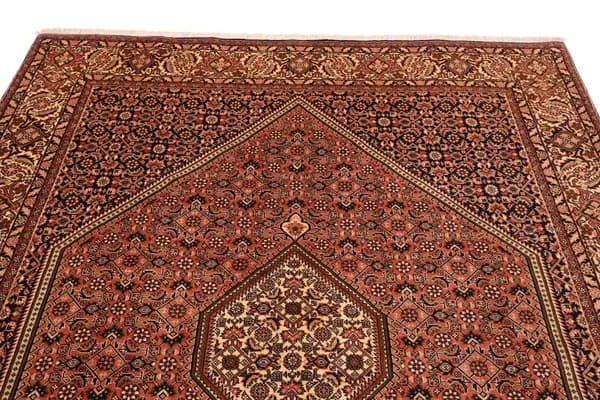
The field is a warm salmon terracotta, covered edge to edge in a fine, small-scale lattice of rosettes and diamonds — the mahi, or fish, pattern that recurs across Persian weaving. Floating at its centre is a sharply lobed medallion, holding a second, smaller diamond in ivory with its own miniature rosette pattern, a medallion within a medallion. Around it all runs a broad navy border, cream floral scrollwork against a field close to a fifth of the rug's width, setting warm terracotta against a much darker frame.
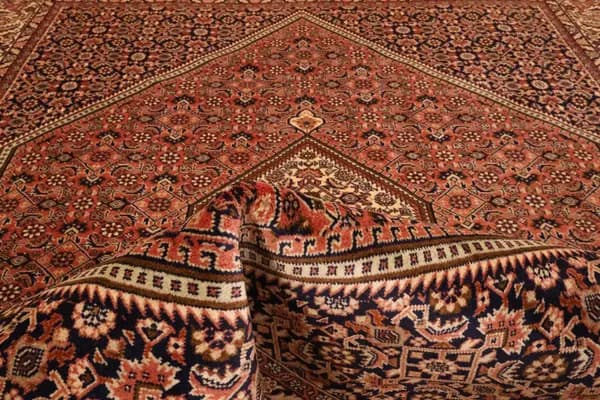
Bidjar weavers press each row of knots down hard with a metal comb, working hand-spun wool on a cotton warp — the source of the type's legendary density. This piece carries 321,000 to 380,000 knots per square metre, among the tightest counts in Persian weaving, months of work at the loom. That density is what keeps the drawing this exact: the nested diamond inside the medallion, the small rosettes across the field, would blur at a coarser count. At 15 mm the pile sits low, firm and matte rather than lustrous.
This size suits a dining room under the table, or a seating group in a living room. The terracotta warms a pale floor and holds its own against dark wood, while the navy border keeps the pattern contained rather than spreading into the room. Underfoot it is dense and firm, built for daily use rather than careful stepping-around. Daylight moves the terracotta between salmon and rust, and the ivory medallion stays the point the eye returns to.
More on Bidjar rugs: origin, making and how to recognise a genuine piece
Superior craftsmanship
At 244 × 199 cm (4.86 m²) this is a medium rug. It works in front of a sofa, in front of a bed or in a study. It is too small for a dining table — there you want about 80 cm of clearance so a chair does not tip over the edge when pushed back.
Yes, knotted by hand — knot by knot on a loom, not machine-made. The density is 321,000 to 380,000 knots per square metre; across 4.86 m² that is roughly 1.6 to 1.8 million individual knots, every one of them tied by hand.
Hand-spun wool still carries its own lanolin, which keeps liquid sitting on the surface for a moment: blot quickly, with clear water and a light cloth, working inwards and without rubbing. Otherwise regular vacuuming along the pile is enough. Turn the rug once or twice a year so light and footfall reach it evenly.
We are in the Hamburg Speicherstadt. Come and see this rug in daylight, or write to us — a person answers.
Certificate included verifying origin, materials, and craftsmanship.
Ref: 568729