Exclusive
Bidjar | Exclusivewith silk
245 × 173 cm
5.700 €
6.750 €
Incl. VAT
In Stock · Ready to Ship
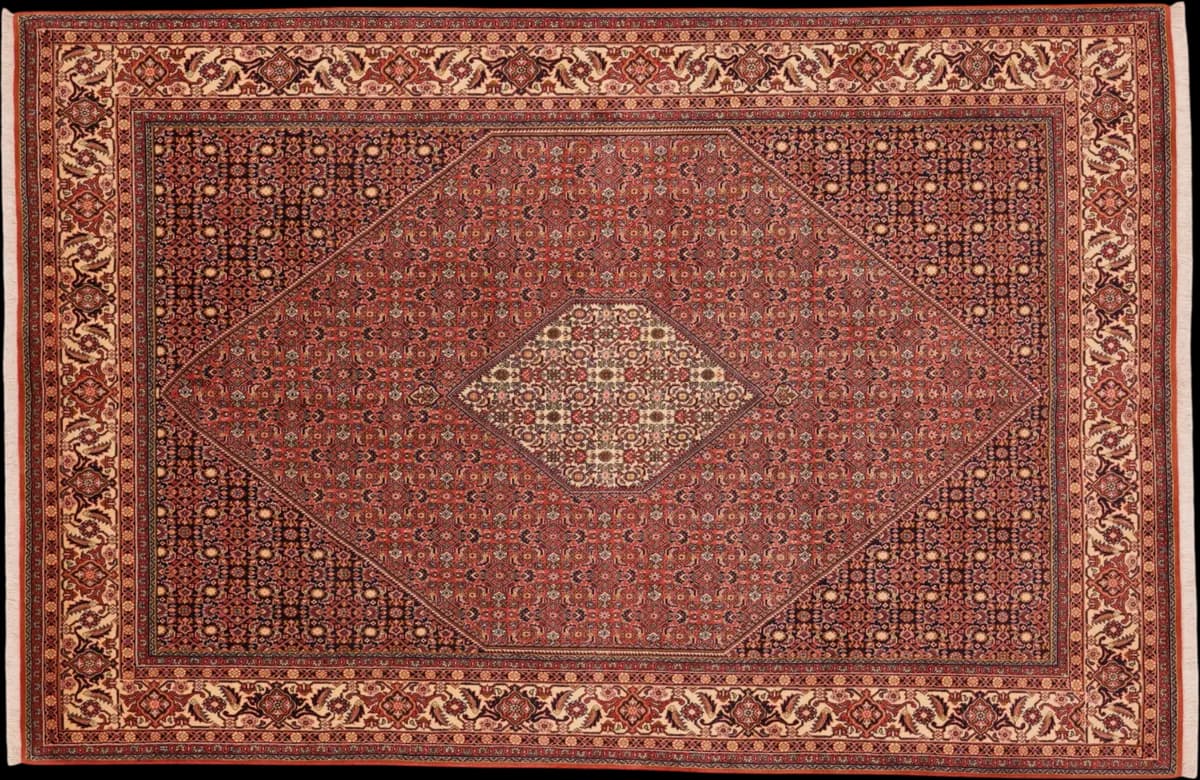
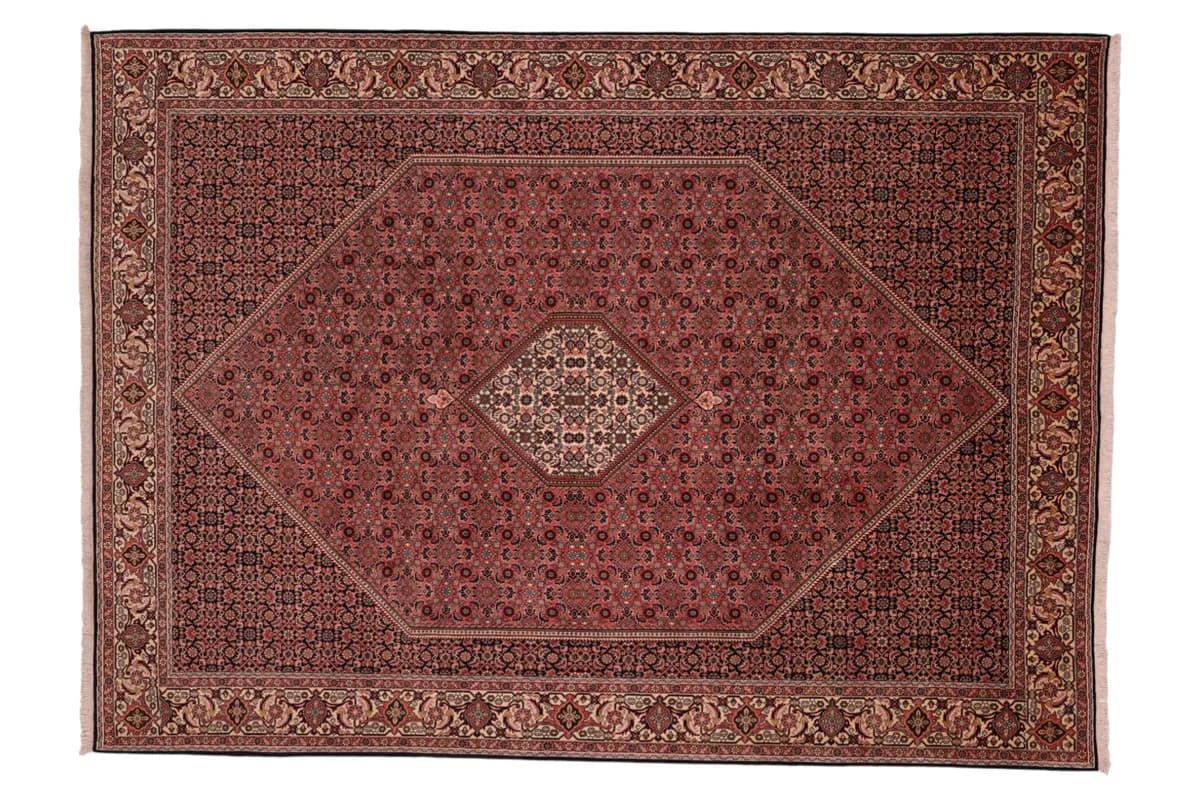
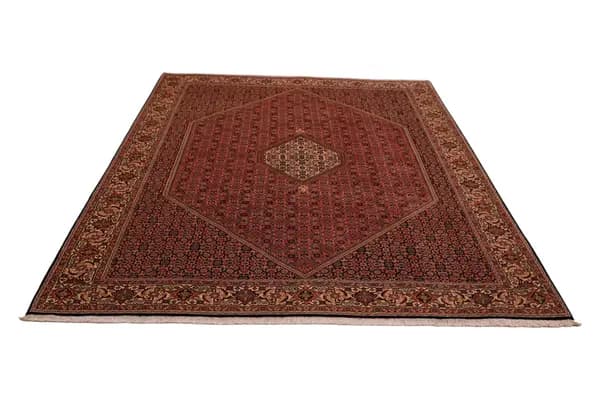
This is a Bidjar, the rug type from the Kurdish regions of western Iran nicknamed the iron rug of Persia for its density and its refusal to wear out. This example measures 346 x 250 cm (11'4" x 8'2"). Bidjars are known for weight and permanence rather than delicacy, yet the piece in front of you holds a surprisingly quiet centre.
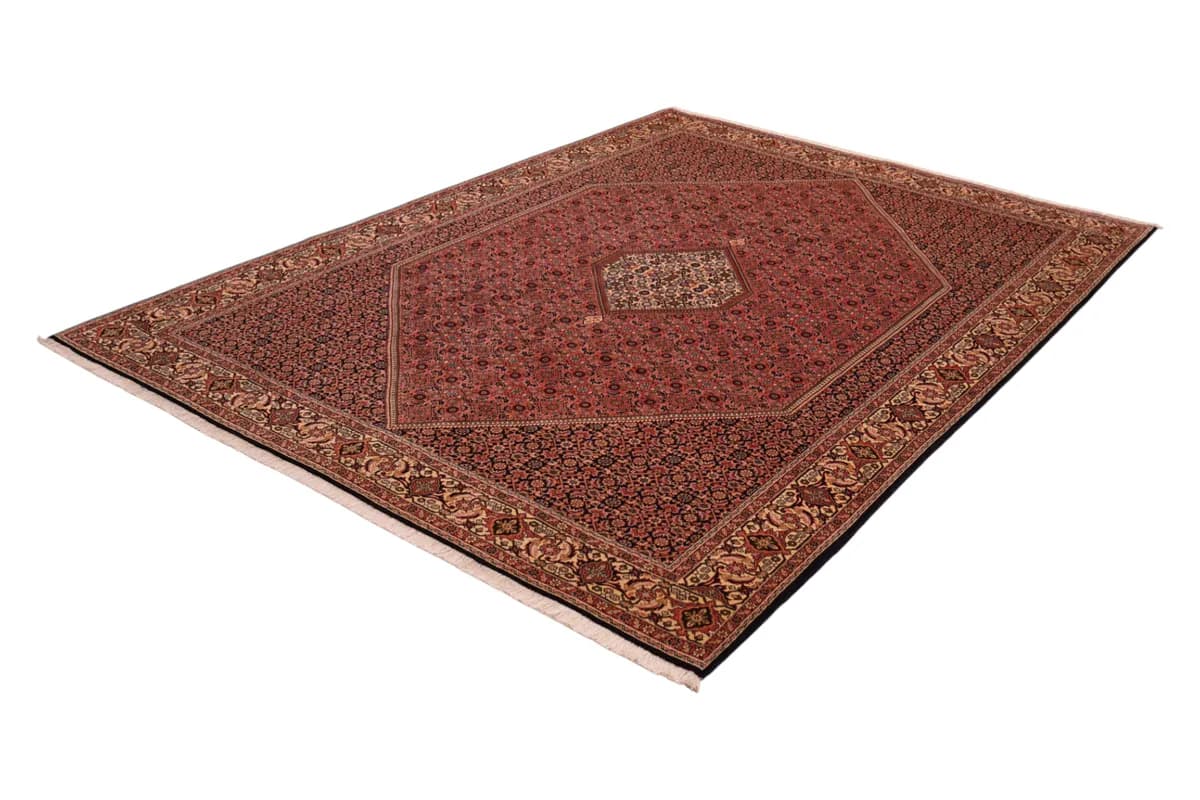
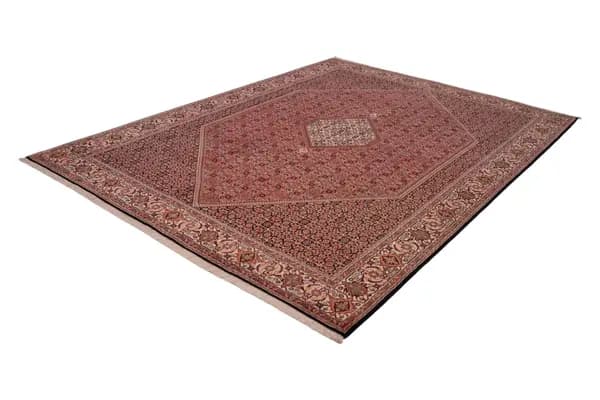
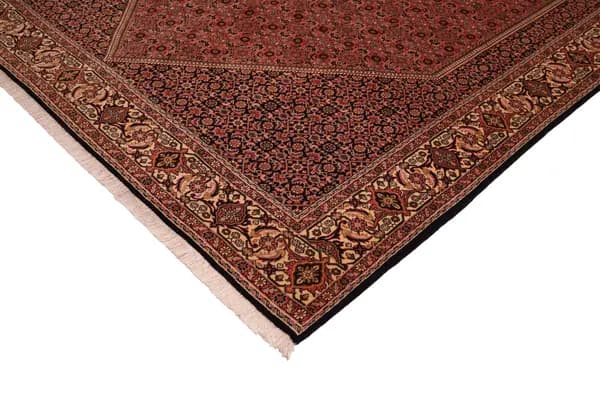
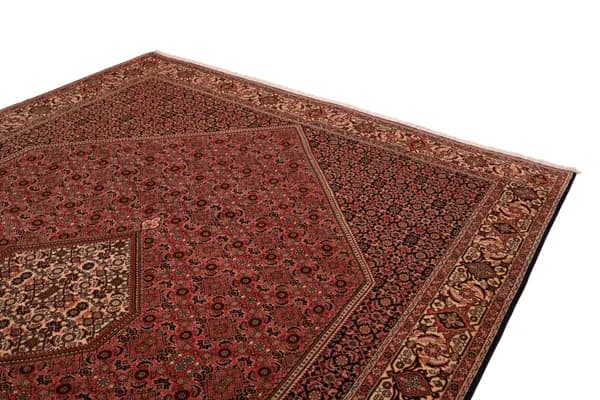
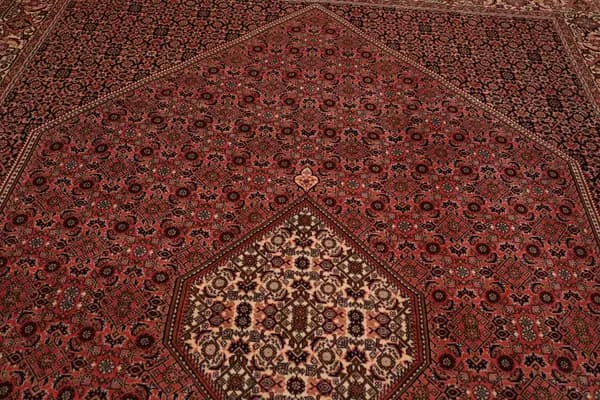
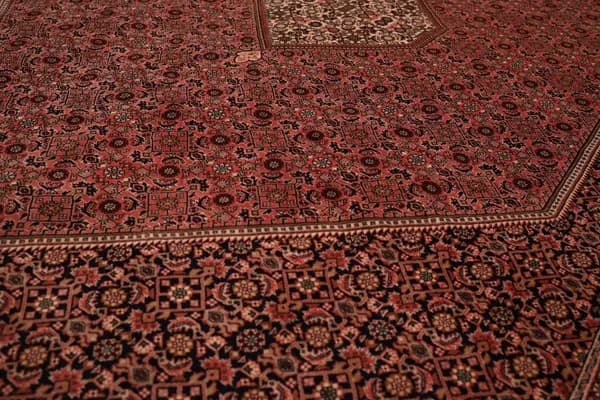
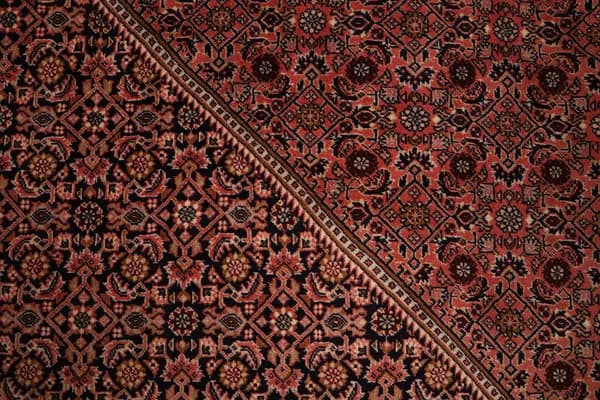
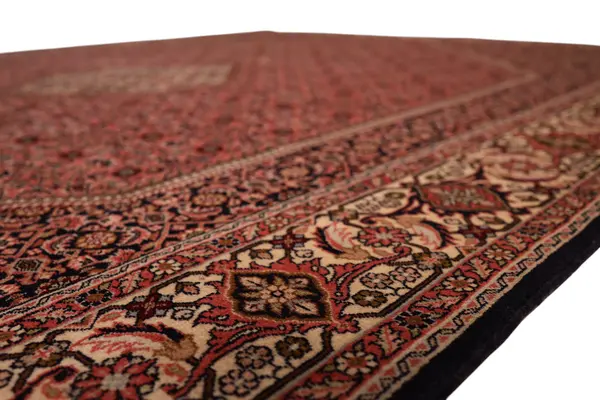
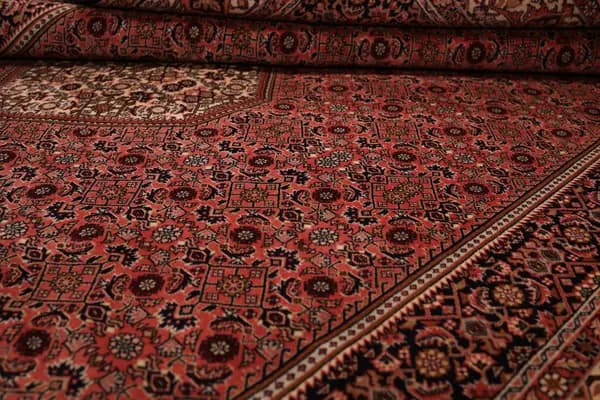
The field opens in a warm brick red, filled edge to edge with a dense diamond lattice of Mahi rosettes, each cell touched with dusty rose or slate blue. A large hexagonal medallion rises out of this lattice, its pendants reaching toward the corners, and at its very heart sits a second, smaller medallion in plain ivory, a rug within a rug. Deep navy fills the spandrels and returns in the wide border, where a cream ground carries a scrolling palmette vine between two narrow navy guard bands.
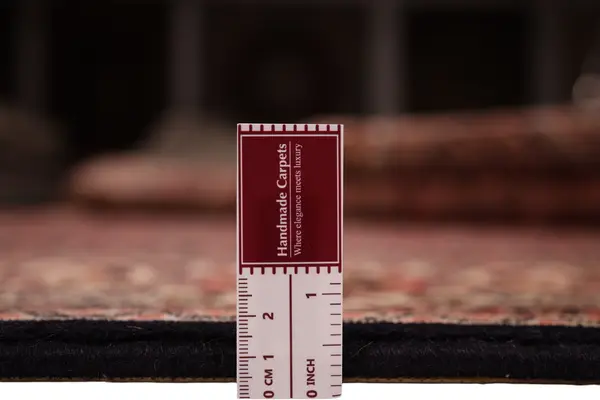
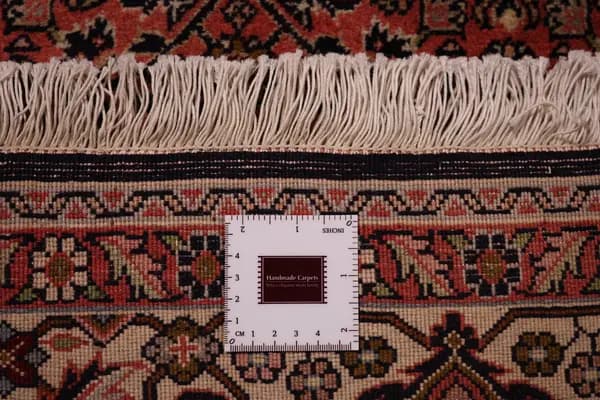
Bidjars owe their density to a weaving method unlike any other in the Persian tradition: the weft is packed down hard between rows, forcing the knots into a structure so tight that the finished rug cannot be folded, only rolled. Here that technique reaches 321,000 to 380,000 knots per square metre, hand-knotted over a cotton warp in handspun wool, the pile clipped low and even at 15 mm. That density is exactly what lets the small ivory medallion hold its edge so cleanly against the red around it — there is no room in this weave for a line to blur.
At 346 x 250 cm this is a dining room or living room rug, sized to sit under a table and chairs or to anchor a seating group. The brick red holds its own against dark wood furniture and warms a pale or stone floor without ever competing with it, while the navy border keeps the eye from wandering off the edge. Underfoot it is dense, firm and substantial, a weave built for a room that gets used rather than kept for best, and it will take years of chairs and footsteps without losing its shape. What stays with you, once the rug is down, is that small ivory medallion at the centre, catching the light a little differently from the red around it every time the sun moves across the room.
More on Bidjar rugs: origin, making and how to recognise a genuine piece
Superior craftsmanship
At 346 × 250 cm (8.65 m²) this is a very large rug. It carries a whole seating group with every furniture leg on it, or a dining table with the chairs pushed back. In a small room it becomes the floor rather than a rug.
Yes, knotted by hand — knot by knot on a loom, not machine-made. The density is 321,000 to 380,000 knots per square metre; across 8.65 m² that is roughly 2.8 to 3.3 million individual knots, every one of them tied by hand.
Hand-spun wool still carries its own lanolin, which keeps liquid sitting on the surface for a moment: blot quickly, with clear water and a light cloth, working inwards and without rubbing. Otherwise regular vacuuming along the pile is enough. Turn the rug once or twice a year so light and footfall reach it evenly.
We are in the Hamburg Speicherstadt. Come and see this rug in daylight, or write to us — a person answers.
Certificate included verifying origin, materials, and craftsmanship.
Ref: 585432