Bidjar
302 × 199 cm
4.500 €






2.880 €
Incl. VAT
In Stock · Ready to Ship
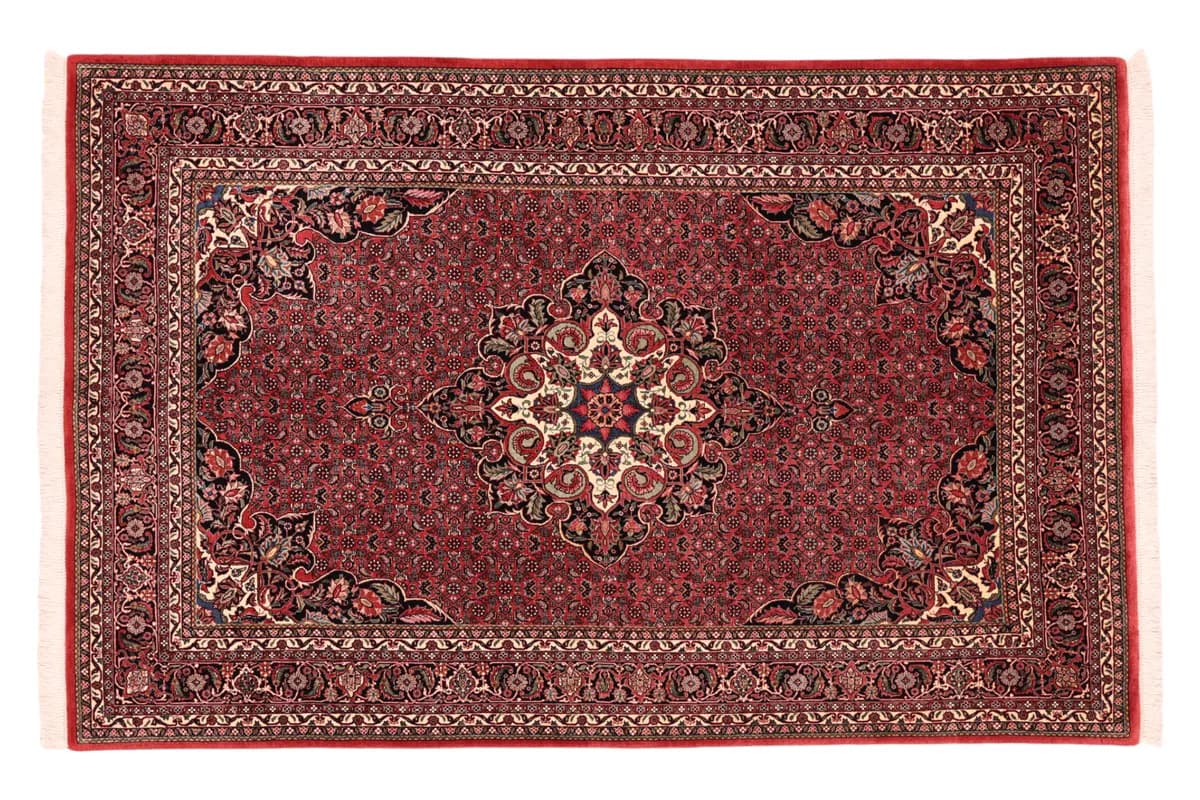
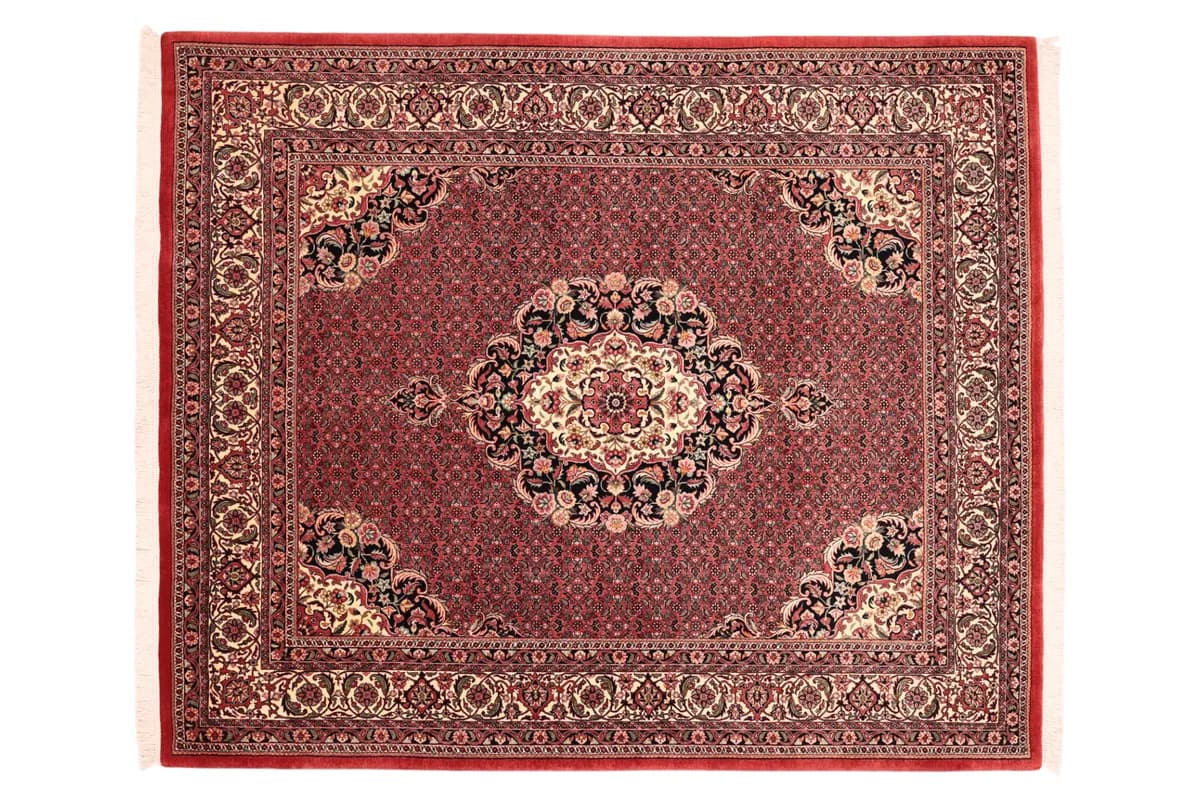
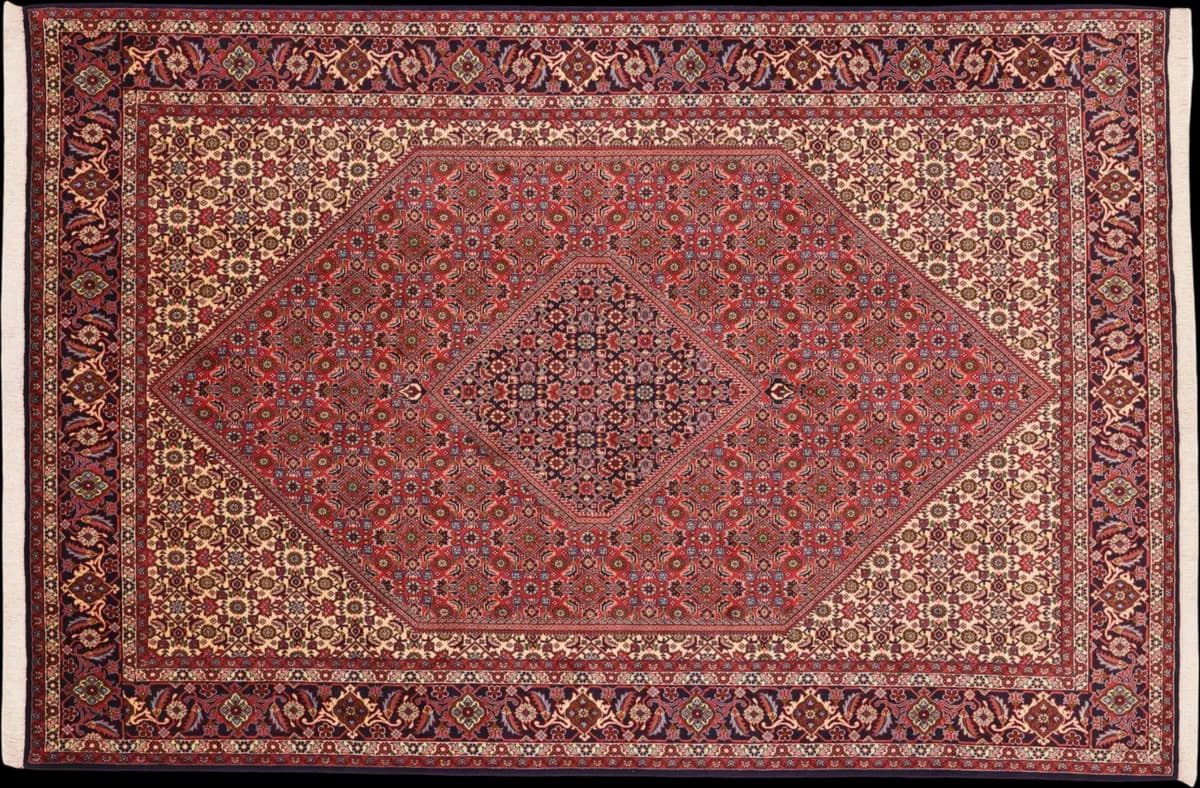
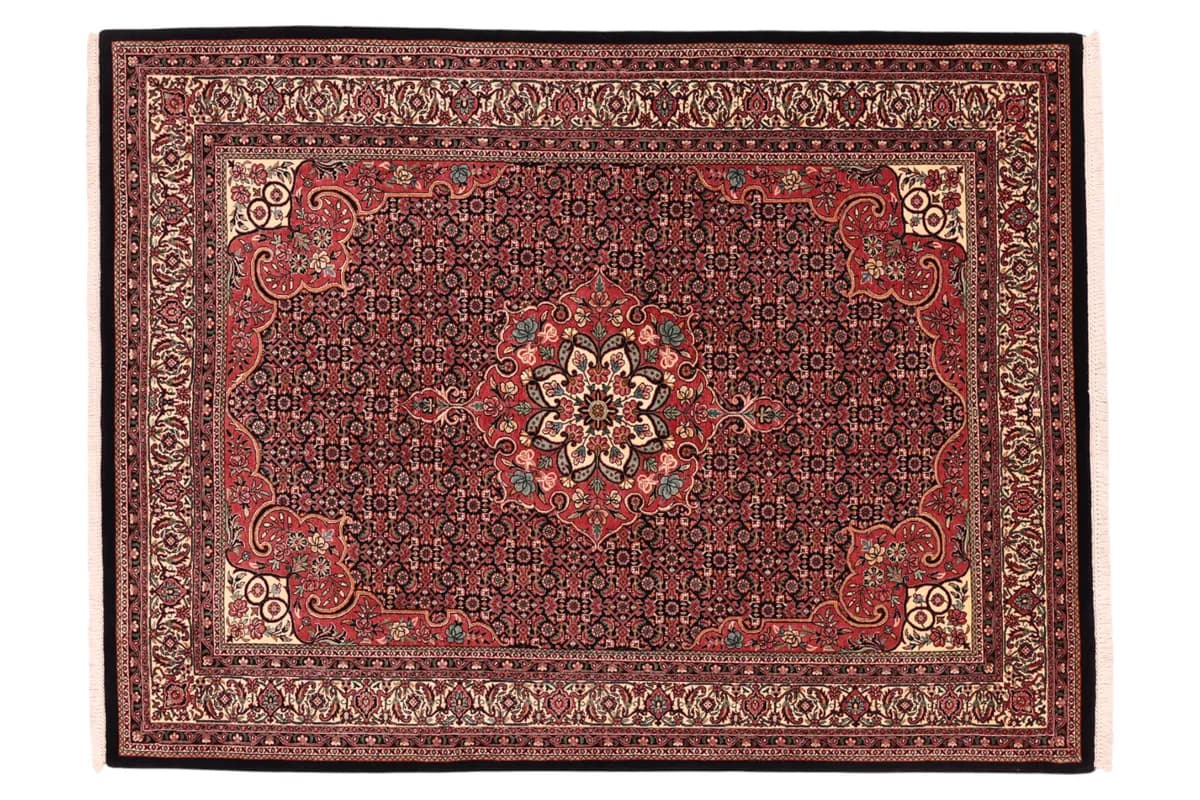
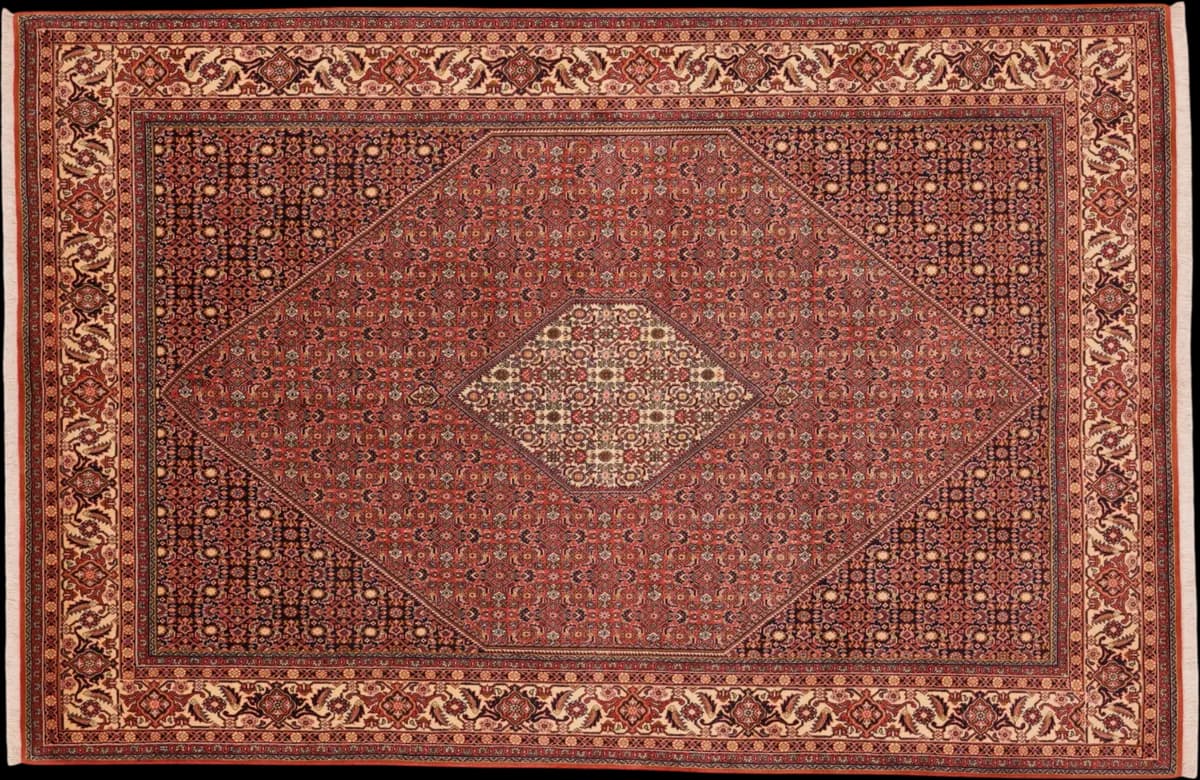
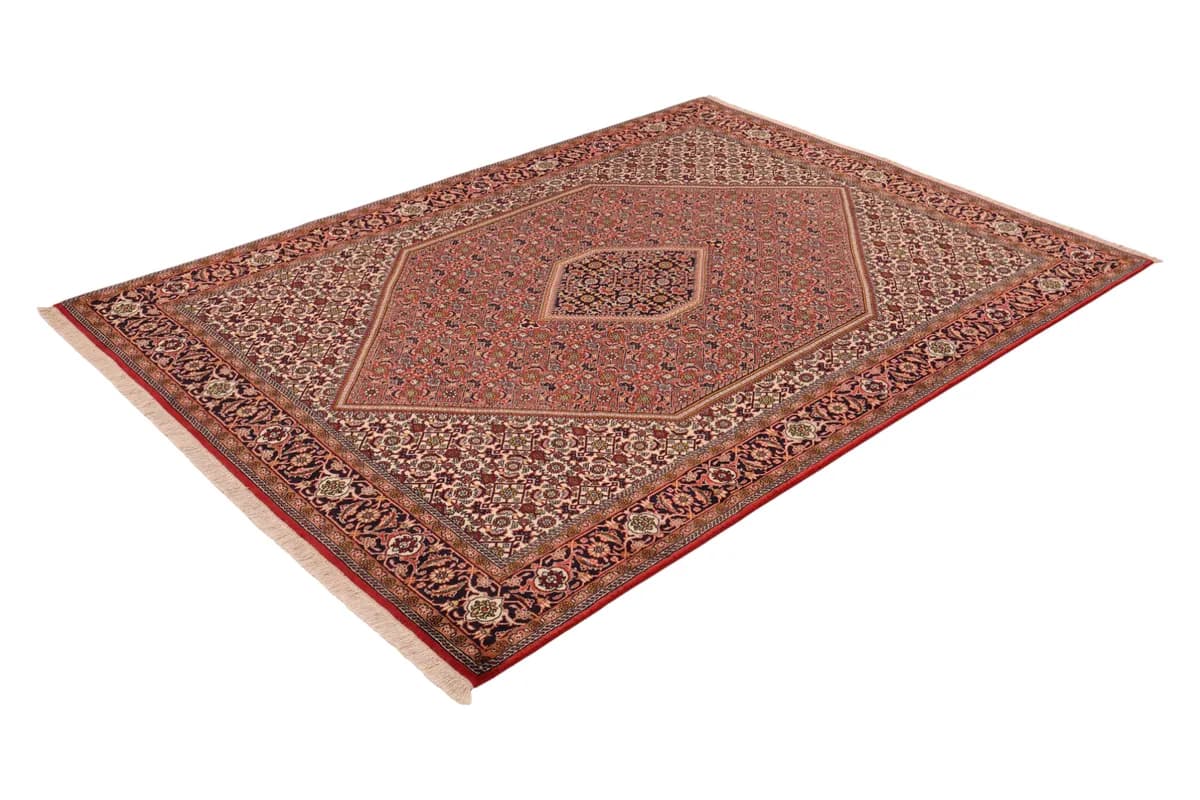
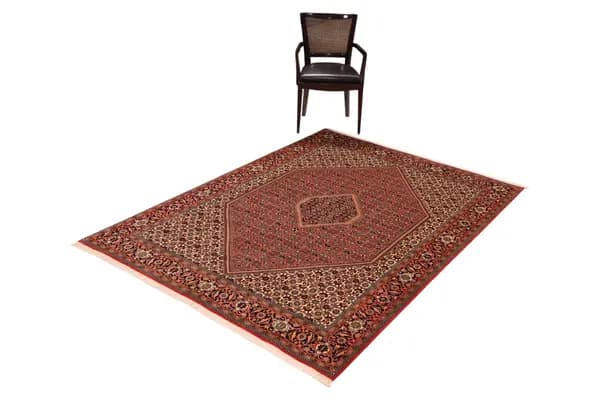
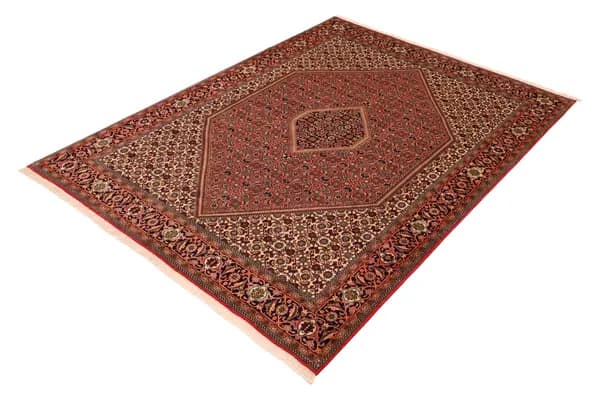
This is a Bijar, also written Bidjar, from the Kurdish weaving regions of western Iran, measuring 234 x 169 cm (7'8" x 5'7"). The type has earned itself a blunt nickname among rug people, the Iron Rugs of Persia, for a density and weight in the hand that most weavings never approach. It is a piece built first for endurance, and only then for looks.
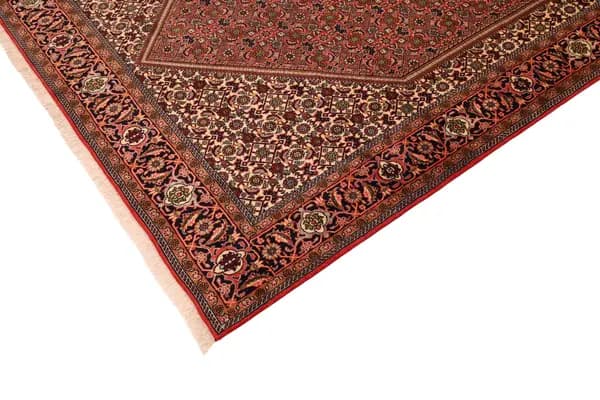
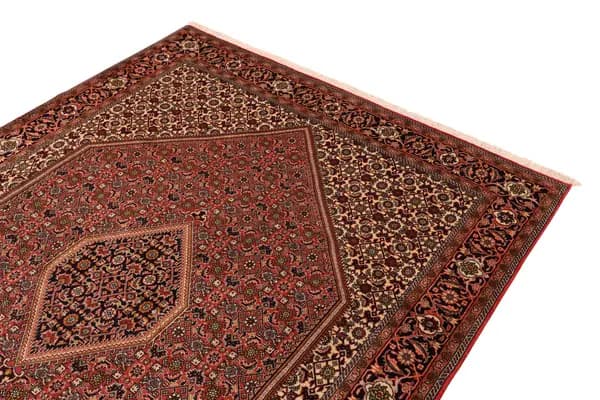
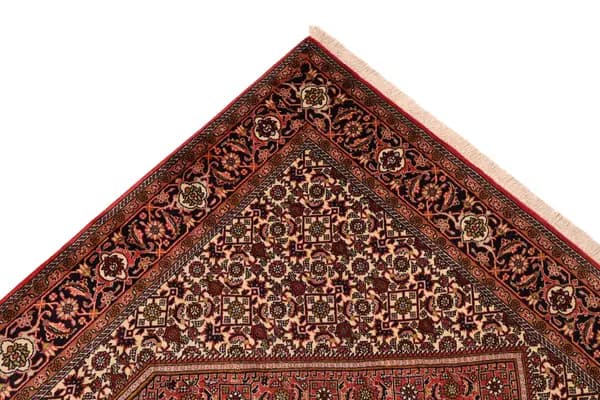
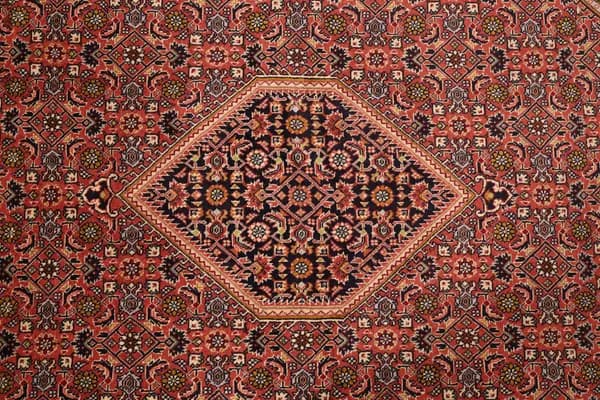
The first impression is a brick-red medallion held quietly on an ivory ground, the corners answering it in matching cream. Look closer and the medallion opens into layers: a large octagonal form filled with the fish-and-rosette lattice known as Mahi, and at its very centre a second, smaller medallion in navy diamond lattice, a medallion within a medallion. The drawing is exact, each point of the octagon meeting its opposite, the spandrels balanced against the border rather than fighting it. That border itself runs broad and navy, dense with vinework and palmettes, a settled frame around a field that could otherwise feel too open.
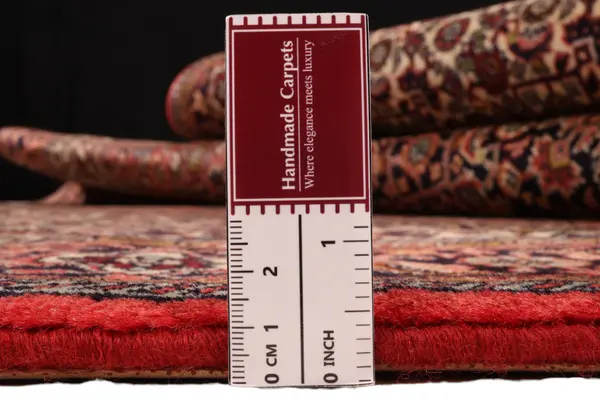
That precision is not accidental. At 321,000 to 380,000 knots per square metre, this is among the tightest knotting in the whole Persian tradition, and it is that density which lets the lattice hold such crisp, unblurred edges rather than the soft drift of a looser weave. The pile itself is hand-spun wool, taken up to 15 millimetres, giving the surface real substance underfoot without dulling the sharpness of the pattern. Bijars of this construction are famously too compact to fold, only ever rolled, which tells you plainly what kind of density is packed into them.
A rug this size and this formal in its colours belongs under a dining table for four to six, or anchoring a seating group in a living room with darker wood furniture nearby to hold its own against. The ivory ground lifts a room with limited daylight, while the red and navy keep it grounded rather than bright. Underfoot it is dense and firm, built for a room that gets used every day rather than admired from the doorway, and the wool takes a soft, even sheen as the light moves across the medallion through the afternoon.
More on Bidjar rugs: origin, making and how to recognise a genuine piece
Superior craftsmanship
At 234 × 169 cm (3.95 m²) this is a medium rug. It works in front of a sofa, in front of a bed or in a study. It is too small for a dining table — there you want about 80 cm of clearance so a chair does not tip over the edge when pushed back.
Yes, knotted by hand — knot by knot on a loom, not machine-made. The density is 321,000 to 380,000 knots per square metre; across 3.95 m² that is roughly 1.3 to 1.5 million individual knots, every one of them tied by hand.
Hand-spun wool still carries its own lanolin, which keeps liquid sitting on the surface for a moment: blot quickly, with clear water and a light cloth, working inwards and without rubbing. Otherwise regular vacuuming along the pile is enough. Turn the rug once or twice a year so light and footfall reach it evenly.
We are in the Hamburg Speicherstadt. Come and see this rug in daylight, or write to us — a person answers.
Certificate included verifying origin, materials, and craftsmanship.
Ref: 595581