Exclusive
Bidjar | Exclusivewith silk
242 × 82 cm
4.500 €







1.082 €
Incl. VAT
In Stock · Ready to Ship
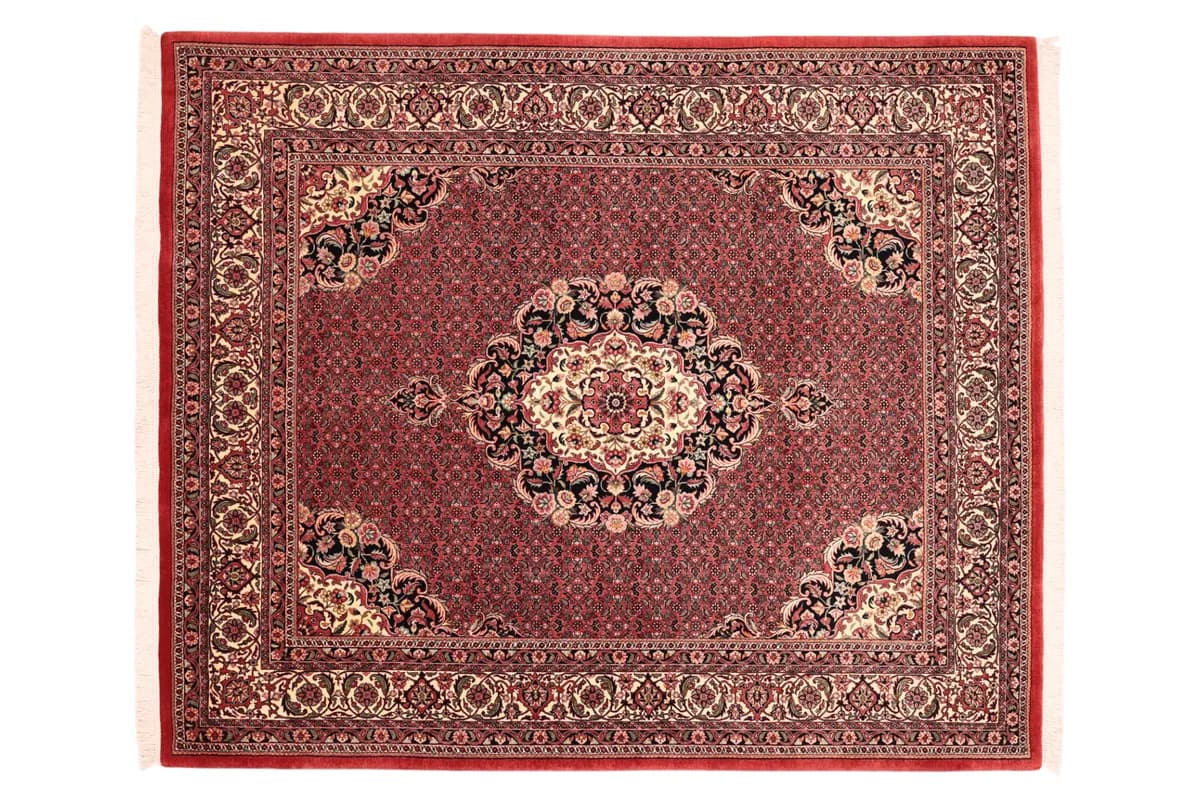
A Bidjar, also written Bijar, from the Kurdish regions of western Iran, 181 x 114 cm (5'11" x 3'9"). The type is known through Persia and beyond as one of the "iron rugs" — woven so densely that a Bidjar is never folded, only rolled, and holds its shape and edge for decades of use. This piece carries that reputation into a design of unusual clarity.
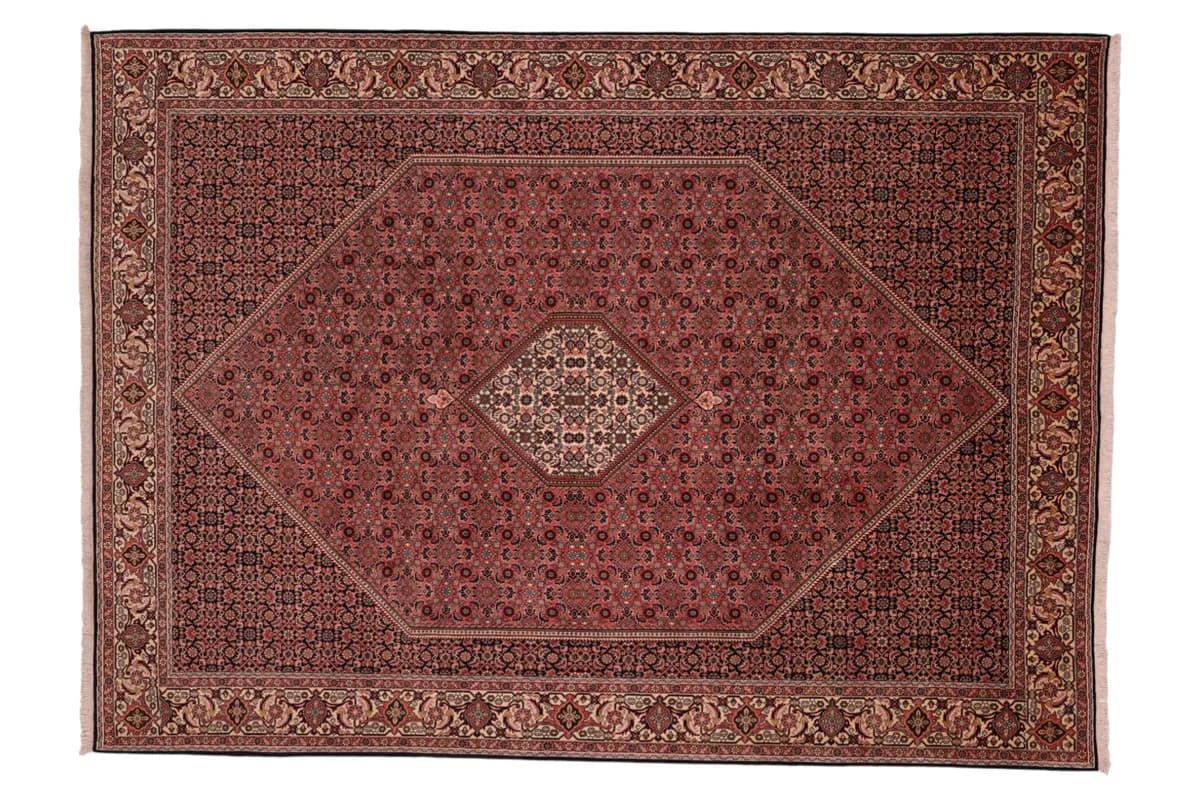
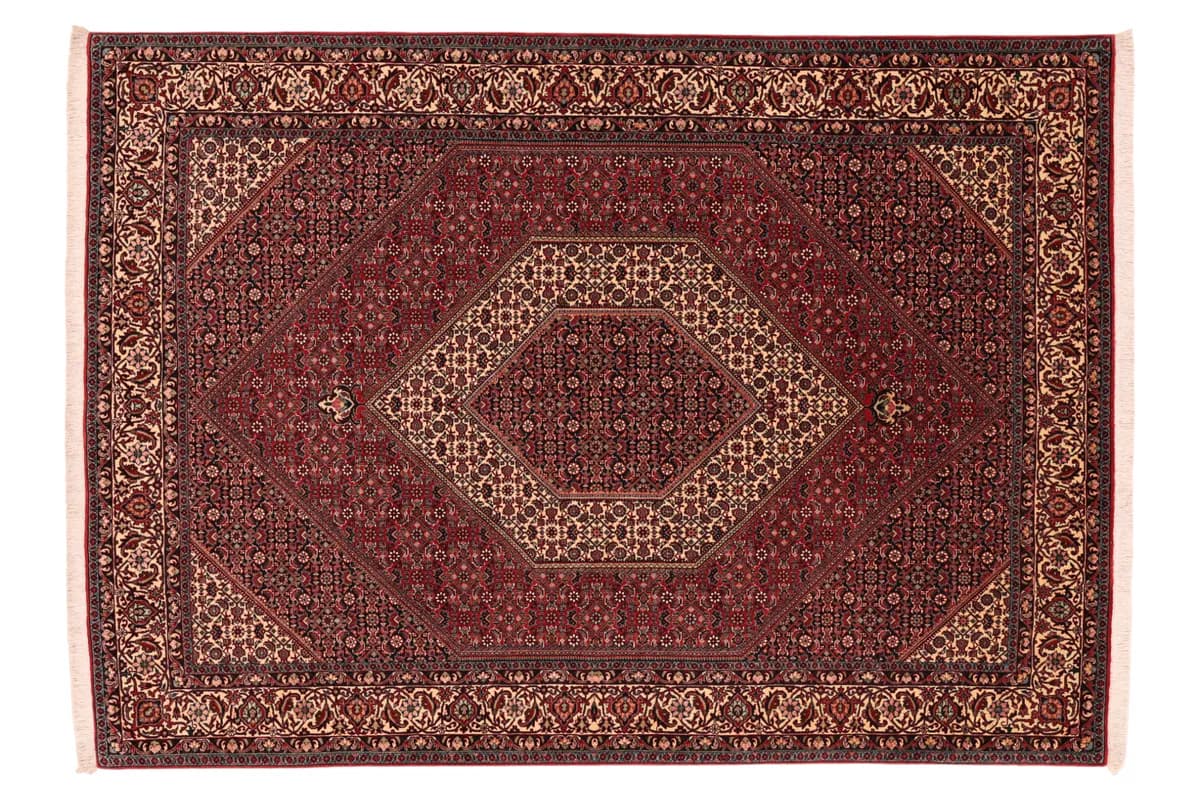
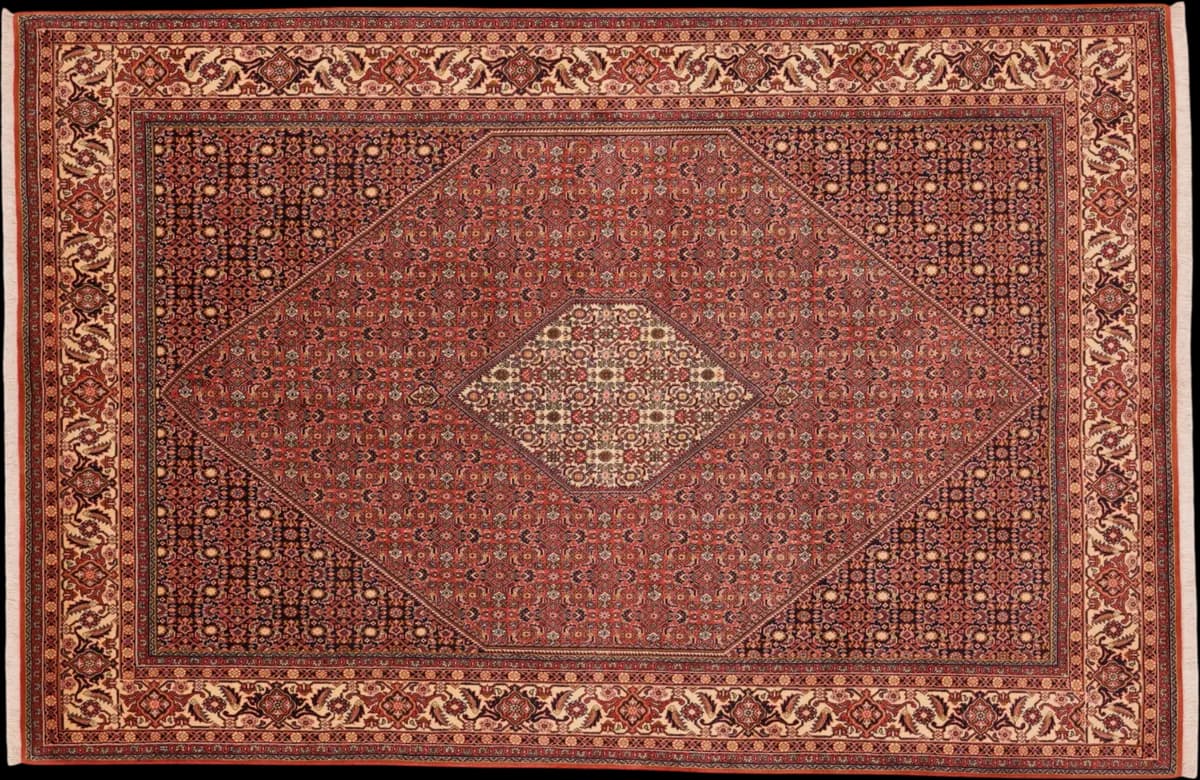
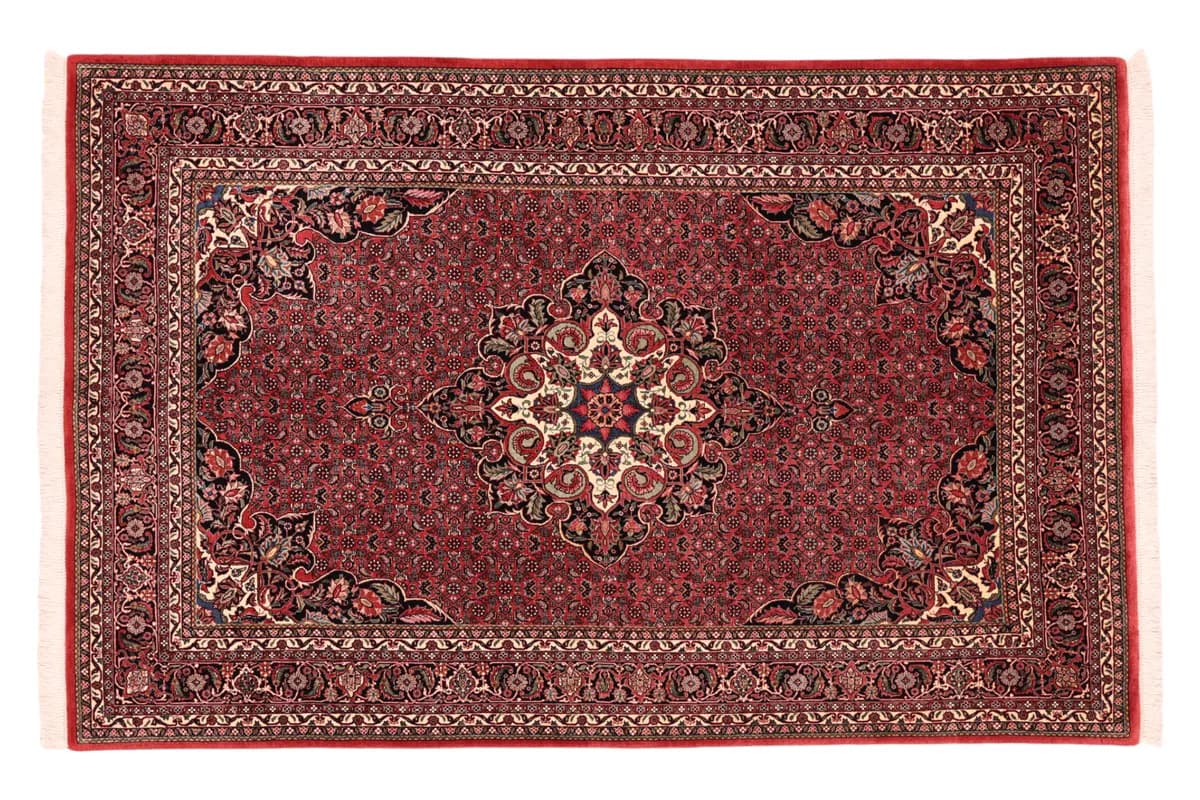
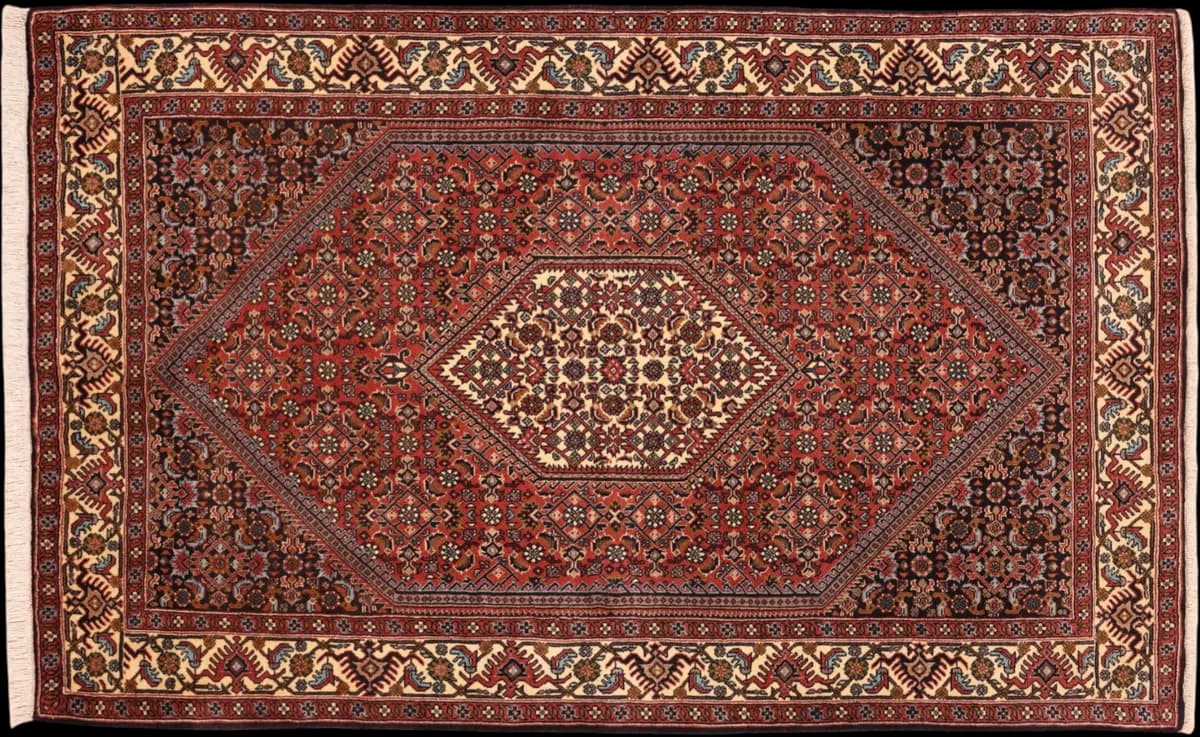
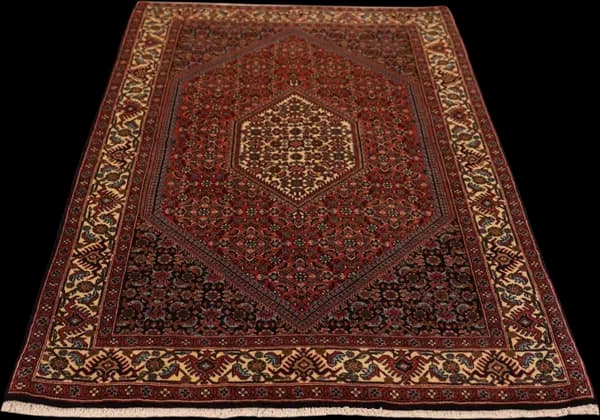
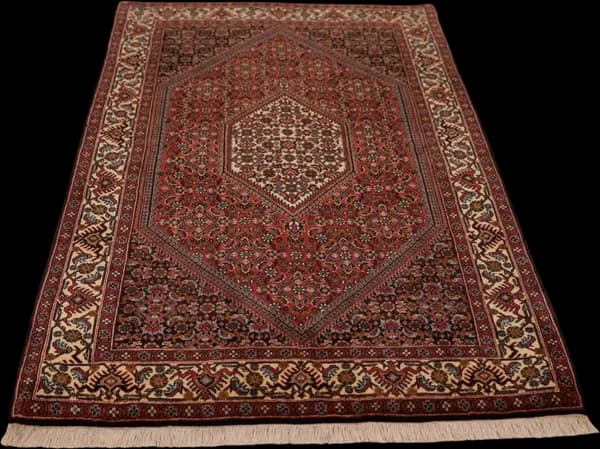
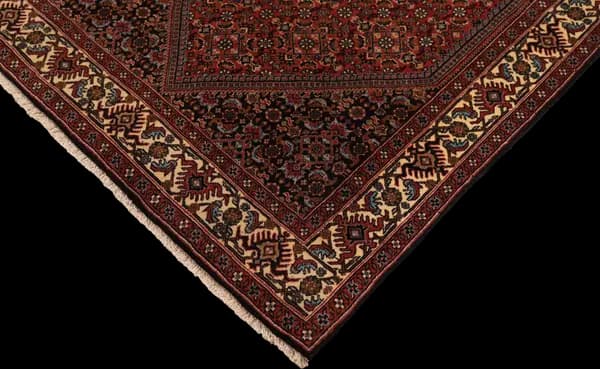
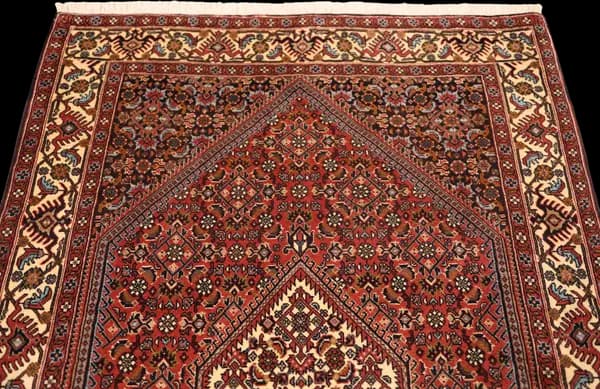
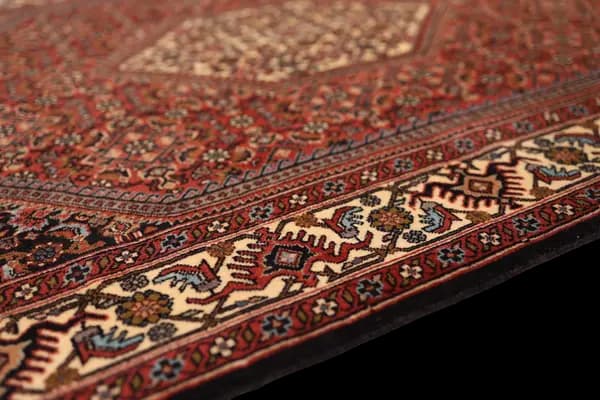
A deep brick red field carries a fine, dense lattice of diamonds in the Mahi style, and resting on it is a medallion built in layers: a red diamond holding a smaller ivory hexagon, which in turn holds a further small diamond at its centre, each ring set inside the last. Dark navy spandrels anchor the four corners, and the whole field is held by a wide ivory border, patterned with serrated leaf-and-diamond motifs, that reads sharp and pale against the red beneath it.
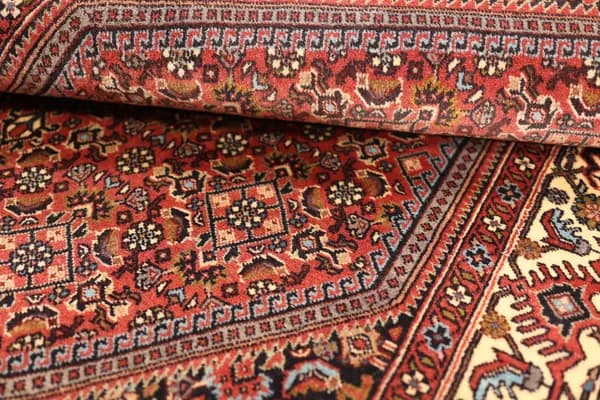
This is a tribal weaving, knotted from memory on a portable loom rather than drawn out on a cartoon in a workshop, and its irregularities are simply the record of the hand that made it. What is unusual here is how crisply that hand has drawn the telescoping medallion, and the density of the knotting is why. At 251,000 to 320,000 knots per square metre, on a cotton warp with a hand-spun wool pile kept to 15 mm, there is simply more wool packed into every centimetre than most rugs allow, and it is this that lets the ivory lines stay sharp rather than blur into the red around them.
At this size the rug suits a bedroom, laid beside the bed, or a study, where its weight of colour has room to sit without competing with much else. The brick red holds its own against dark wood and warms a pale floor considerably, while the ivory medallion keeps the whole thing from reading as too heavy. Underfoot the pile is tight, firm and matte, dense enough for daily use rather than a piece to tread around, and in low afternoon light the ivory core of the medallion is the first thing that catches.
More on Bidjar rugs: origin, making and how to recognise a genuine piece
Fine quality weave
At 181 × 114 cm (2.06 m²) this is a small rug. It works beside a bed, in a reading corner, in front of a fireplace or as a mat by a door. It does not furnish a room; it makes a point in one.
Yes, knotted by hand — knot by knot on a loom, not machine-made. The density is 251,000 to 320,000 knots per square metre; across 2.06 m² that is roughly 520,000 to 660,000 individual knots, every one of them tied by hand.
Hand-spun wool still carries its own lanolin, which keeps liquid sitting on the surface for a moment: blot quickly, with clear water and a light cloth, working inwards and without rubbing. Otherwise regular vacuuming along the pile is enough. Turn the rug once or twice a year so light and footfall reach it evenly.
We are in the Hamburg Speicherstadt. Come and see this rug in daylight, or write to us — a person answers.
Certificate included verifying origin, materials, and craftsmanship.
Ref: 581219