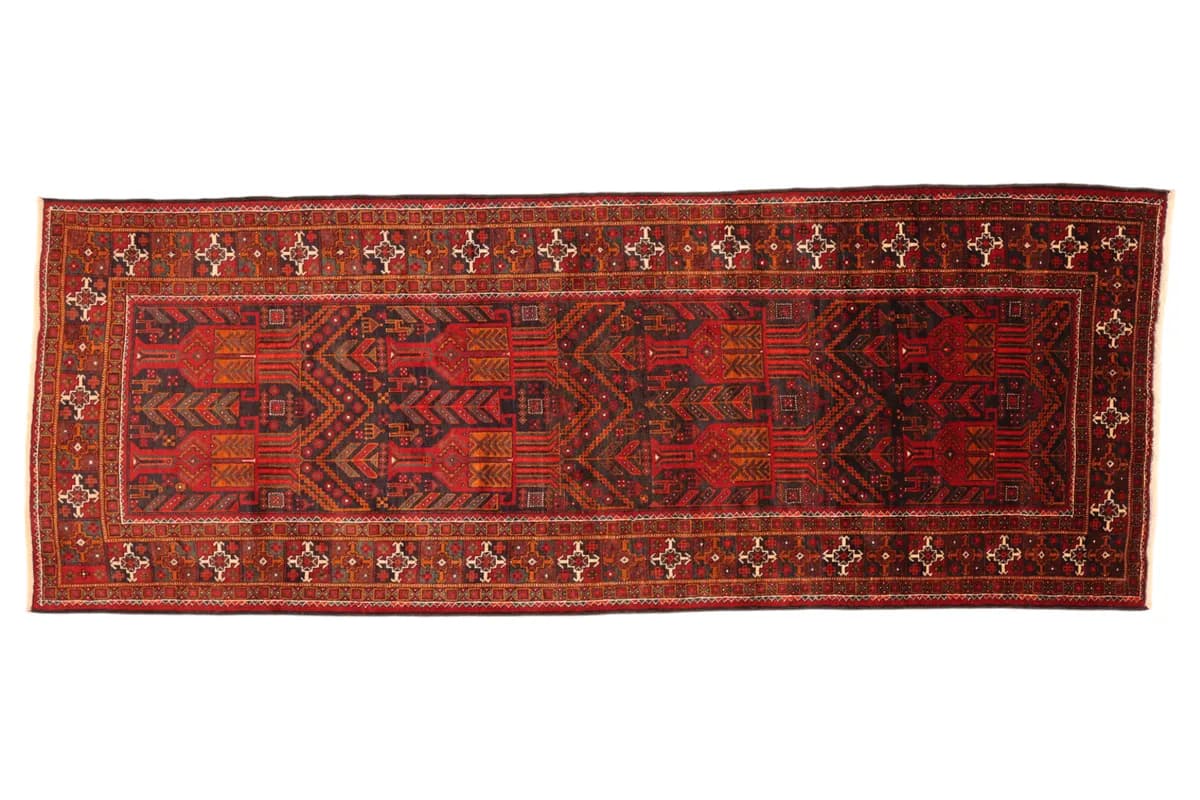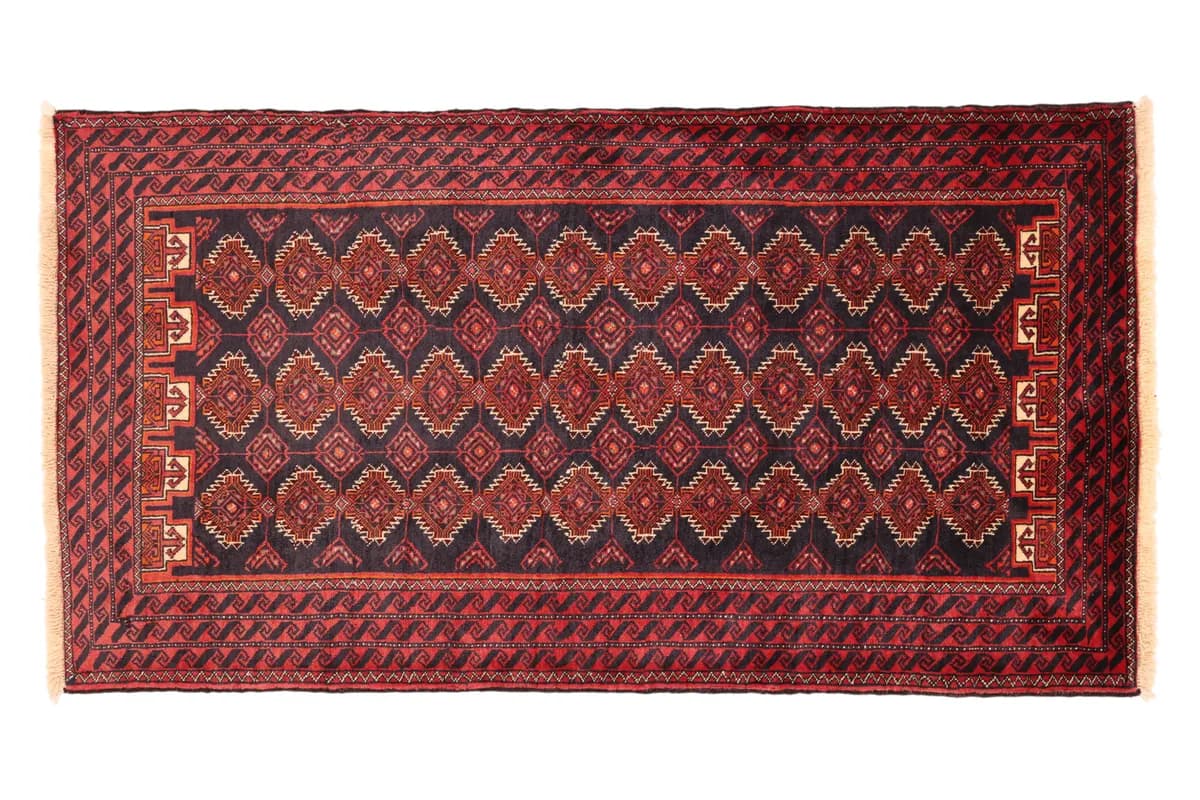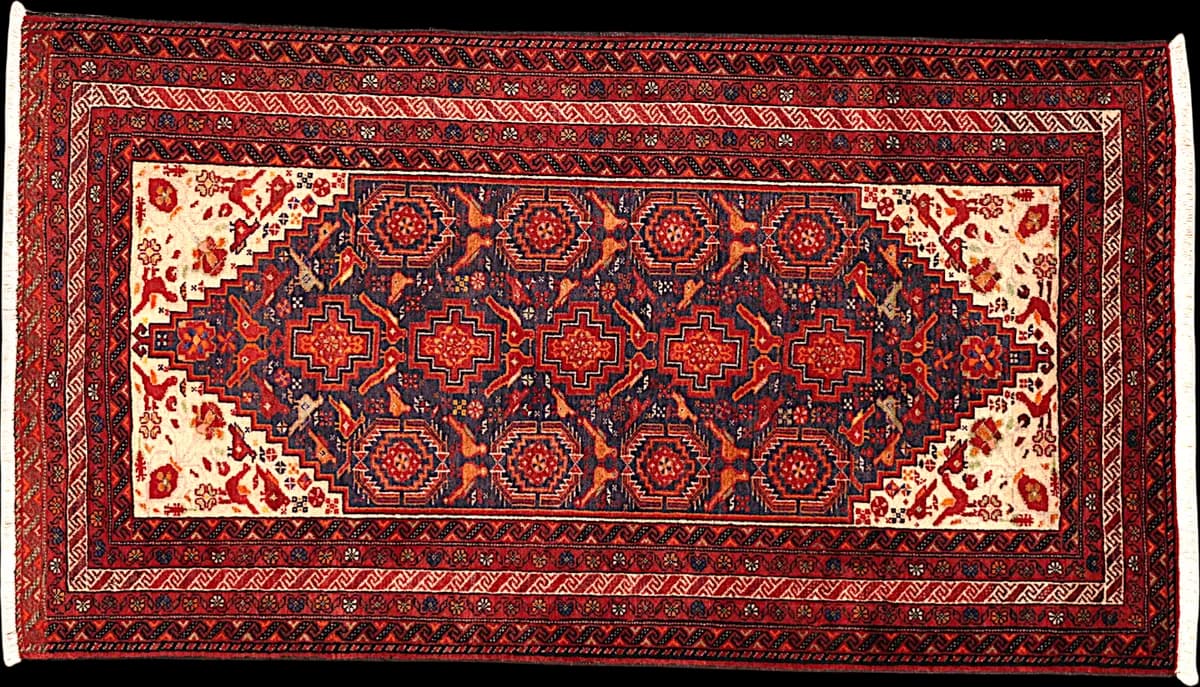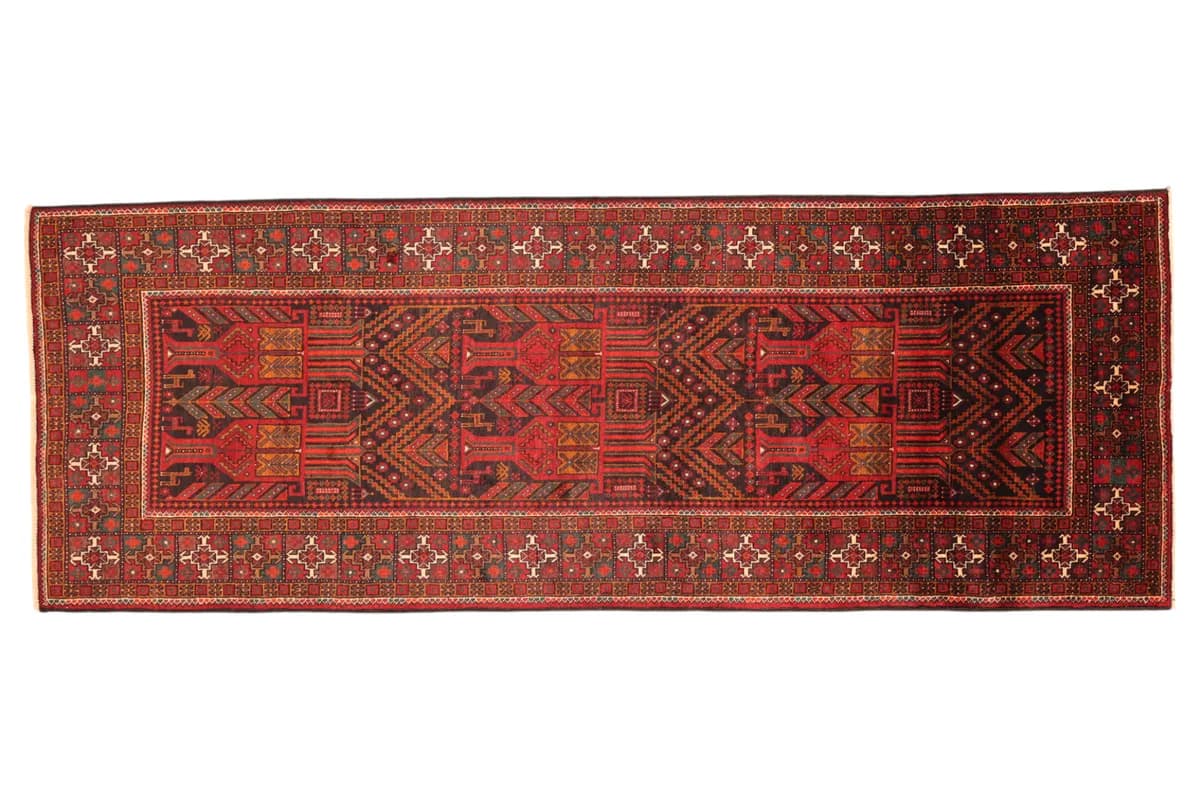
Belutsch
297 × 107 cm
1.293 €
493 €
Incl. VAT
In Stock · Ready to Ship
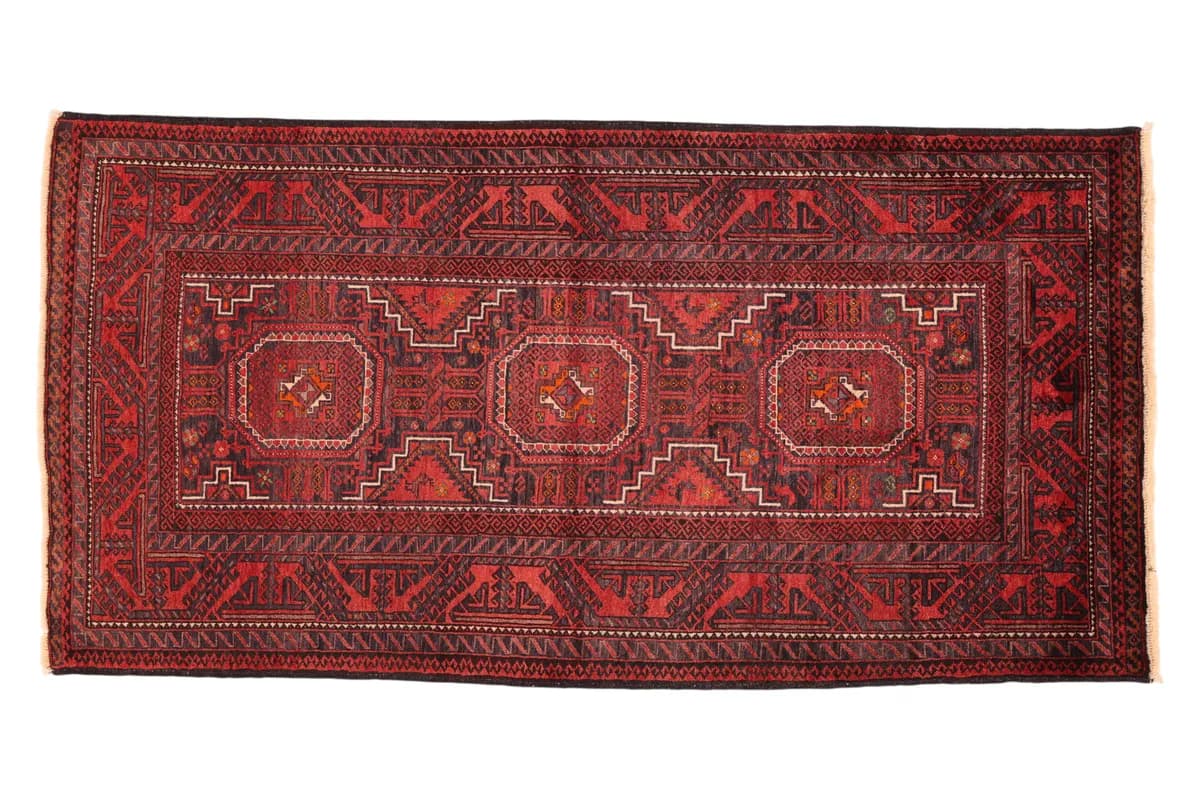
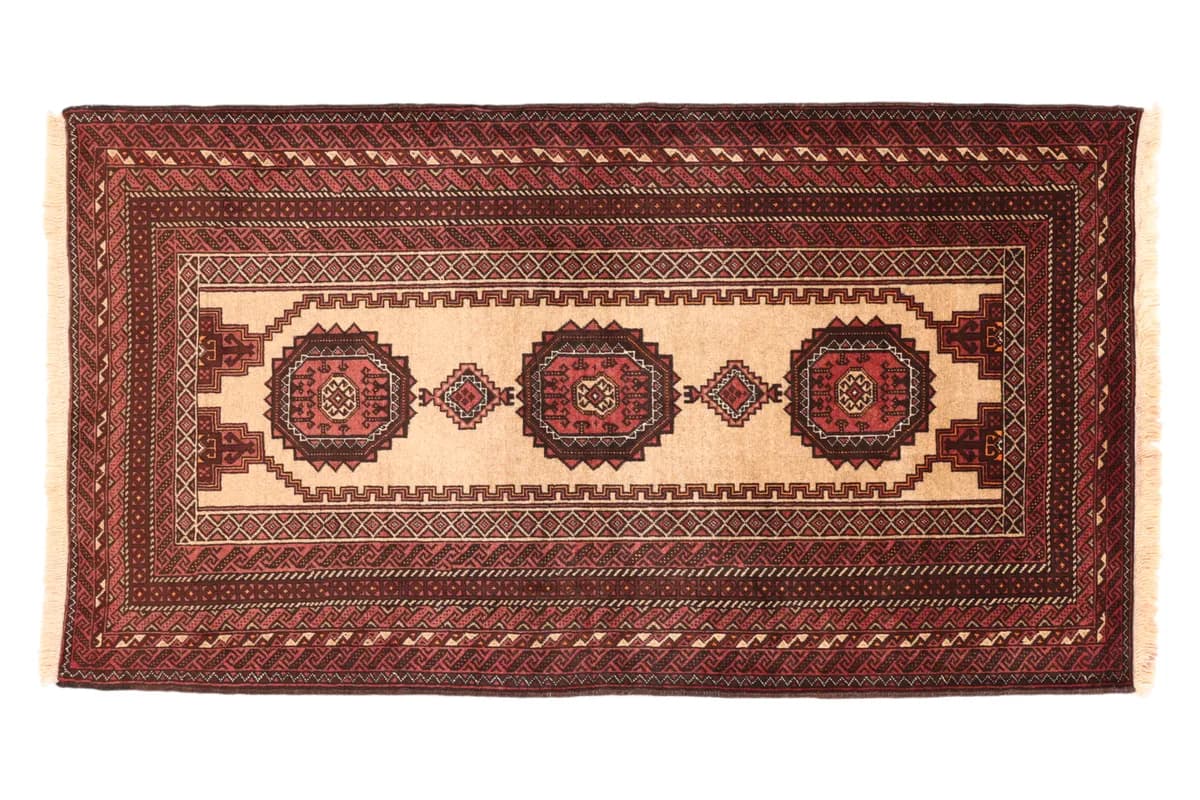
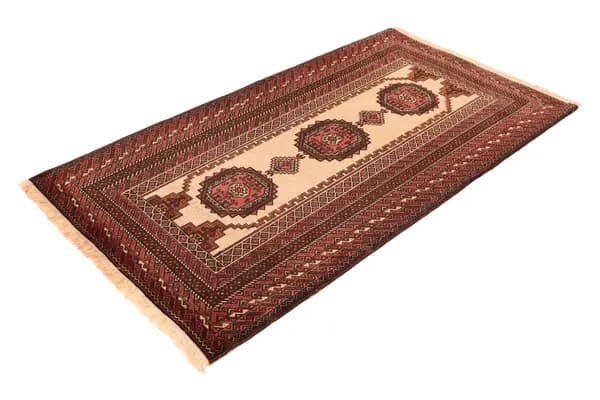
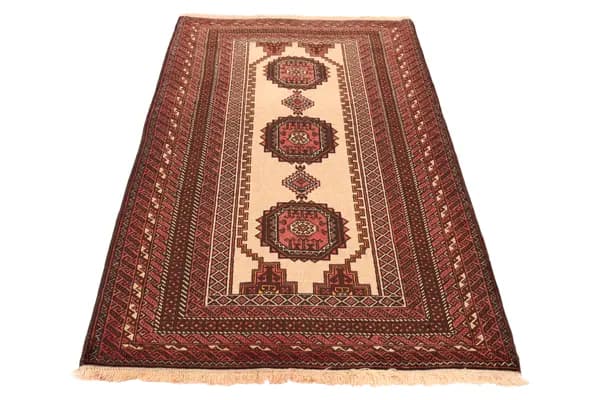
This is a Baluch rug, a tribal weaving from the borderlands of southeastern Iran, measuring 189 x 105 cm (6'2" x 3'5"). Baluch weavers are known for deep, saturated colour and for prayer-niche compositions passed down through generations, the field usually carrying the dense reds and indigo the tribe is famous for. Here the ground is ivory, a paler and rarer choice for the type, and it changes everything that sits on it.
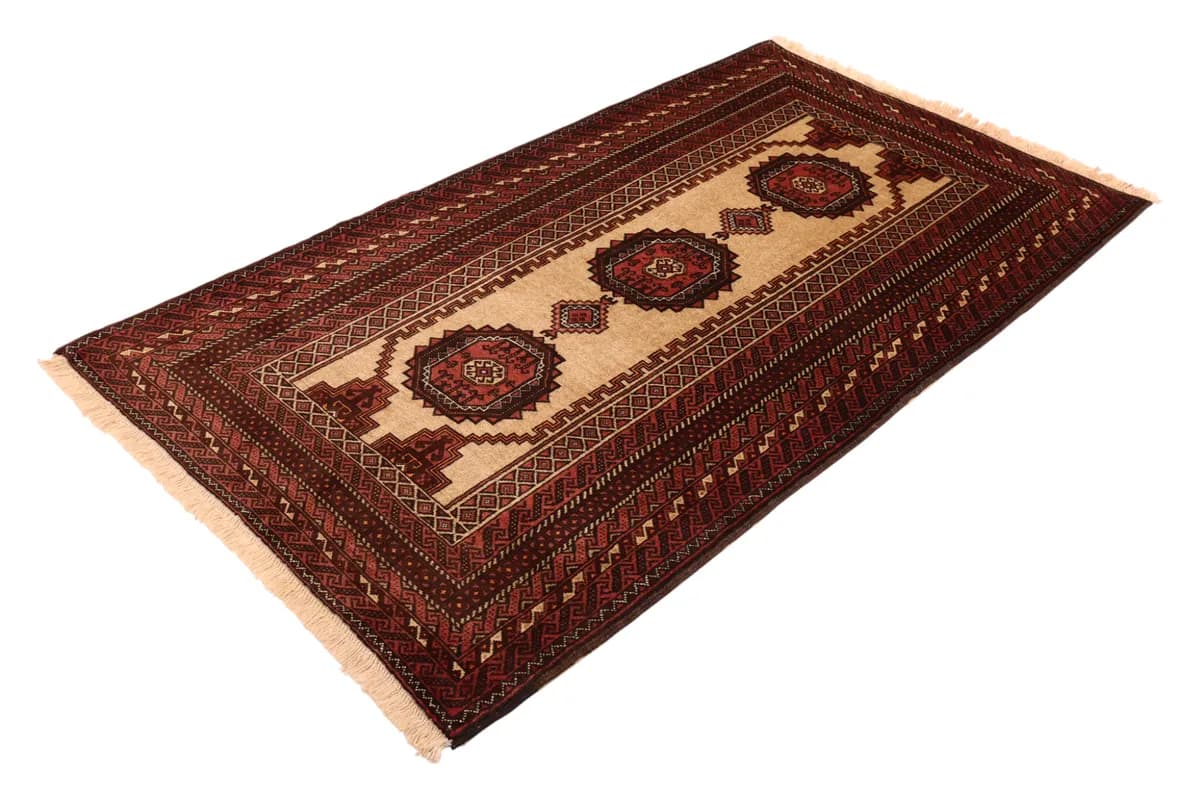
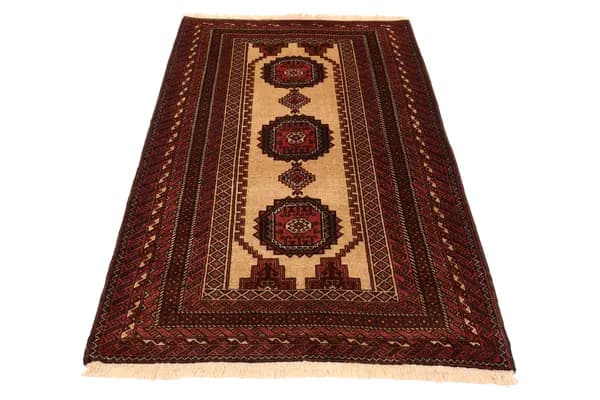
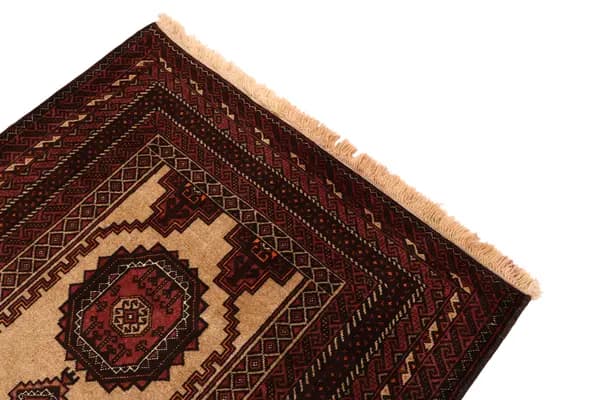
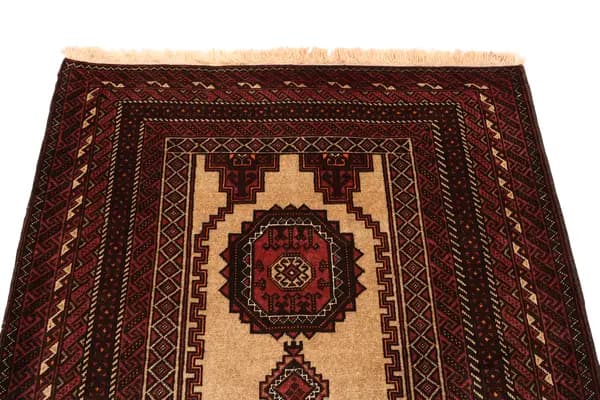
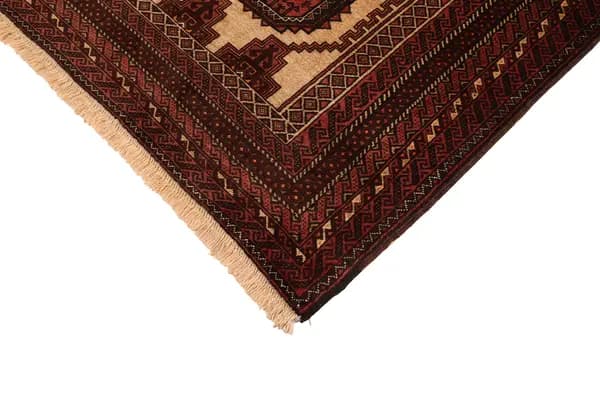
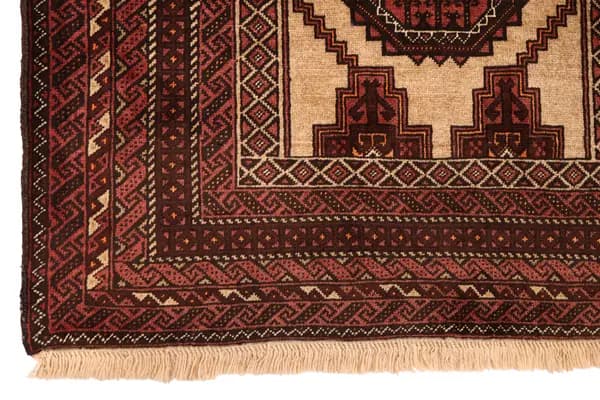
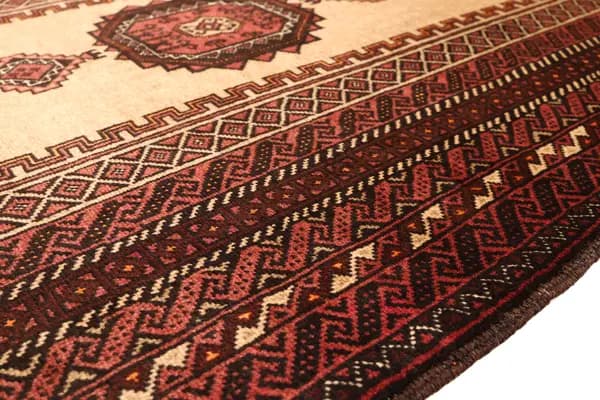
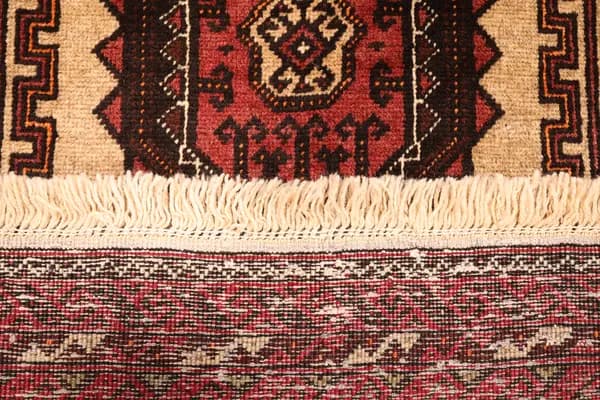
Three rust-red octagonal medallions run in a row across that ivory field, each one bold and hooked at the corners, with small diamond-shaped guls set between them like punctuation. The sequence has a rhythm to it rather than a plain repeat, the eye moving from medallion to gul to medallion. Around this, a wide stack of dark maroon and near-black border bands closes in on each side, patterned with zigzags and diamonds and taking up close to a third of the rug's width. Against the pale centre this border reads almost architectural, and it is what holds the composition together.
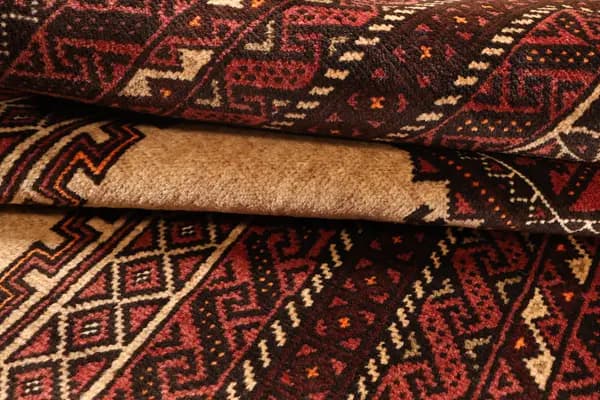
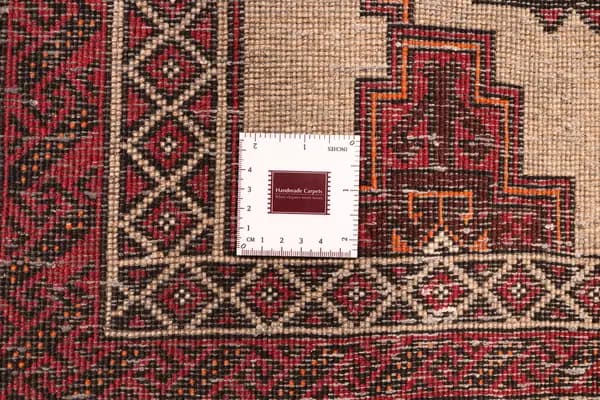
The wool is hand-spun rather than machine-spun, which is why the surface has that slightly ribbed, uneven texture instead of a smooth, uniform one — a mark of the hand rather than a flaw in it. Knotted at 128,000 to 160,000 knots per square metre on a cotton warp, the weave is tight enough to hold the medallions' sharp outlines crisply, without the extreme fineness that would have flattened the wool's natural texture. It was knotted from memory rather than from a drawn plan, which is why the medallions and guls, though clearly patterned, are never quite identical to one another.
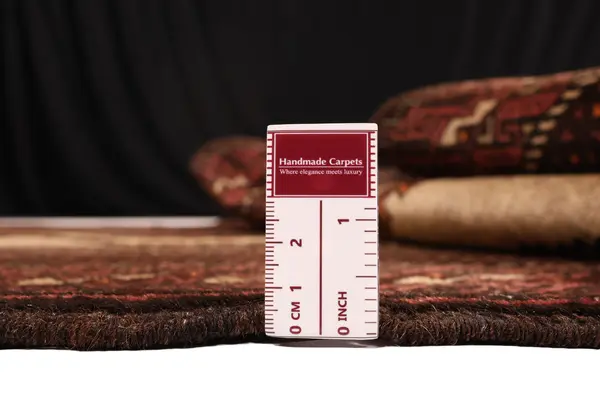
At around 190 by 105 centimetres, this is a rug for a hallway, a landing, or beside a bed, somewhere it is seen daily rather than crossed at a distance. The ivory ground lifts a dim hallway noticeably, and the rust medallions keep it from ever looking pale or washed out. Underfoot the pile is dense and flat rather than soft and deep, well suited to a spot with regular footfall. Morning light along a landing will catch the medallions one after another, and that quiet rhythm is the thing you keep returning to.
More on Baluch rugs: origin, making and how to recognise a genuine piece
Traditional weave
At 189 × 105 cm (1.98 m²) this is a small rug. It works beside a bed, in a reading corner, in front of a fireplace or as a mat by a door. It does not furnish a room; it makes a point in one.
Yes, knotted by hand — knot by knot on a loom, not machine-made. The density is 128,000 to 160,000 knots per square metre; across 1.98 m² that is roughly 250,000 to 320,000 individual knots, every one of them tied by hand.
Hand-spun wool still carries its own lanolin, which keeps liquid sitting on the surface for a moment: blot quickly, with clear water and a light cloth, working inwards and without rubbing. Otherwise regular vacuuming along the pile is enough. Turn the rug once or twice a year so light and footfall reach it evenly.
We are in the Hamburg Speicherstadt. Come and see this rug in daylight, or write to us — a person answers.
Certificate included verifying origin, materials, and craftsmanship.
Ref: 658848