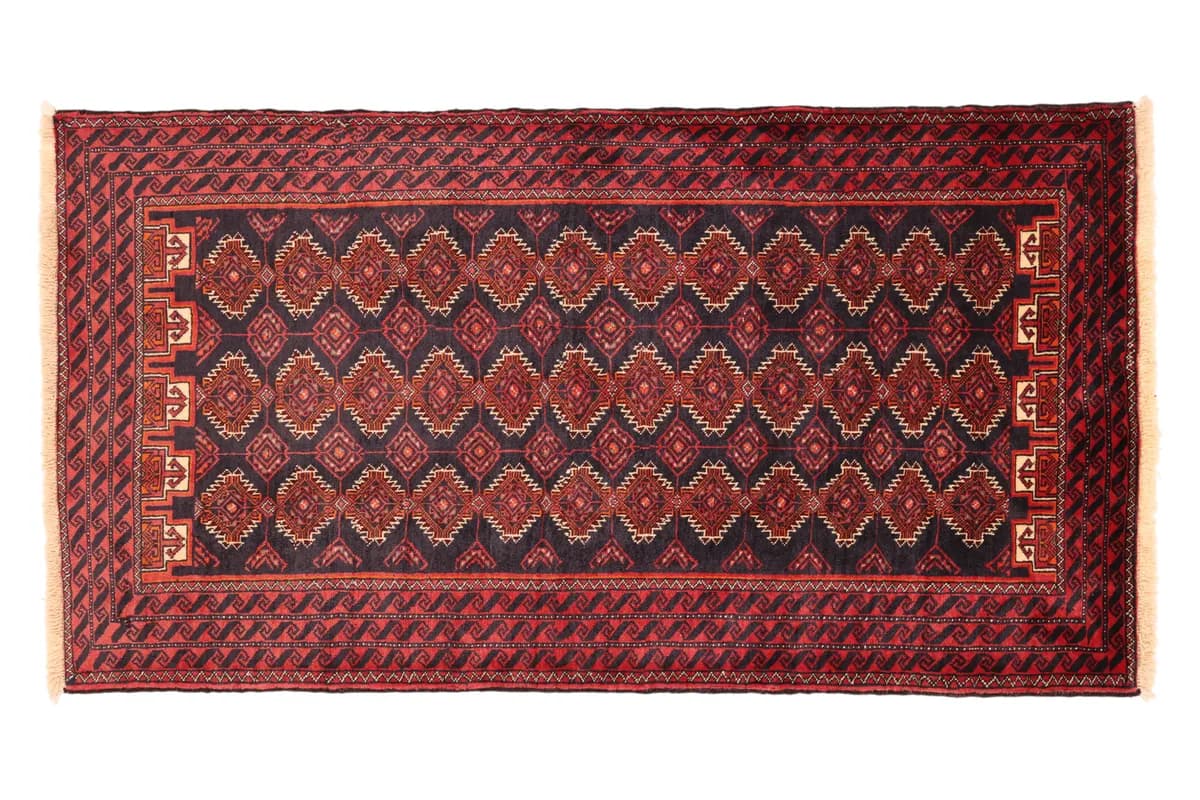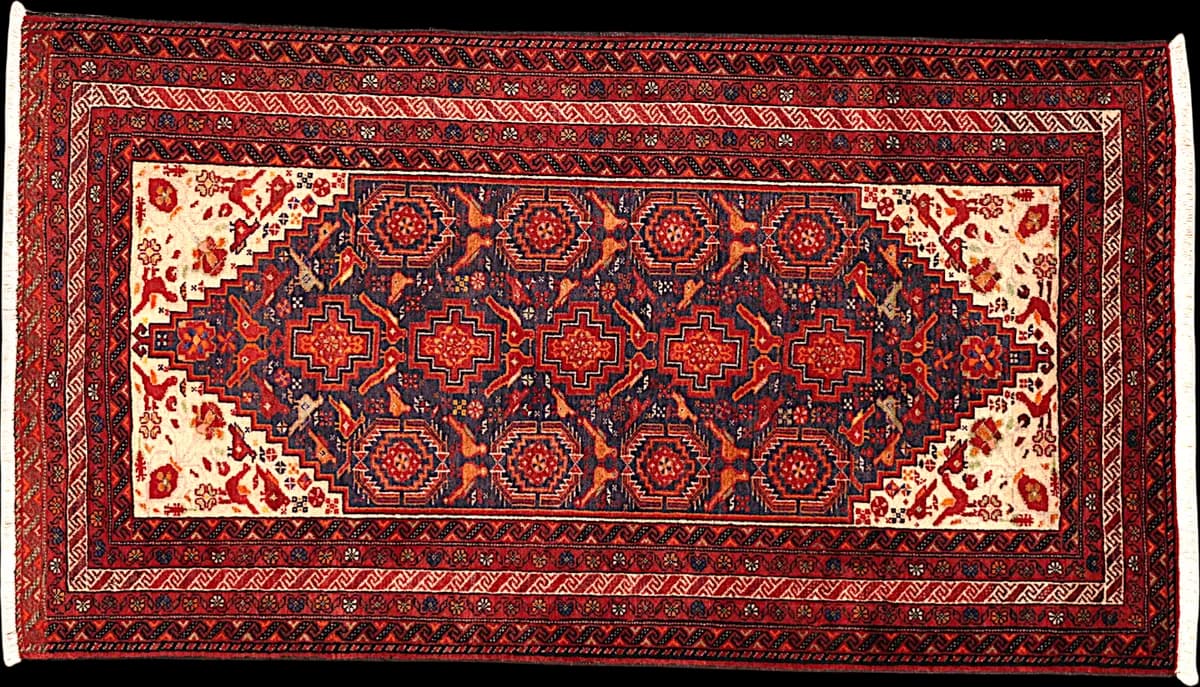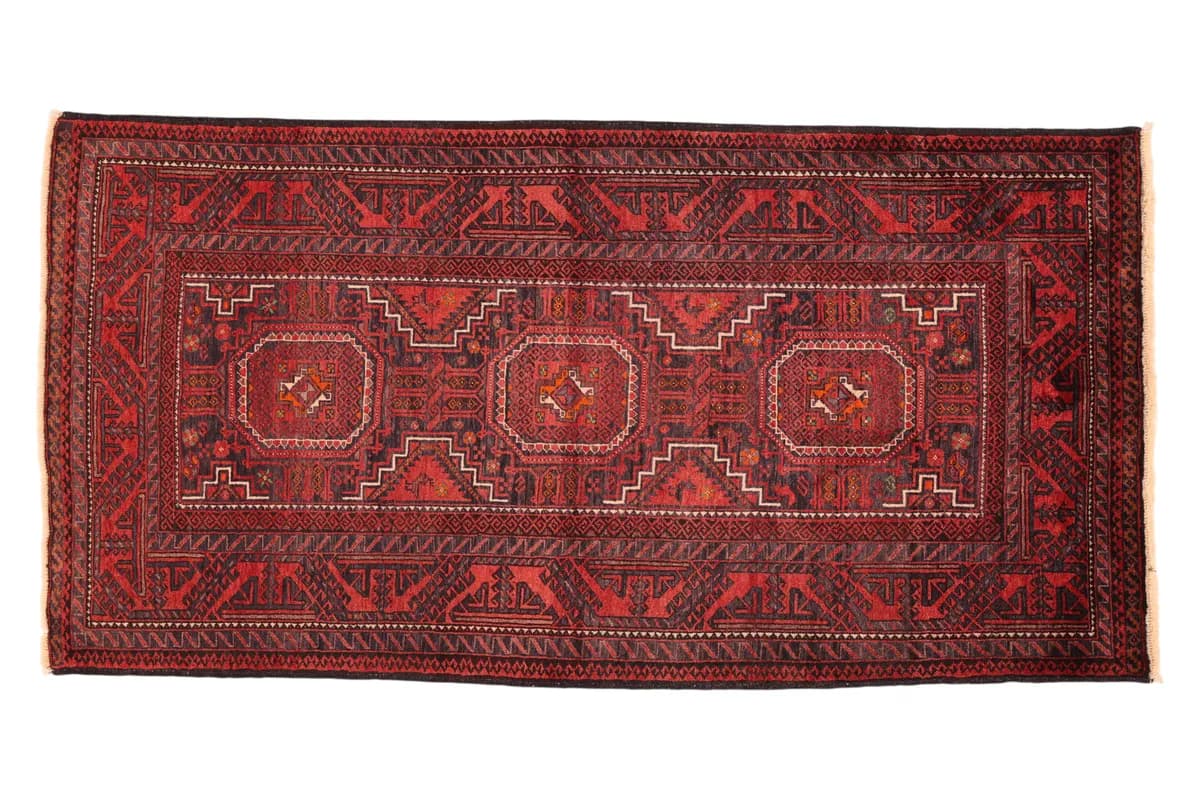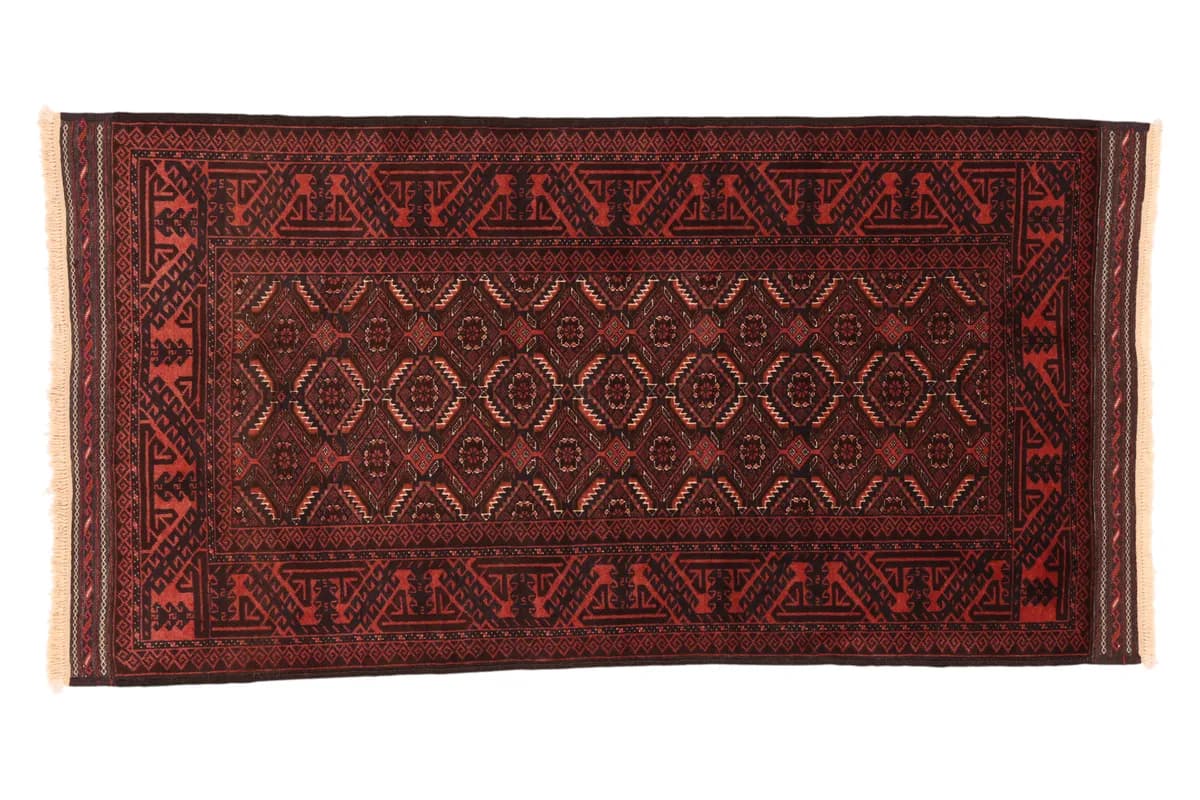
Belutsch
293 × 108 cm
1.243 €






1.293 €
Incl. VAT
In Stock · Ready to Ship
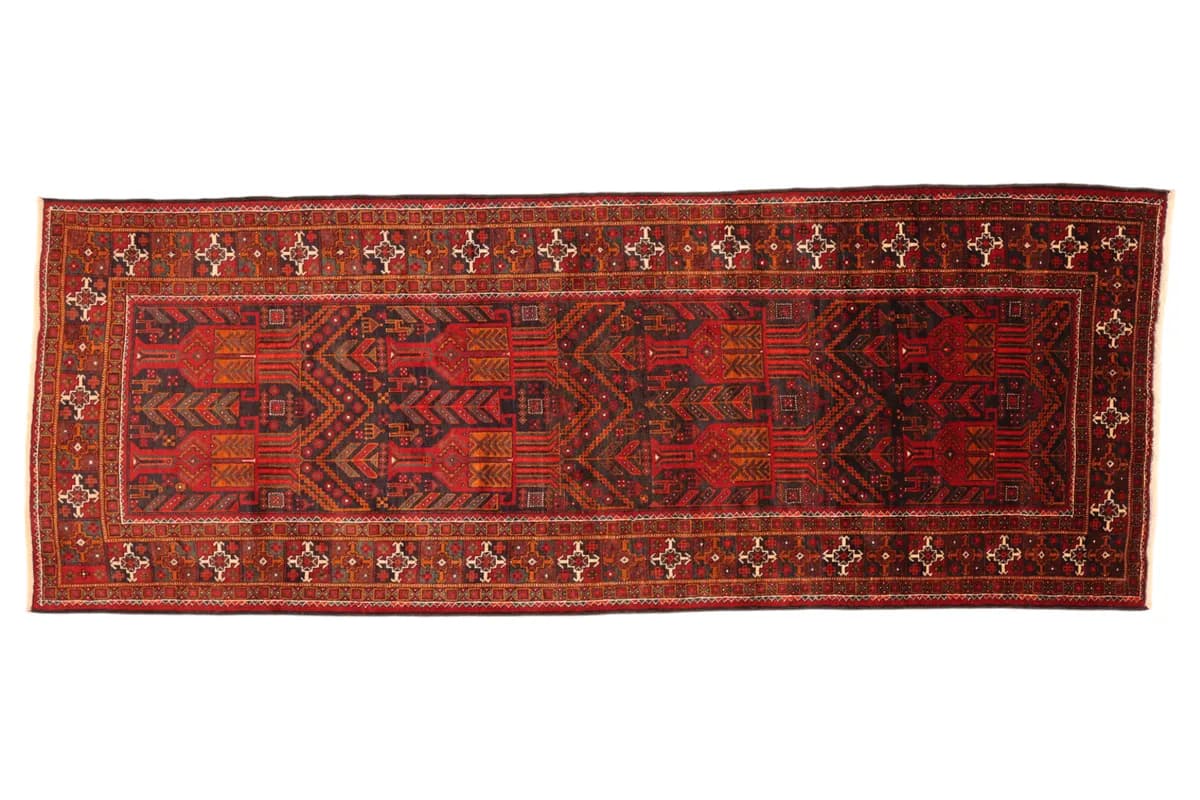
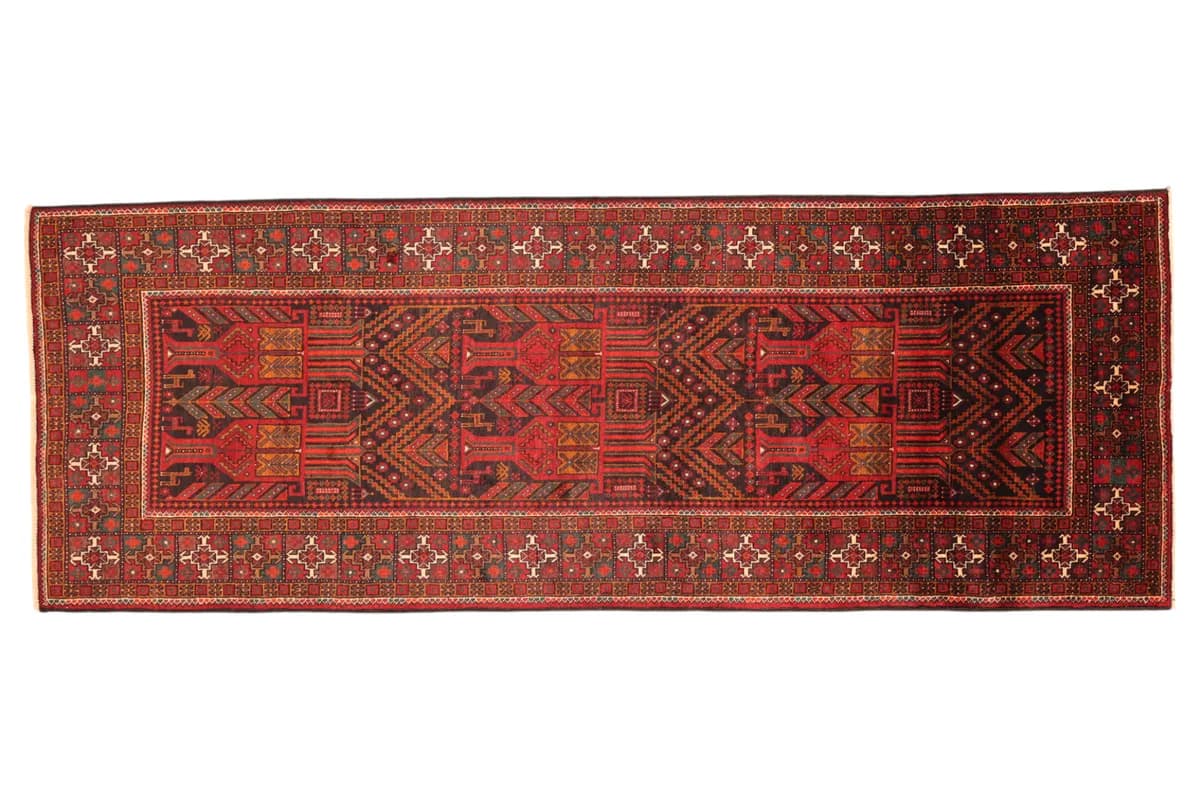
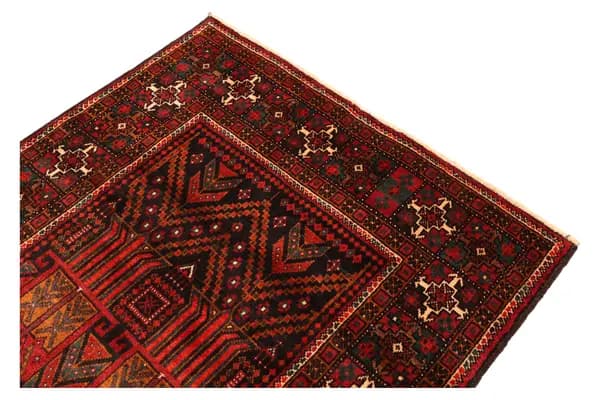
This is a Baluch runner, 297 x 107 cm (9'9" x 3'6"), from the tribal weaving grounds of southeastern Iran, an area whose rugs are known for deep, earthy colour and bold geometric drawing carried from memory rather than a paper plan. Where many Baluch pieces settle into one motif repeated end to end, this one is built as a sequence: four medallions, one after another, giving the runner a rhythm closer to a story told in steps than a pattern simply switched on.
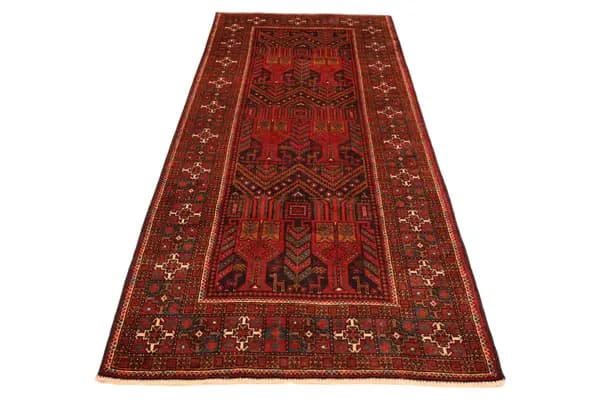
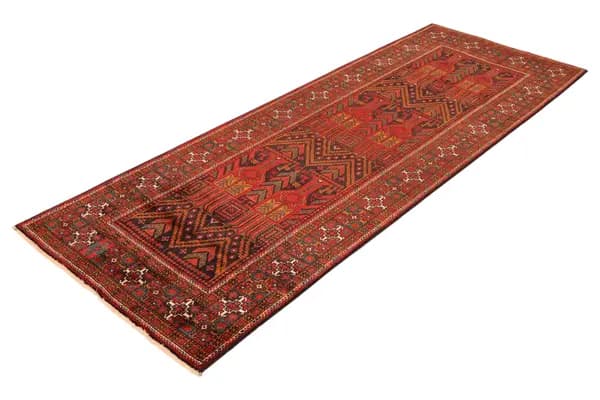
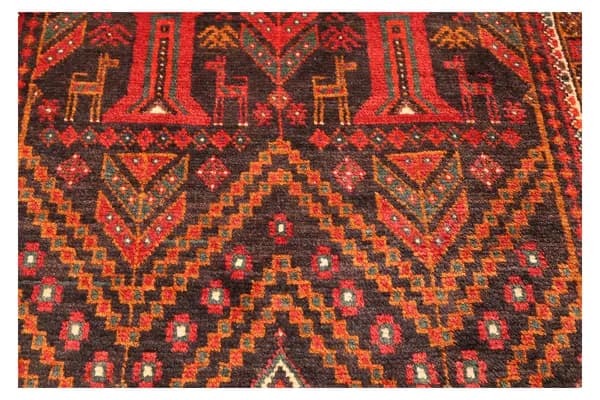
The field is a deep brick red giving way to dark brown, and across it stand four stepped, tree-like medallions, each drawn in the same angular tribal geometry but not quite matched in colour, one leaning more to rust, another to orange, a third settling into the darker brown of the ground. Between them run panels of tight zig-zag lattice, holding the eye until the next medallion arrives. A wide ivory border frames the whole runner, set with small cross-shaped medallions in rust and teal, and against the dark field it reads almost as light spilling in from the sides.
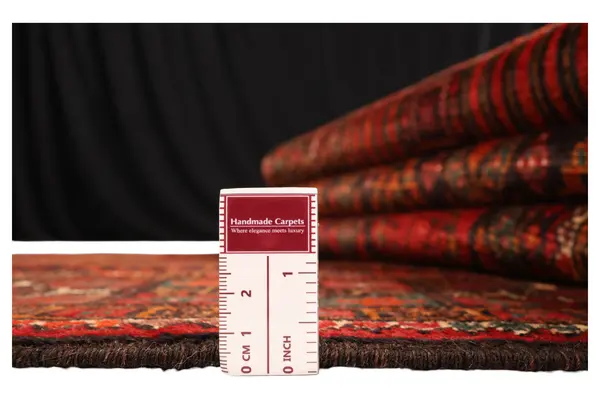
The wool is handspun, spun and knotted by a weaver working from memory on a portable loom rather than from a fixed drawing, which is why the four medallions vary as they do — not a flaw, but the visible trace of a hand repeating a form it knows well without measuring it twice. At a density of roughly 128,000 to 160,000 knots per square metre and a pile of 6 mm, the weave is close enough to hold the geometry crisply while keeping the surface soft and slightly ridged along the pattern lines, a texture particular to handspun rather than machine-spun yarn. Twenty to forty years of age sit easily on wool this densely packed.
A runner of this length belongs in a hallway or along a landing, somewhere it is seen in passing rather than all at once. The brick red and brown hold their own with no daylight to help them, warming a corridor that would otherwise feel plain, while the ivory border keeps the whole thing from disappearing into shadow. Underfoot it is dense and firm, built for a floor that gets walked on every day rather than admired from the doorway. Passing it morning and evening, the four medallions read less like a repeat and more like a sequence you keep noticing in a slightly different order.
More on Baluch rugs: origin, making and how to recognise a genuine piece
Traditional weave
At 297 × 107 cm (3.18 m²) this is a runner. It belongs in a hallway, an entrance, on a landing or lengthways beside a bed. It is too narrow for the middle of a room.
Yes, knotted by hand — knot by knot on a loom, not machine-made. The density is 128,000 to 160,000 knots per square metre; across 3.18 m² that is roughly 410,000 to 510,000 individual knots, every one of them tied by hand.
Hand-spun wool still carries its own lanolin, which keeps liquid sitting on the surface for a moment: blot quickly, with clear water and a light cloth, working inwards and without rubbing. Otherwise regular vacuuming along the pile is enough. Turn the rug once or twice a year so light and footfall reach it evenly.
We are in the Hamburg Speicherstadt. Come and see this rug in daylight, or write to us — a person answers.
Certificate included verifying origin, materials, and craftsmanship.
Ref: 659098