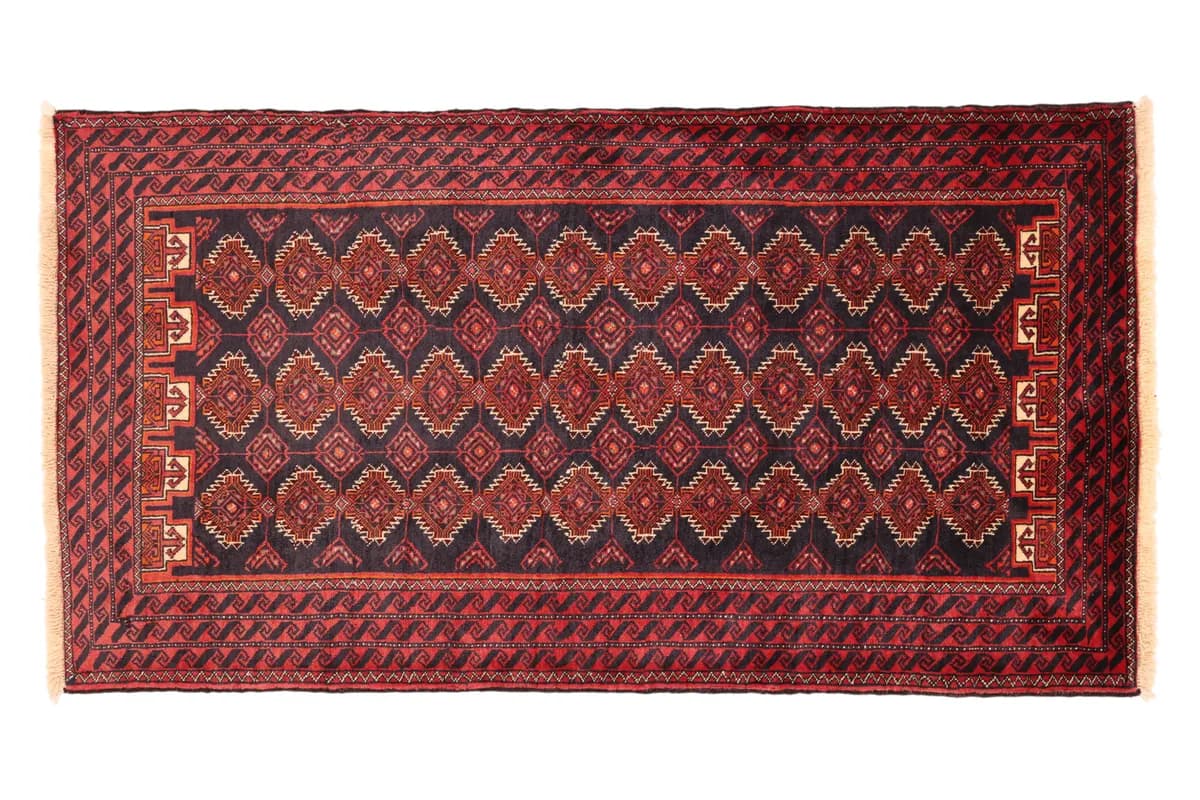
Belutsch
197 × 106 cm
520 €
1.243 €
Incl. VAT
In Stock · Ready to Ship
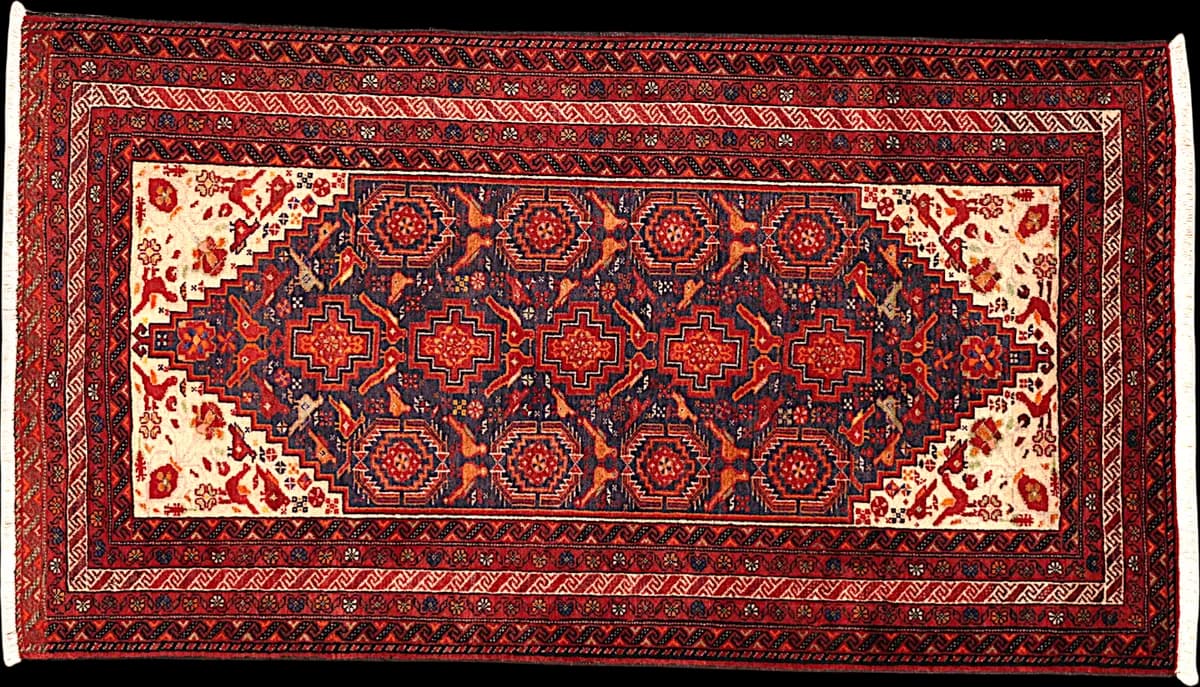
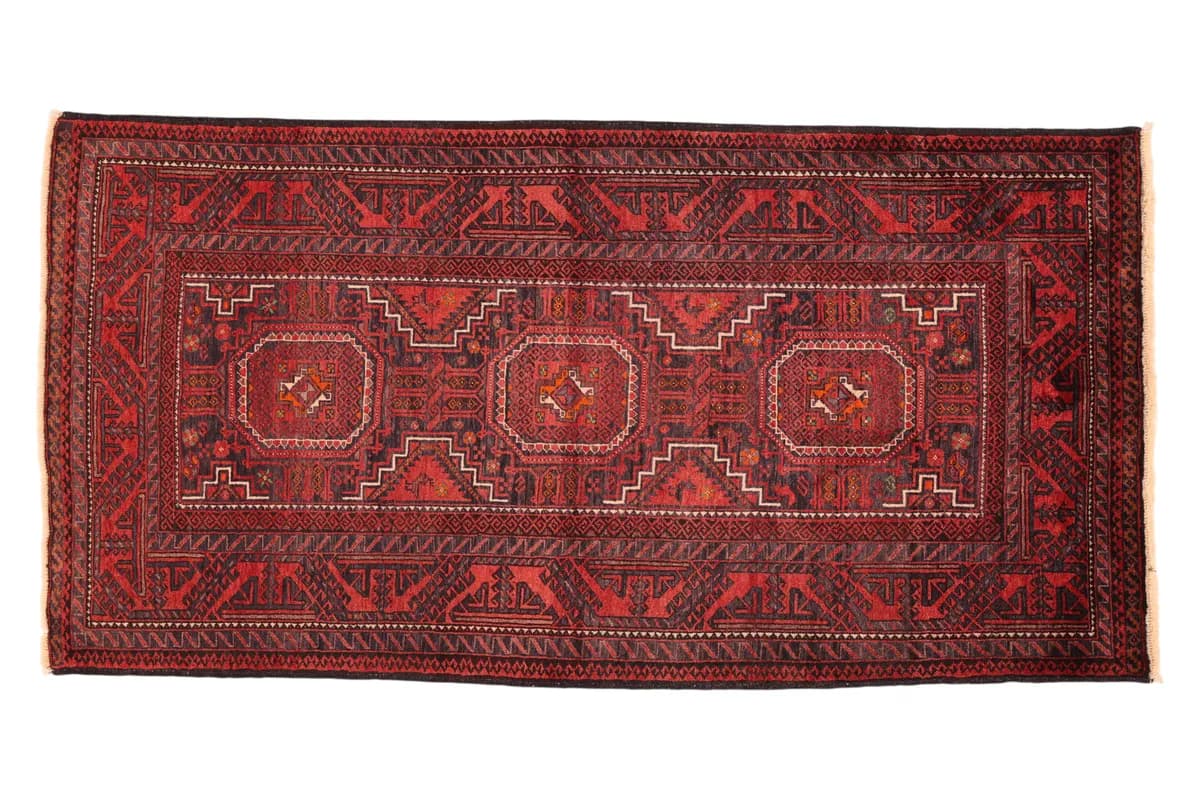
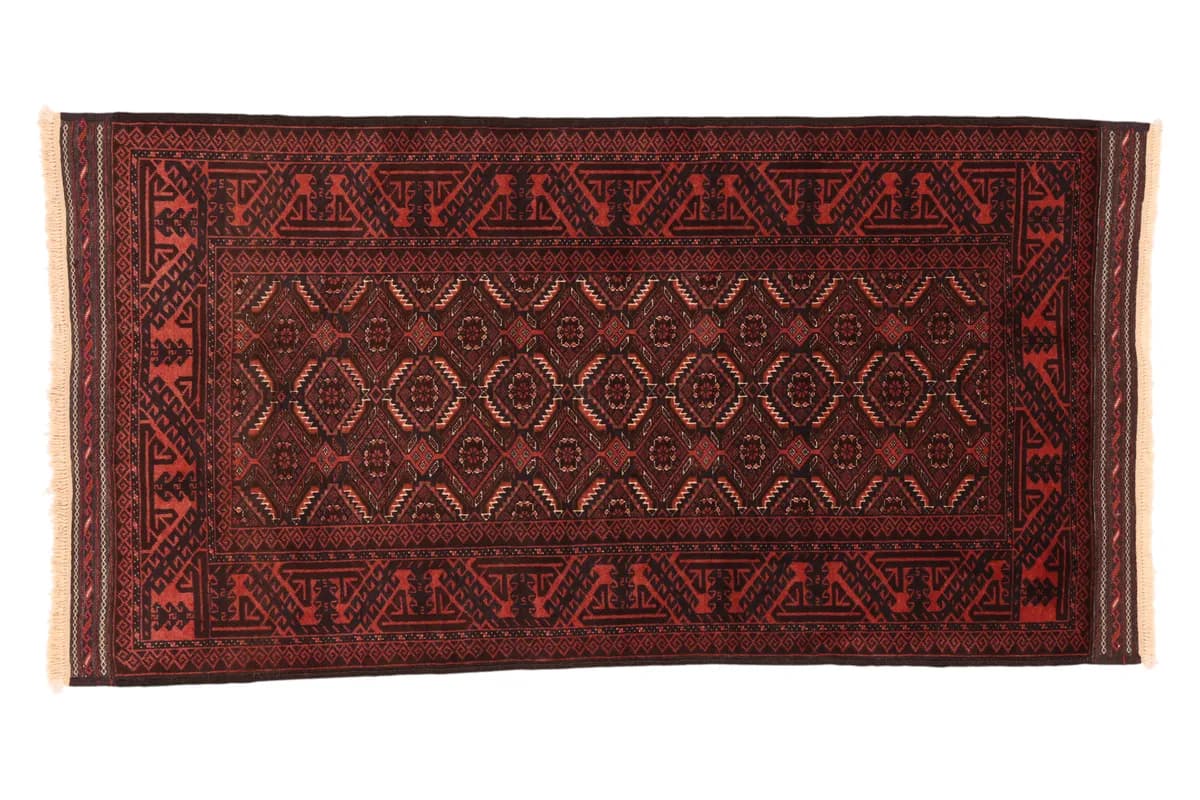
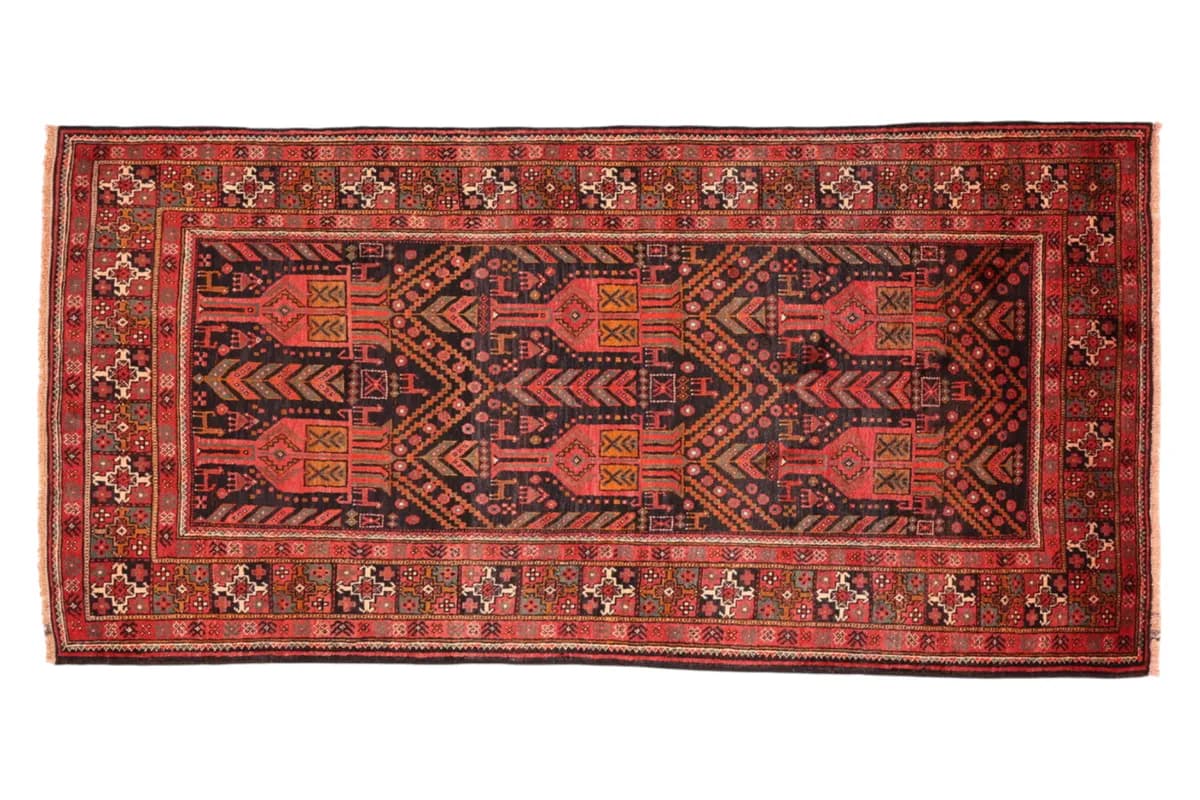
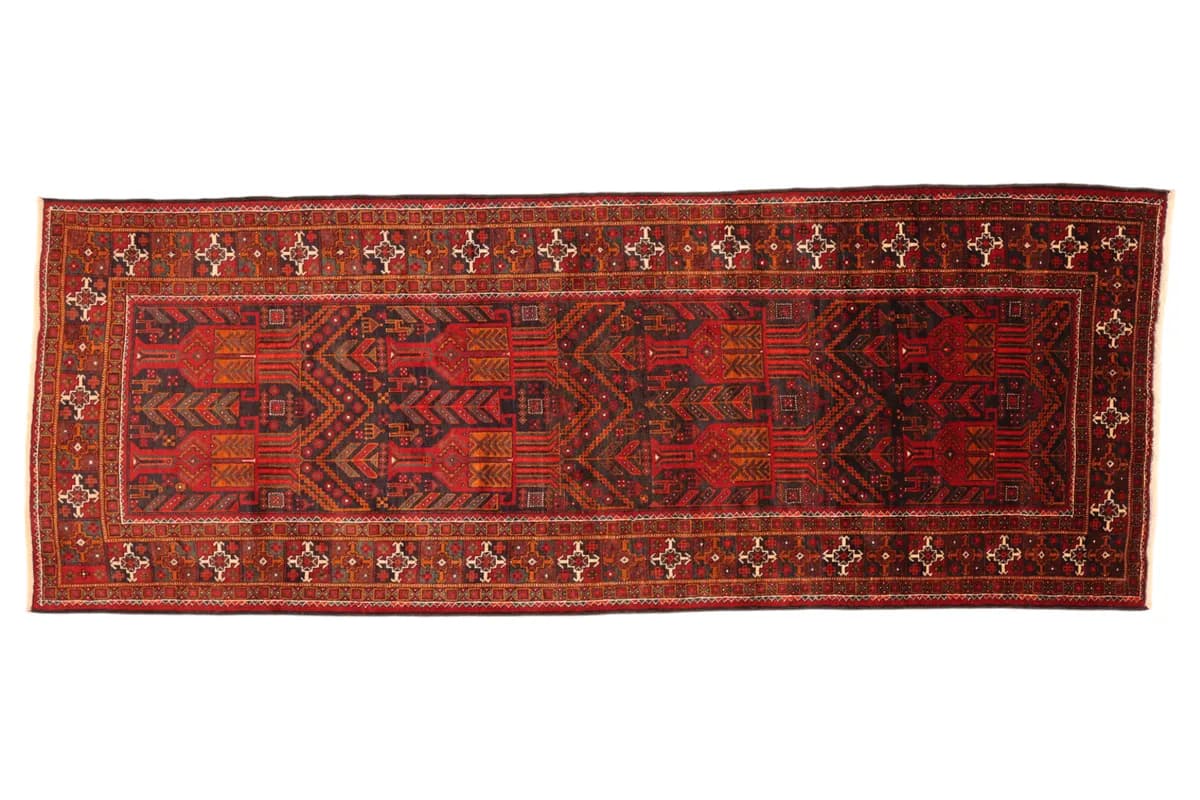
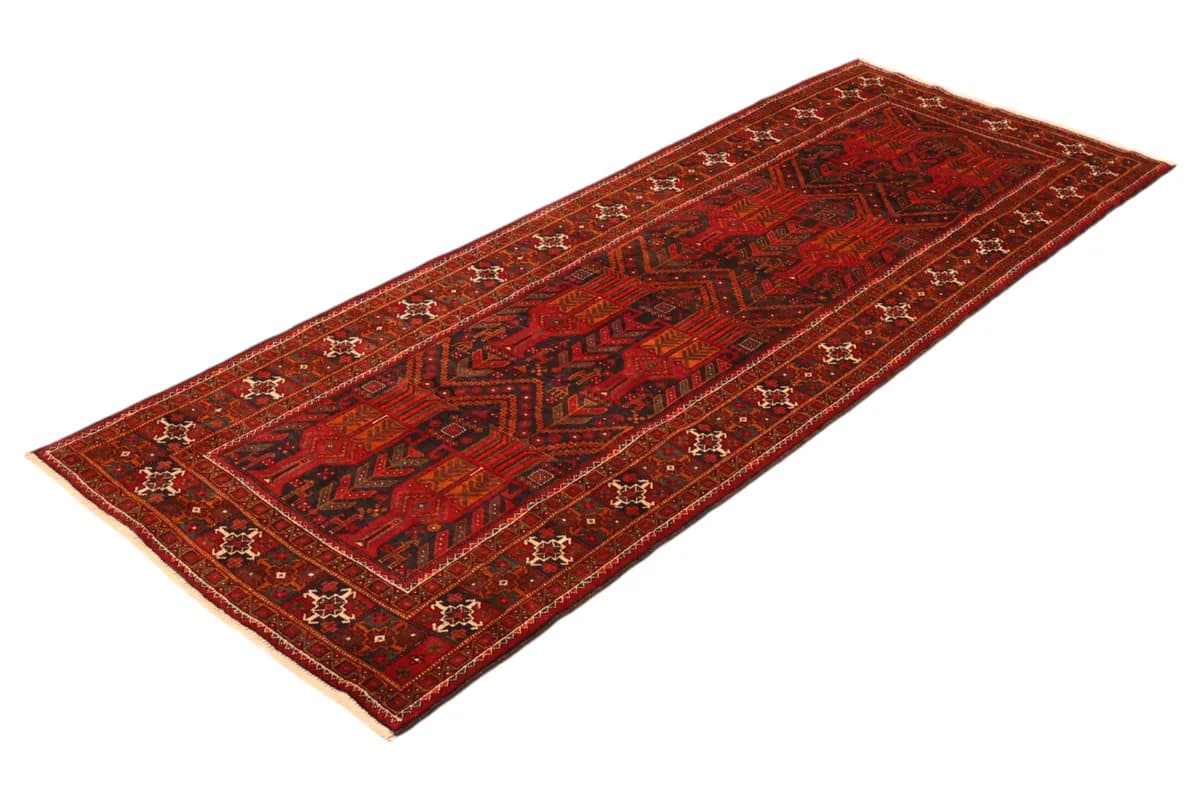
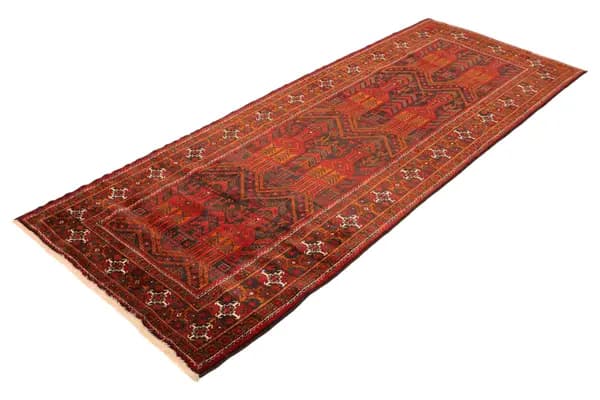
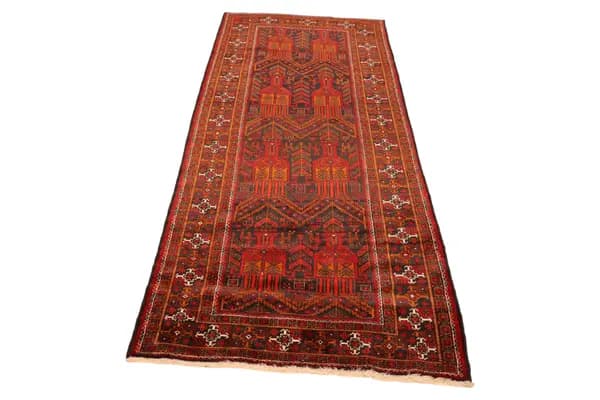
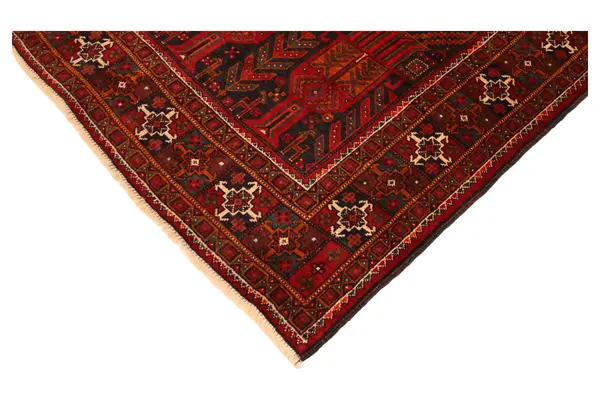
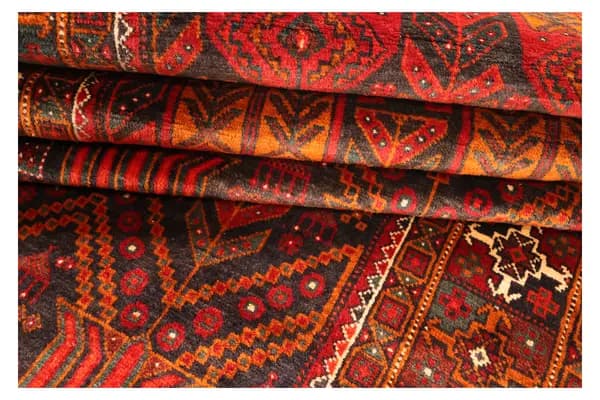
This is a Baluch runner — also written Belouch — hand-knotted in the tribal borderlands of southeastern Iran, 293 x 108 cm (9'7" x 3'7"). Baluch weavers are known for deep, earthy reds and indigo blues set against bold, angular geometry, worked from memory rather than from any drawn plan. This piece takes that vocabulary and turns it into a long, marching composition running the length of a narrow field.
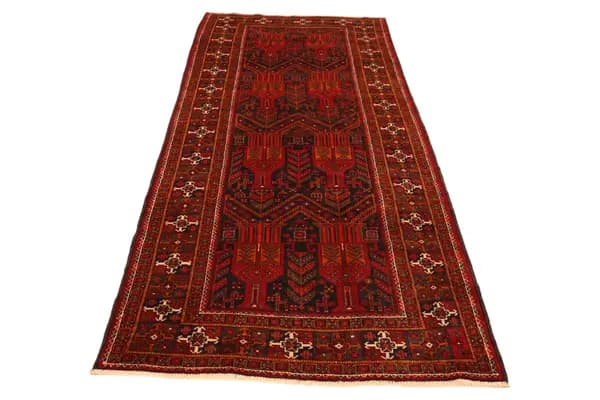
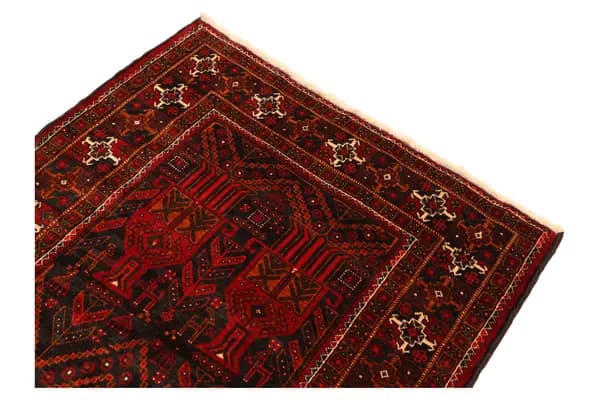
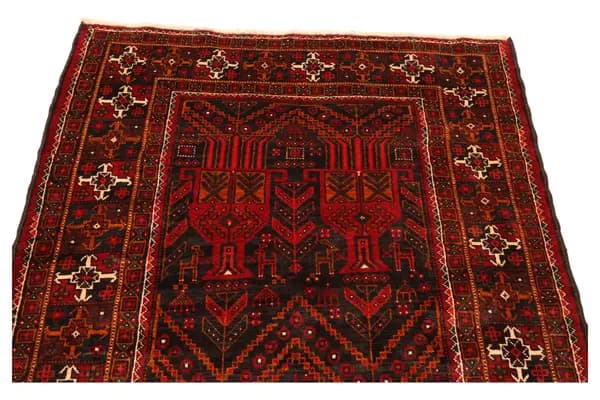
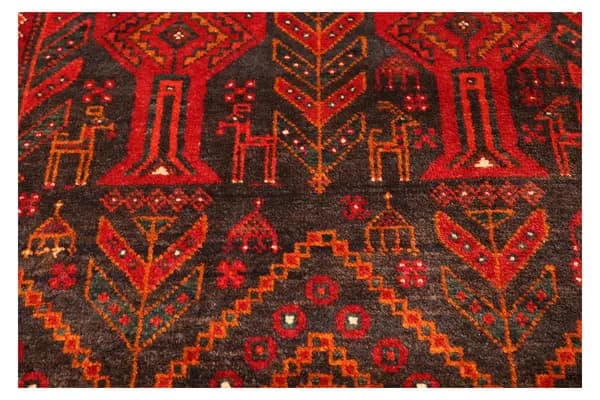
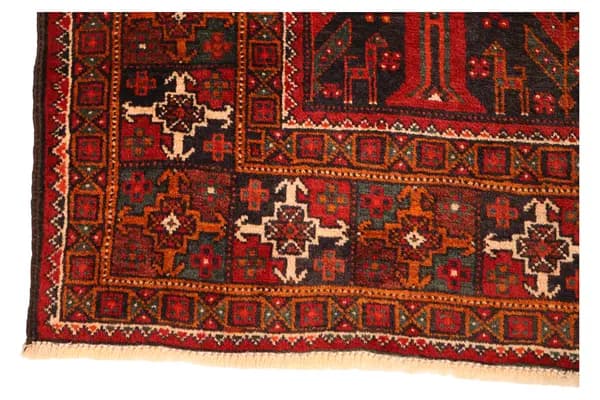
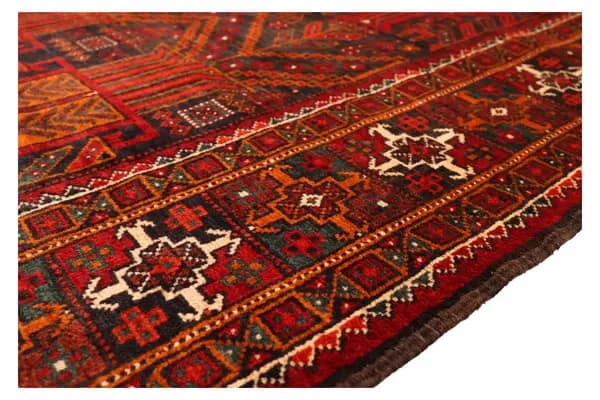
The first impression is of a row of large medallions glowing red-orange against a ground so dark it reads almost black. Look again and the ground is not one colour at all but two, alternating between deep brick red and near-black brown behind each stepped medallion, so the runner moves in bands rather than sitting flat. Each medallion is built from hooked, latch-hook edges, angular and firm against the darker panels around it. Framing all of it, a broad cream border of stepped cross motifs runs the full length, wide enough to hold its own against the depth of colour inside it.
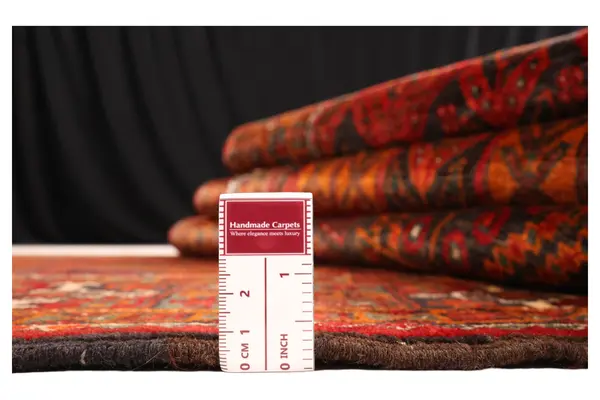
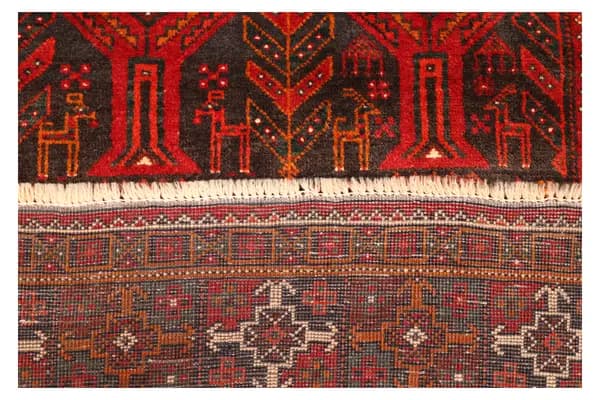
Baluch pieces are knotted on a portable loom, one woman working from memory and habit rather than a cartoon pinned to the frame, which is why the ground panels shift from red to near-black as she moved down the runner rather than repeating a single field colour throughout. The wool is hand-spun, unevenly by hand rather than machine, and knotted onto a cotton warp at around 128,000 to 160,000 knots per square metre, a density that gives the surface its ribbed, matte texture rather than a smooth, uniform sheen. At twenty to forty years old, the wool has already settled into the rhythm the loom gave it.
A runner this size belongs in a hallway or along a landing, somewhere it is seen edge-on and walked over daily. The rust-red and cream will lift a passage that gets little daylight, while the near-black ground keeps it grounded against dark skirting or floorboards. Underfoot it is dense and firm, made for exactly this kind of traffic rather than for careful stepping around it. Morning light moving along a hallway catches each medallion in turn, so the procession down the runner seems to shift a little as you pass.
More on Baluch rugs: origin, making and how to recognise a genuine piece
Traditional weave
At 293 × 108 cm (3.16 m²) this is a runner. It belongs in a hallway, an entrance, on a landing or lengthways beside a bed. It is too narrow for the middle of a room.
Yes, knotted by hand — knot by knot on a loom, not machine-made. The density is 128,000 to 160,000 knots per square metre; across 3.16 m² that is roughly 410,000 to 510,000 individual knots, every one of them tied by hand.
Hand-spun wool still carries its own lanolin, which keeps liquid sitting on the surface for a moment: blot quickly, with clear water and a light cloth, working inwards and without rubbing. Otherwise regular vacuuming along the pile is enough. Turn the rug once or twice a year so light and footfall reach it evenly.
We are in the Hamburg Speicherstadt. Come and see this rug in daylight, or write to us — a person answers.
Certificate included verifying origin, materials, and craftsmanship.
Ref: 659696