Exclusive
Bidjar | Exclusivewith silk
350 × 256 cm
23.400 €
6.450 €
Incl. VAT
In Stock · Ready to Ship
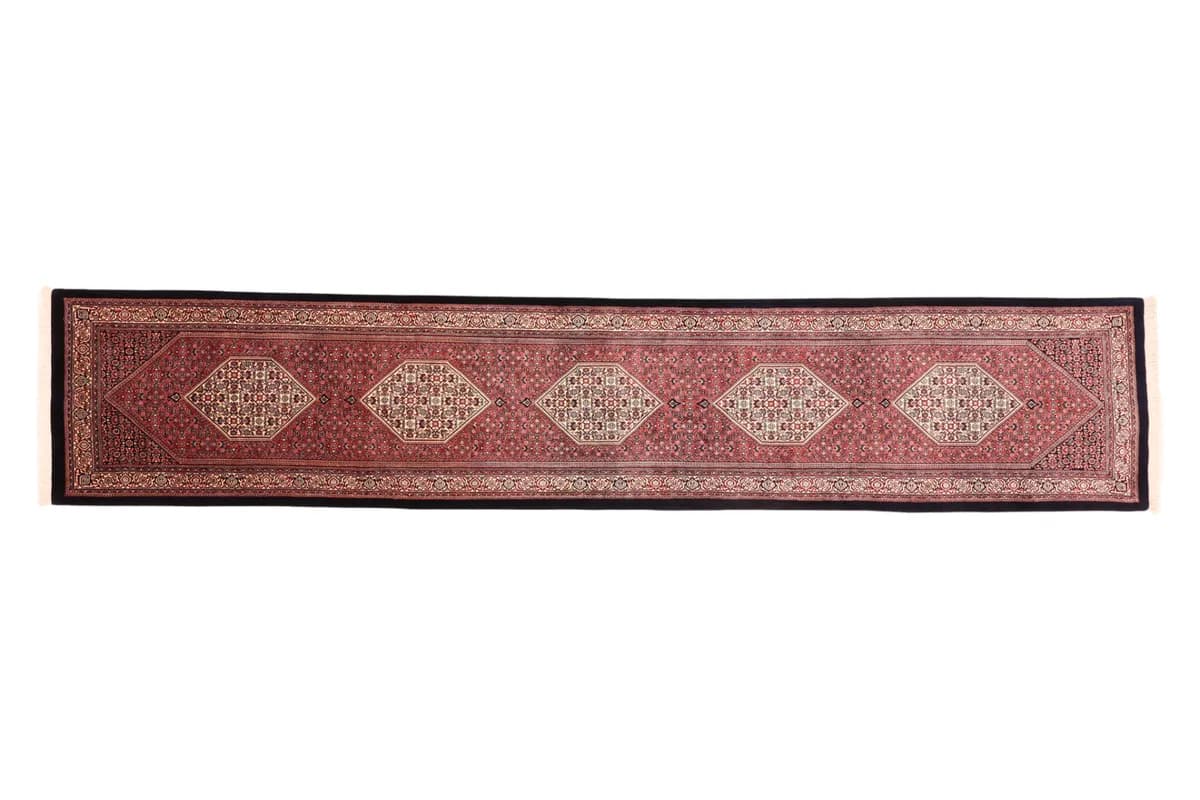
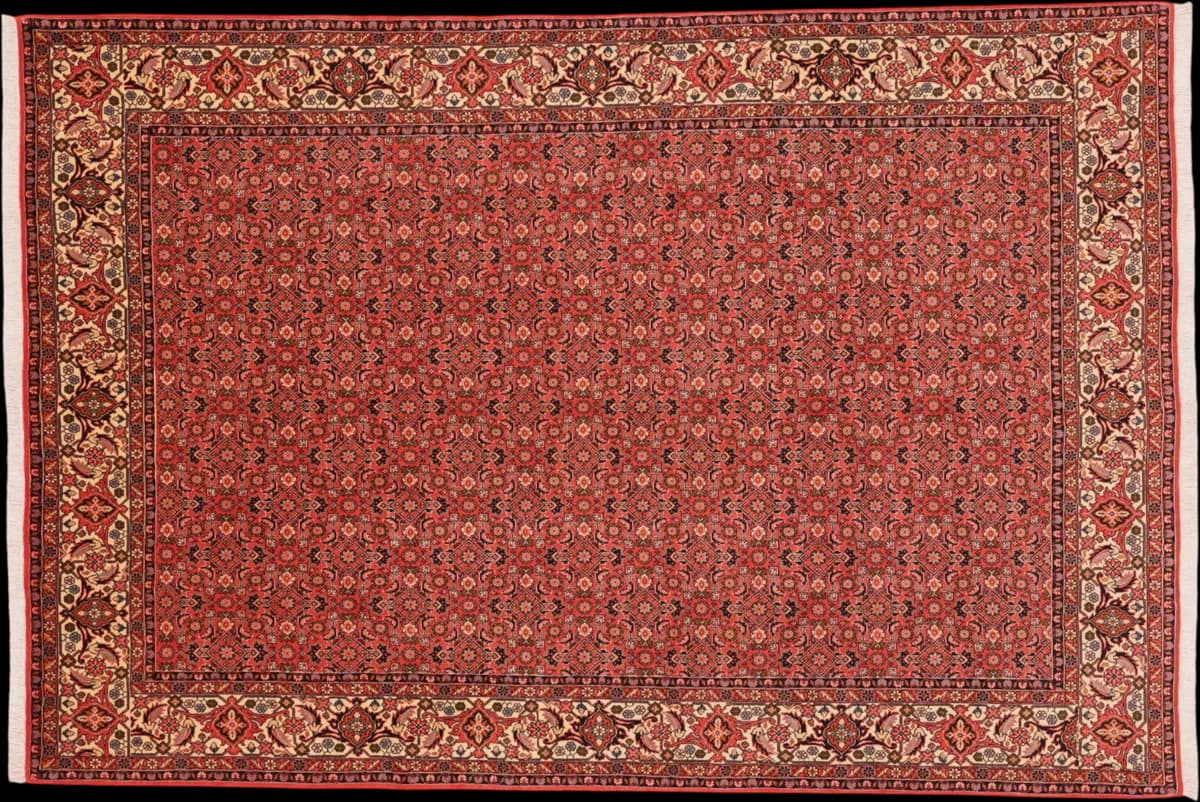
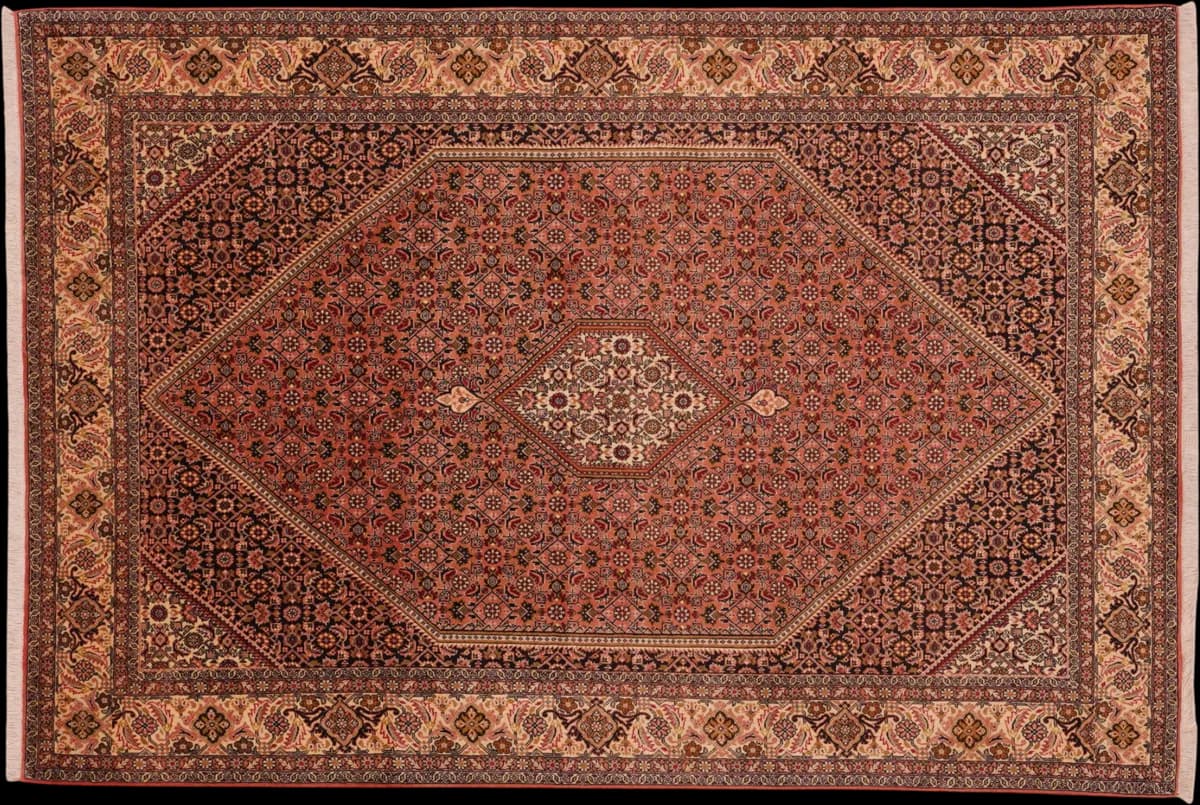
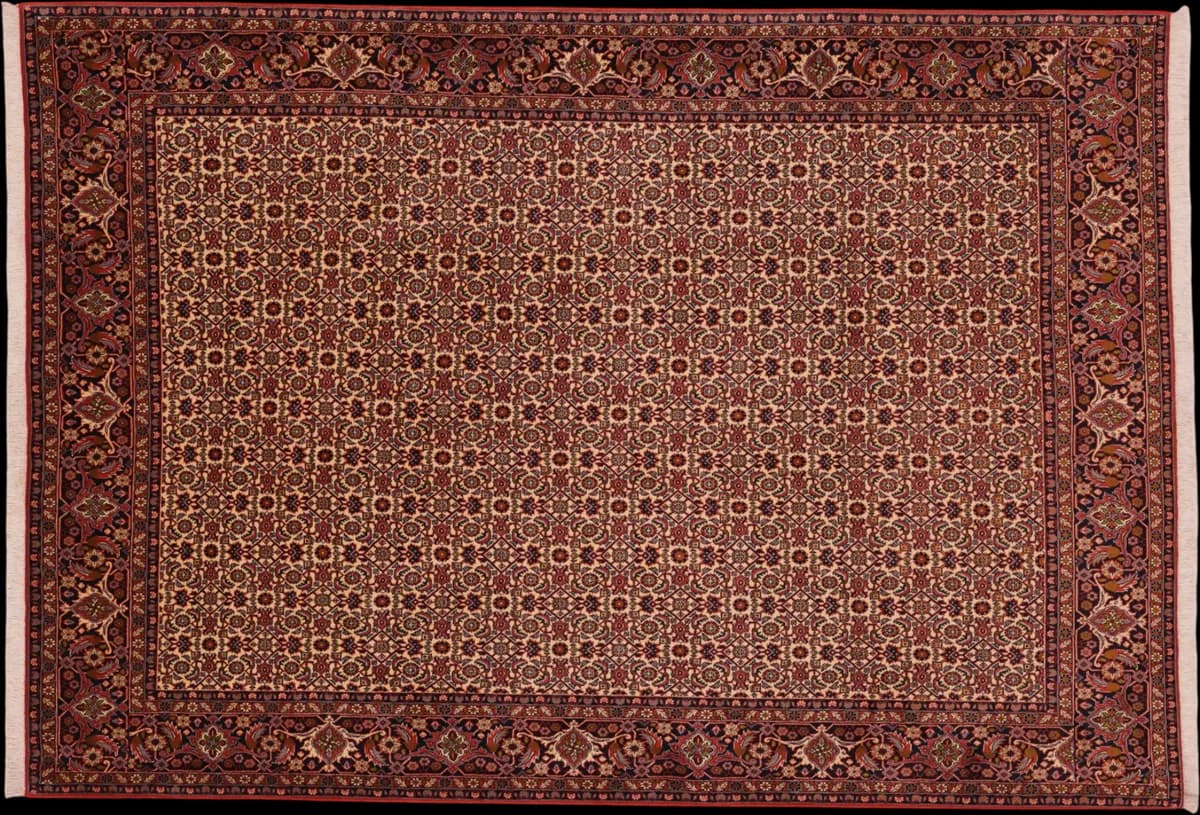
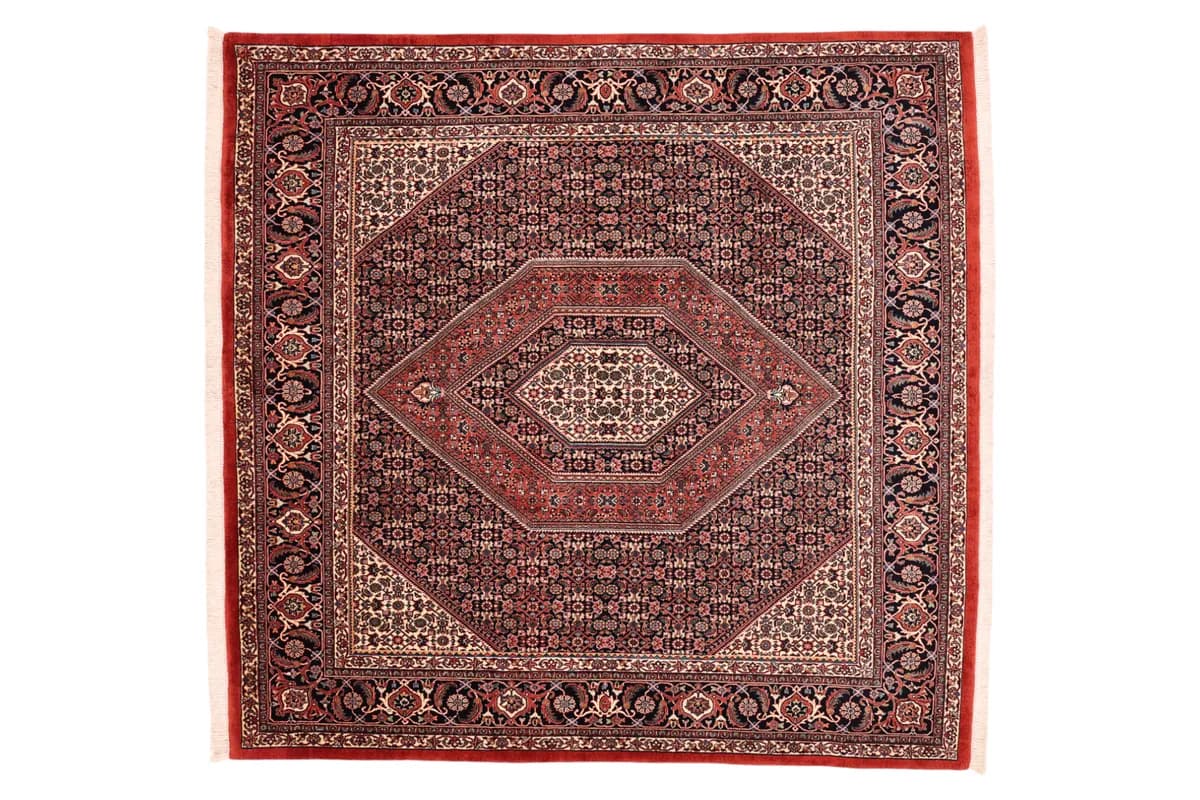
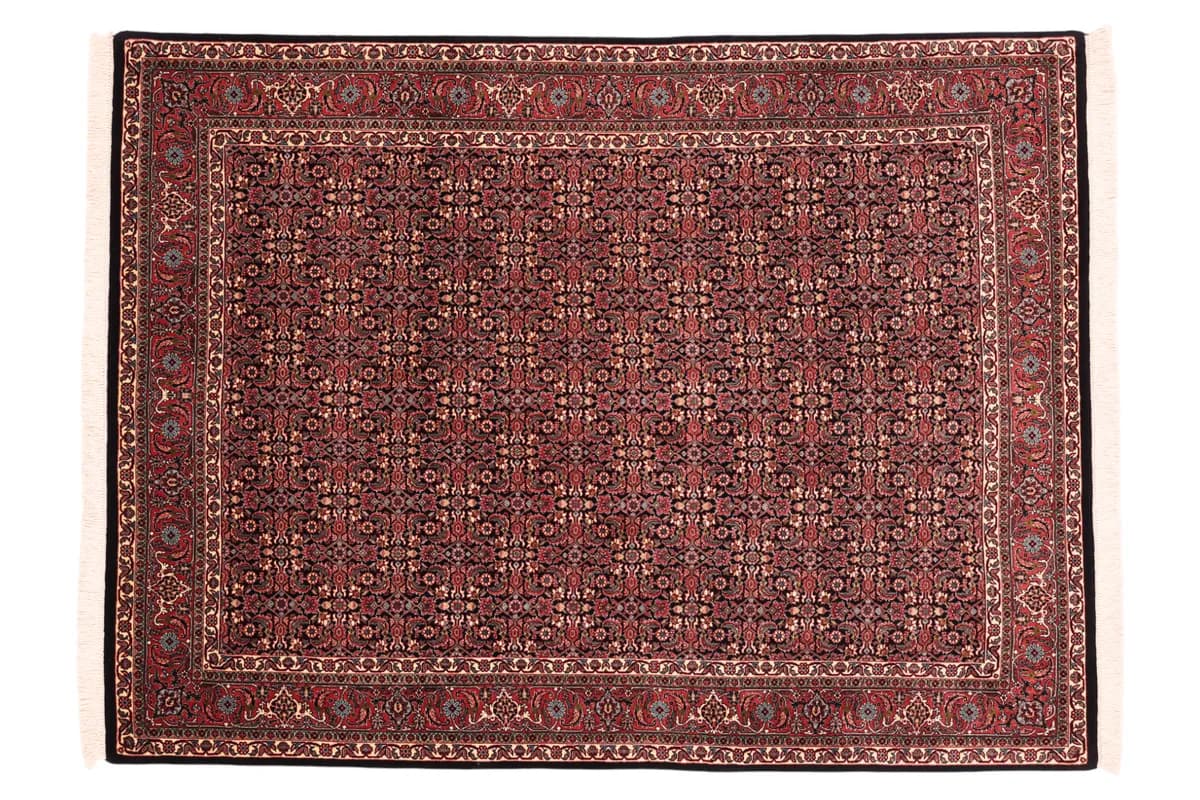
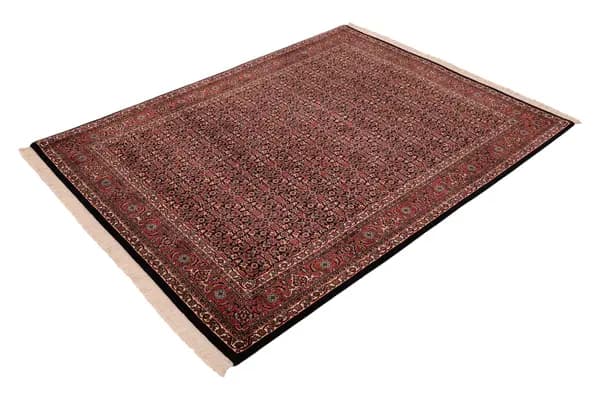
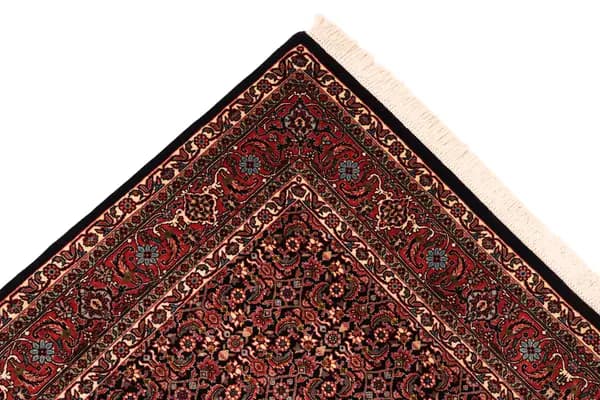
Bijar, sometimes written Bidjar or Bijar Kurdistan, is a rug type from the Kurdish regions of western Iran, long nicknamed the Iron Rugs of Persia for a density and weight few other weavings match. This piece measures 199 x 148 cm (6'6" x 4'10"). Where the type is usually built on a red or ivory ground, here the field is an unusually deep navy, close to black, giving a normally warm pattern a far more formal cast.
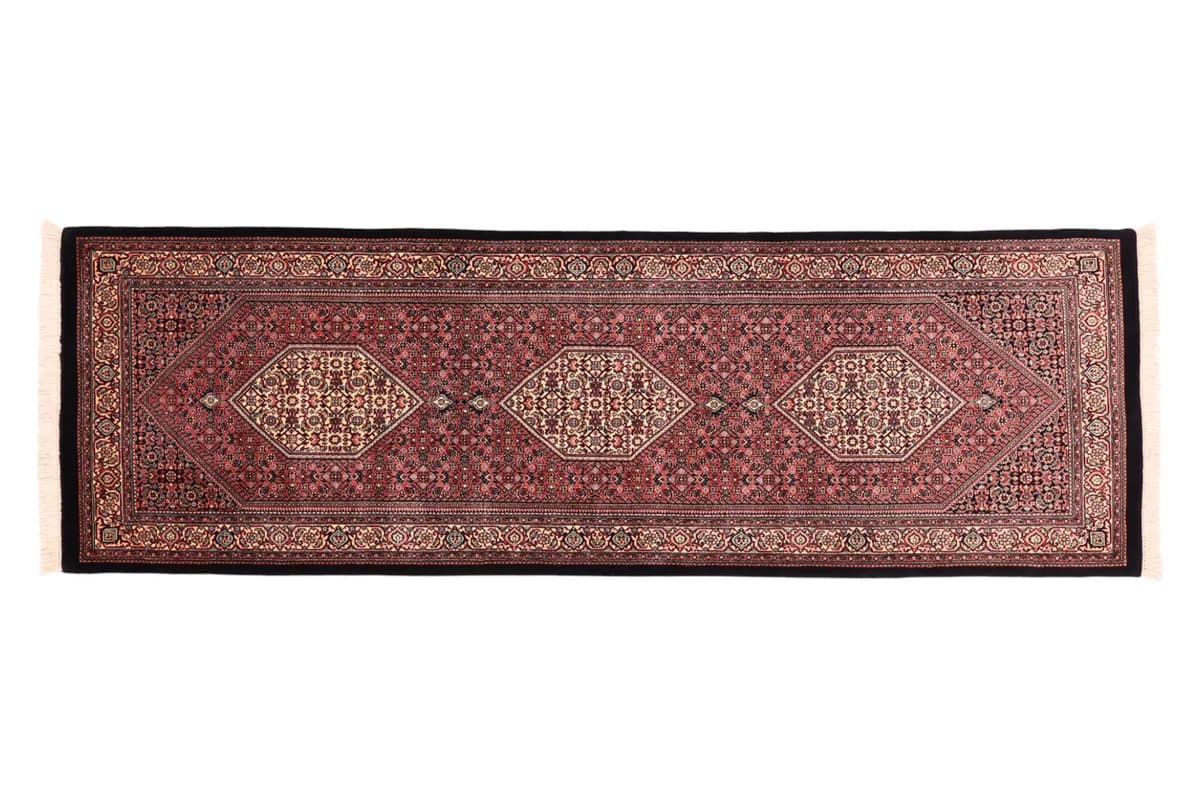
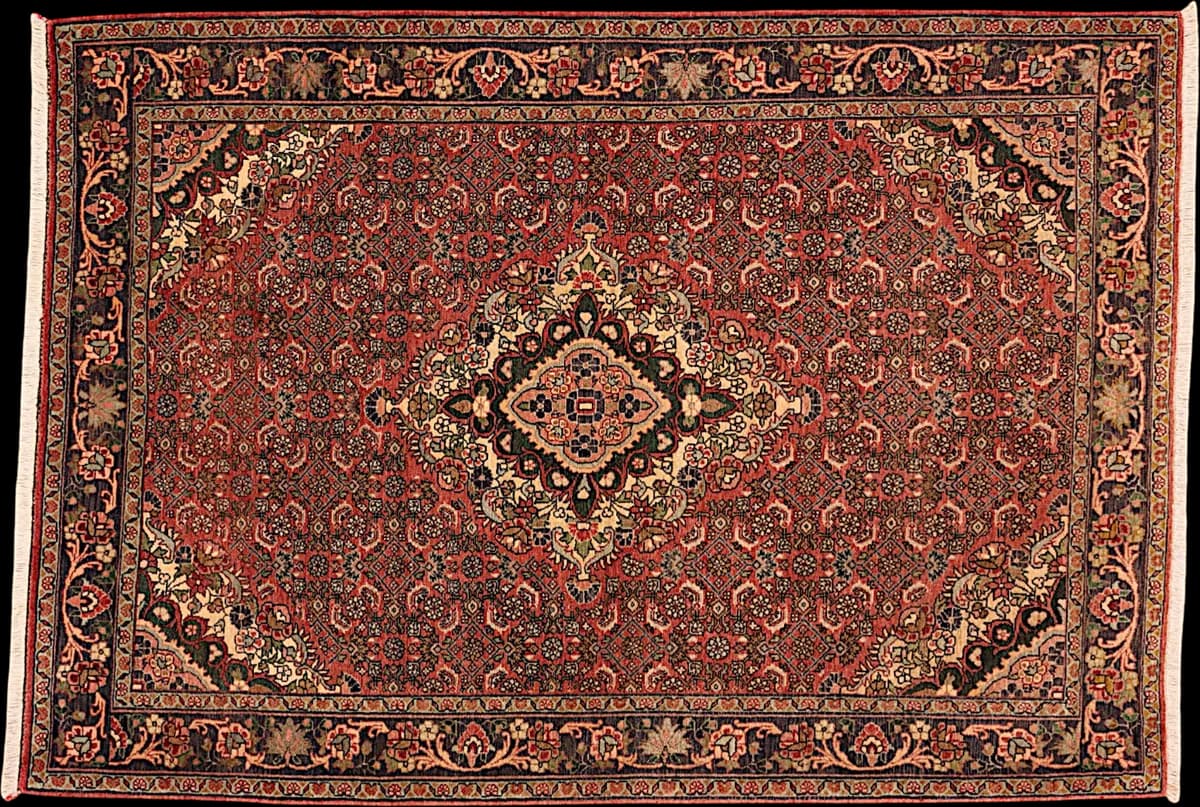
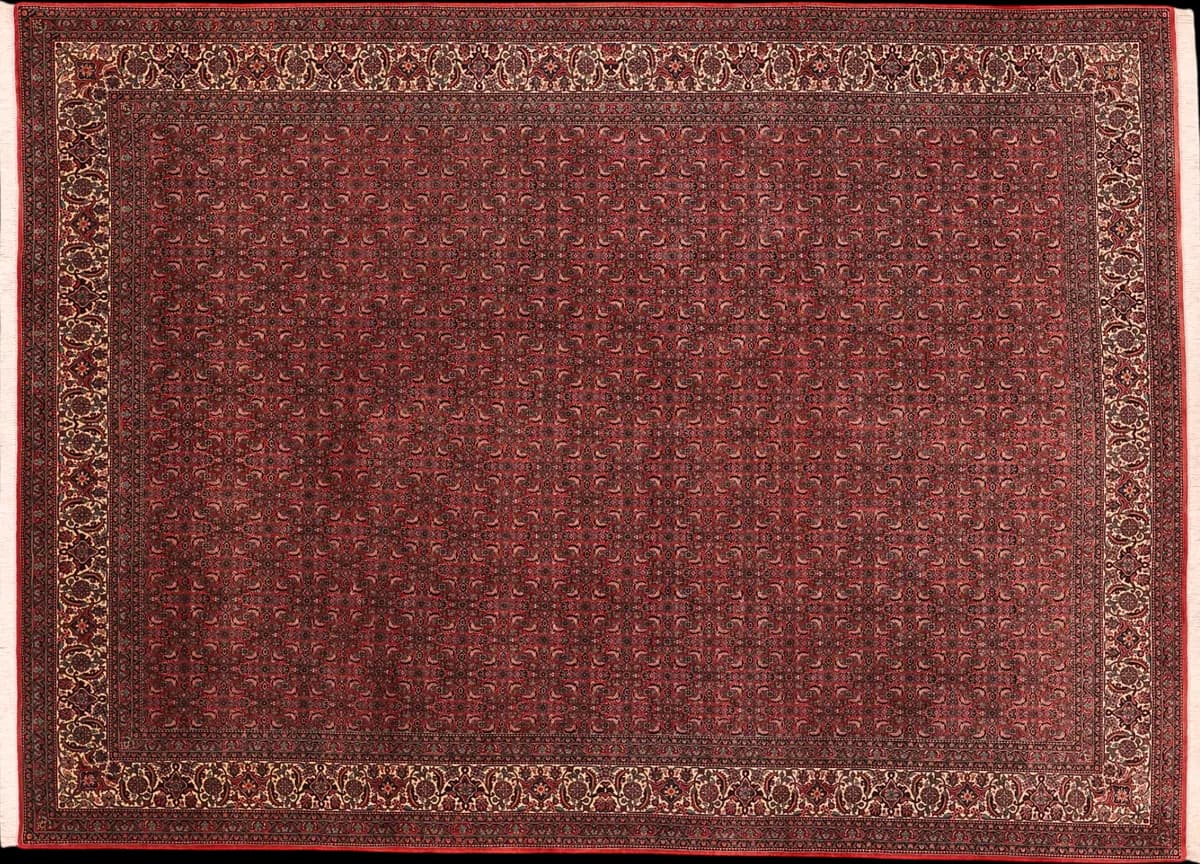
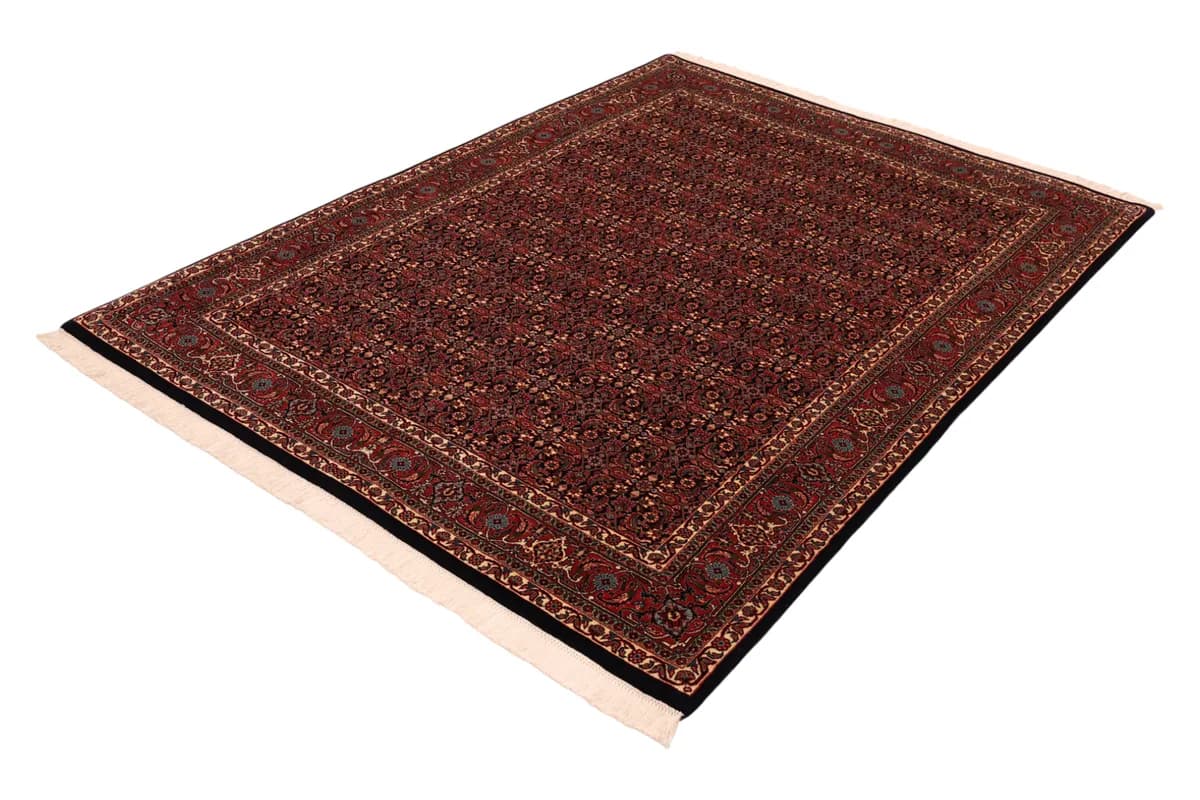
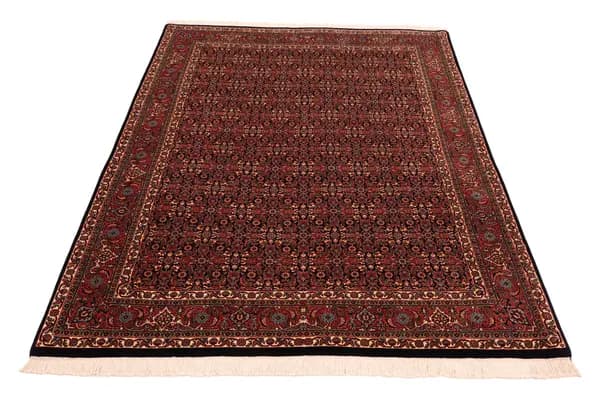
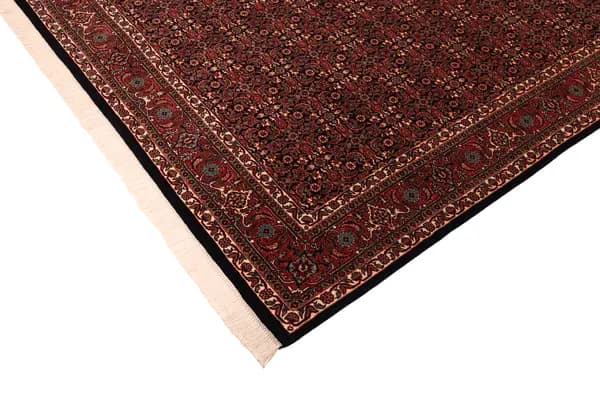
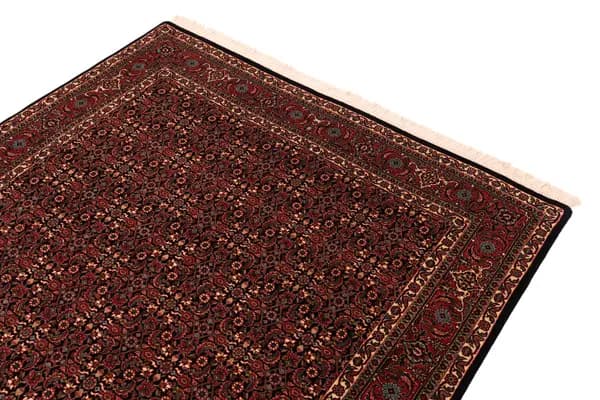
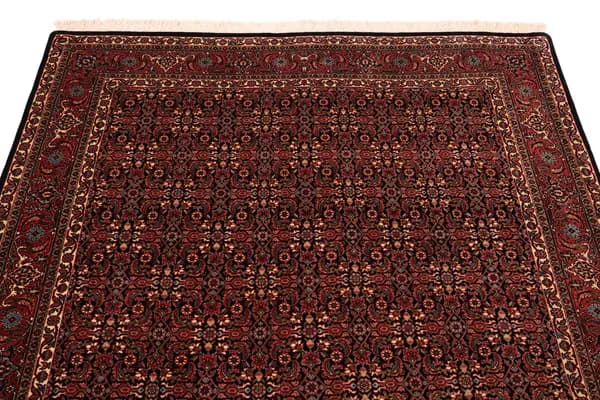
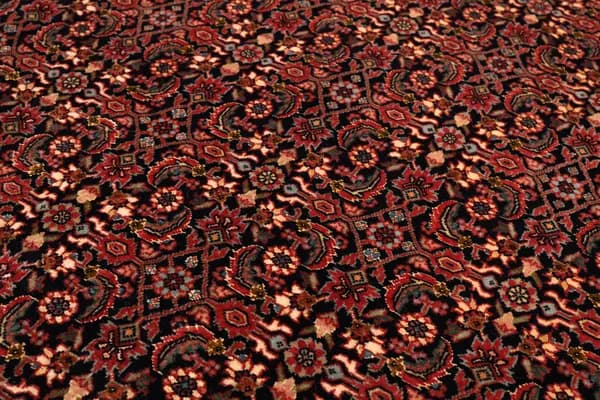
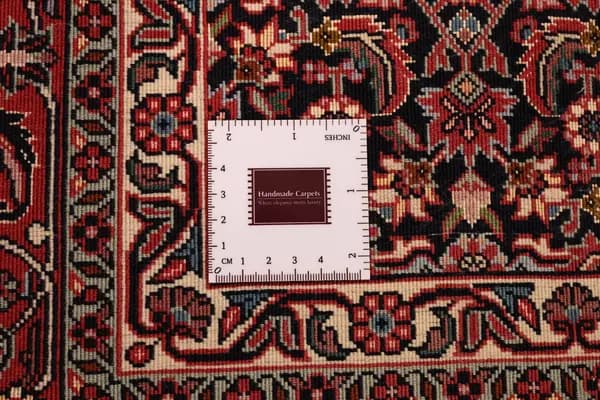
The first impression is of that dark field, covered edge to edge by a fine, repeating diamond lattice in the Mahi, or fish, style, with no medallion to break it. Within the lattice, small touches of brick red, sage green, steel blue and dusty pink sit against the navy like embers under ash. A broad brick-red border of scrolling floral vine runs around the whole, held in by narrow ivory guard stripes that read clean and bright against the dark ground. The surface itself is short and even, the pattern drawn with real precision, and a light sheen moves across it as the light shifts.
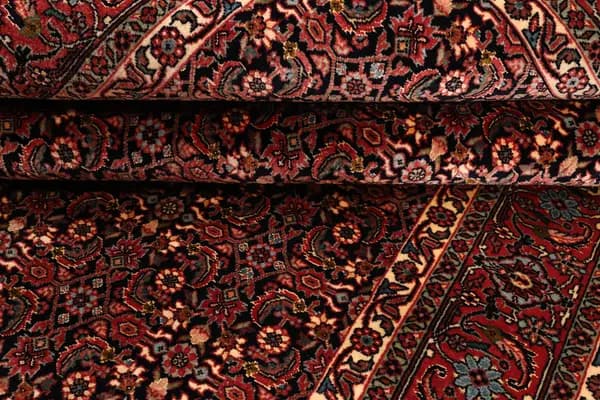
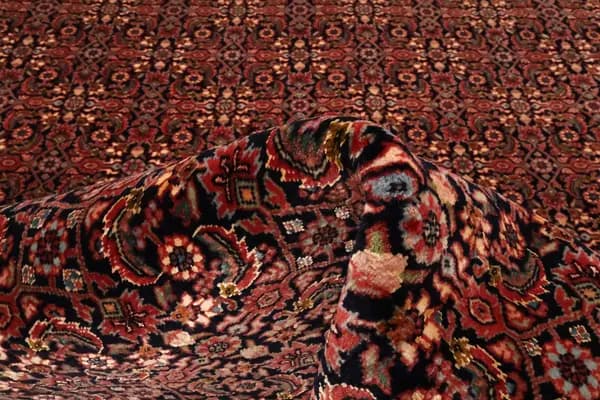
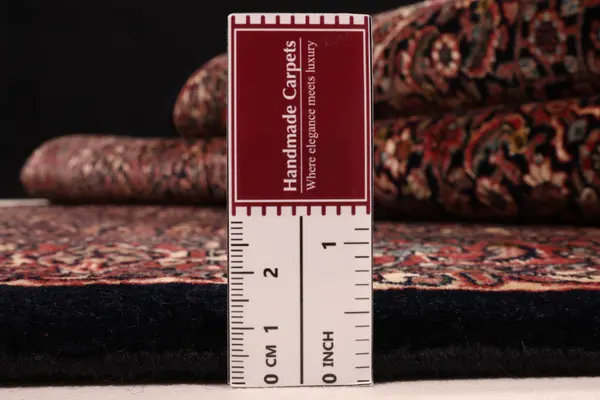
That precision comes from how tightly the piece is built. It is knotted by hand onto a cotton warp, with hand-spun wool pile at a density of 321,000 to 380,000 knots per square metre, among the highest found in Persian weaving, which is what allows a lattice this fine to hold its shape at all. A pile height of just 15 mm keeps the pattern crisp rather than soft-edged. This is also the construction behind the Iron Rug name: the weave is packed so firmly that the rug cannot be folded, only rolled, and it is built to hold its edges and its colour under decades of footsteps rather than to be kept for best.
A rug this dark and this dense earns a room with some quiet in it: a bedroom, or a reading corner where you can sit close to it. Against a pale floor the navy grounds the space rather than competing with it, and the brick-red border keeps the whole from tipping into gloom. Underfoot it is firm and substantial, built for daily use rather than careful stepping. In low evening light the small sage and dusty pink accents catch first, and it is worth noticing how they keep surfacing the longer you look.
More on Bidjar rugs: origin, making and how to recognise a genuine piece
Superior craftsmanship
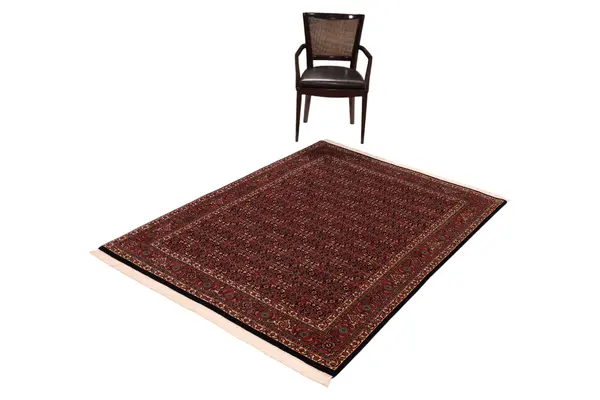
At 199 × 148 cm (2.95 m²) this is a medium rug. It works in front of a sofa, in front of a bed or in a study. It is too small for a dining table — there you want about 80 cm of clearance so a chair does not tip over the edge when pushed back.
Yes, knotted by hand — knot by knot on a loom, not machine-made. The density is 321,000 to 380,000 knots per square metre; across 2.95 m² that is roughly 0.9 to 1.1 million individual knots, every one of them tied by hand.
Hand-spun wool still carries its own lanolin, which keeps liquid sitting on the surface for a moment: blot quickly, with clear water and a light cloth, working inwards and without rubbing. Otherwise regular vacuuming along the pile is enough. Turn the rug once or twice a year so light and footfall reach it evenly.
We are in the Hamburg Speicherstadt. Come and see this rug in daylight, or write to us — a person answers.
Certificate included verifying origin, materials, and craftsmanship.
Ref: 790360