Kelim Verni
199 × 120 cm
968 €
968 €
Incl. VAT
In Stock · Ready to Ship
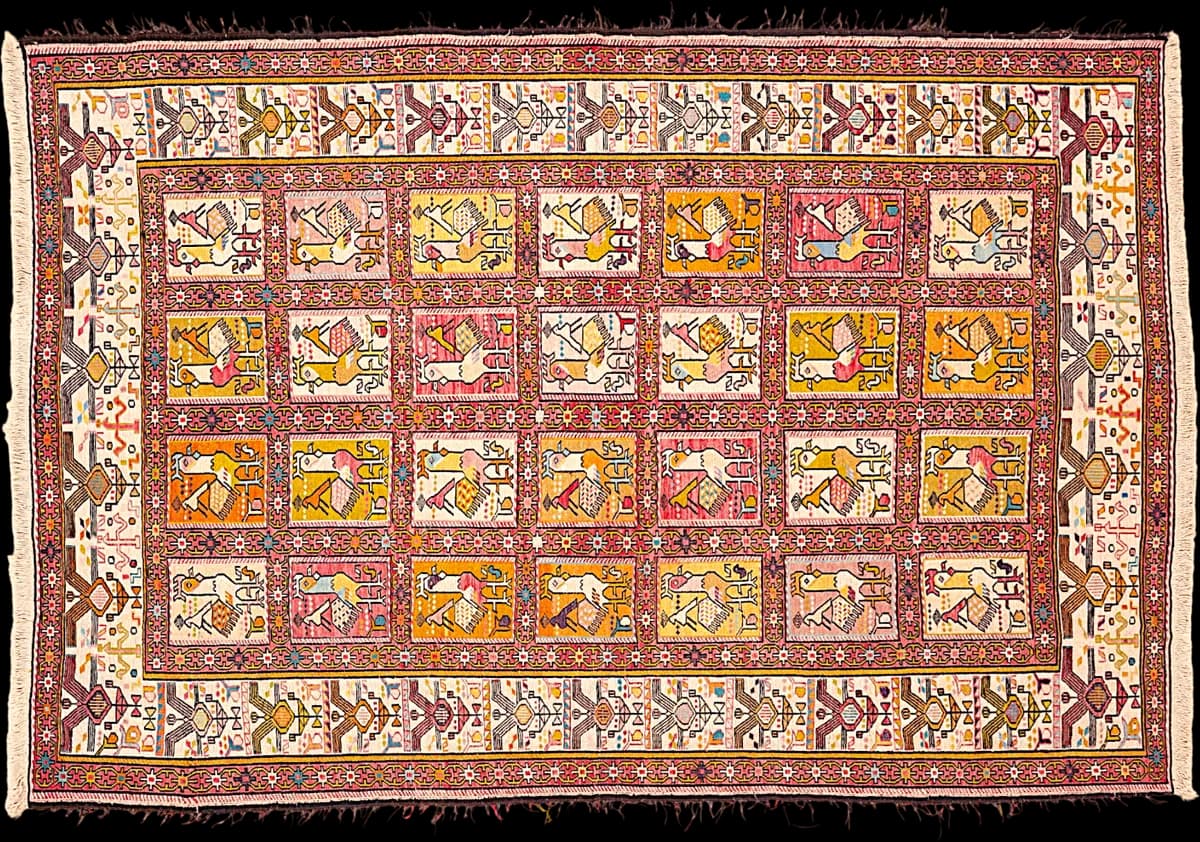
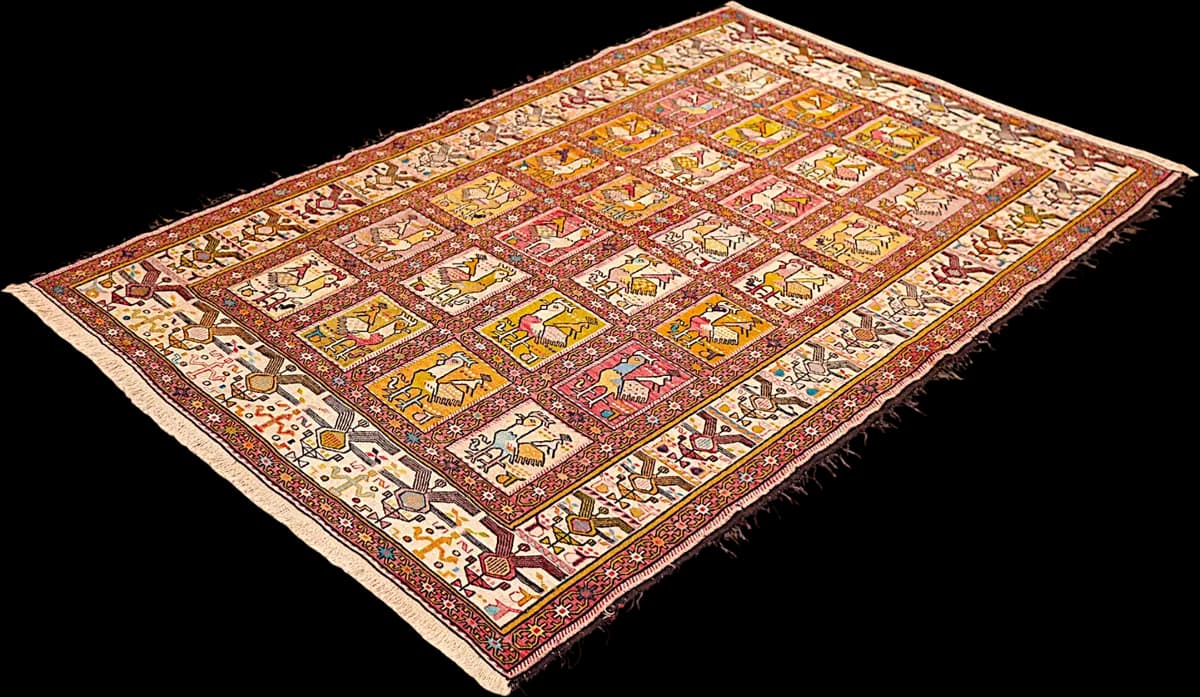
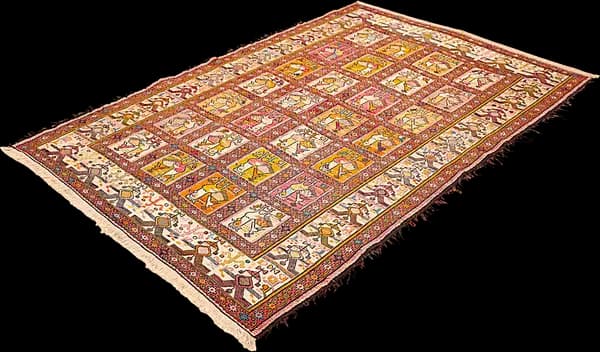
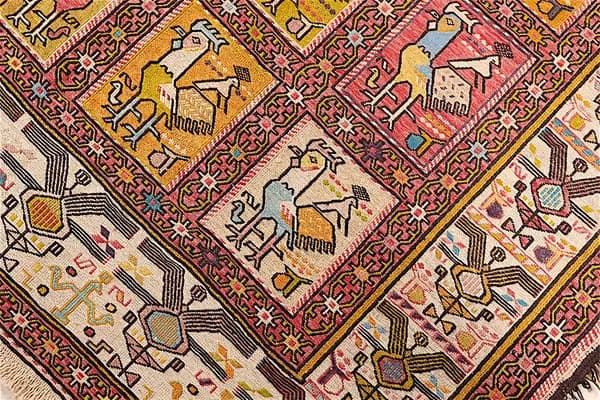
This is a Verni, a flatweave from the tribal weaving traditions of the Caucasus and northwest Persia, hand-woven in the Sumak technique rather than knotted. 188 x 127 cm (6'2" x 4'2"). Vernis – also written Verneh – are known for bold, clearly drawn pattern and a slightly raised surface, closer to texture than to a flat kilim.
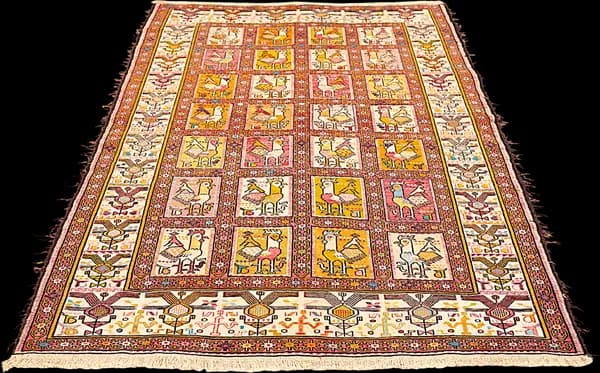
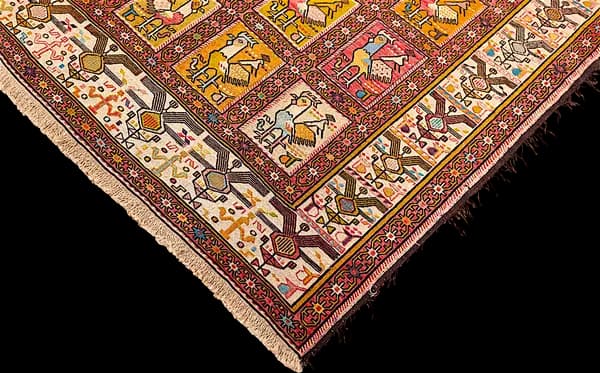
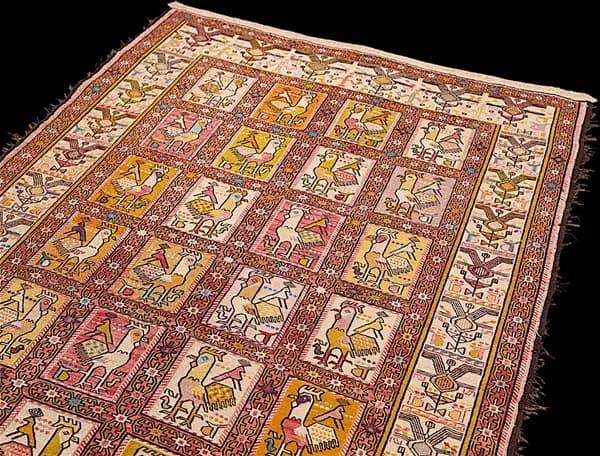
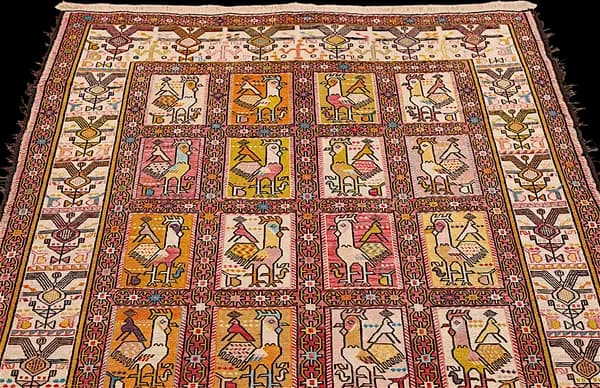
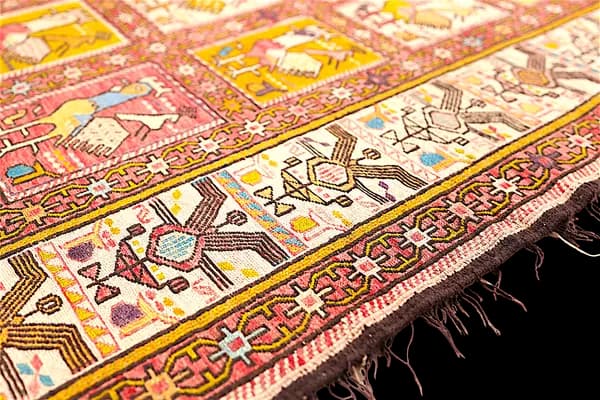
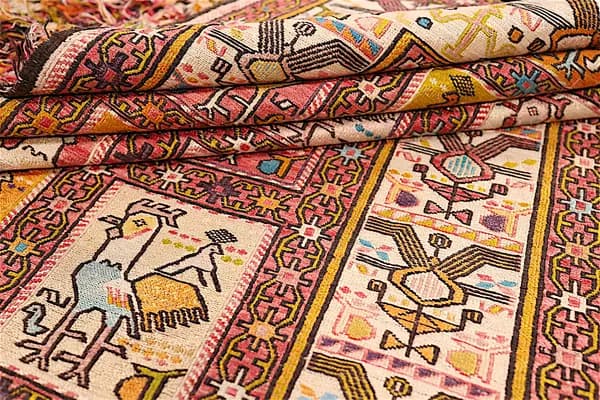
The field alternates old-rose and ivory grounds, laid out as a grid of small compartments in the garden-panel manner. Each box holds its own bird or animal figure, drawn in mustard-gold, ochre and burnt orange, with small touches of brick red and turquoise, all outlined in dark brown against a pink trellis. Look along the rows and no two figures repeat their pose. A wide ivory border carries a column of brown, gold and pink tribal motifs, held between narrow pink guard stripes set with small stars.
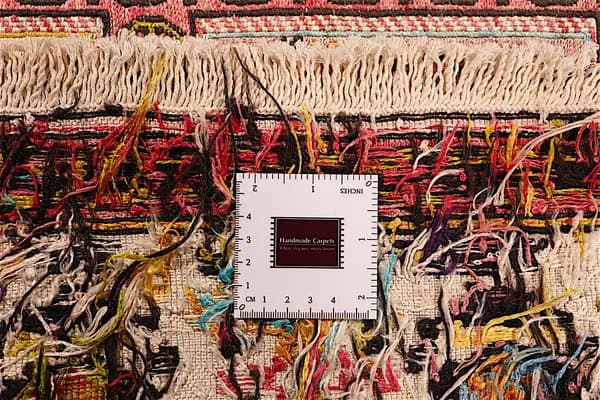
Sumak works by wrapping coloured weft around paired warps rather than knotting a pile, building each motif almost like embroidery across the loom. That wrapping raises the surface just enough to give it body, between the flatness of a kilim and the depth of a knotted rug, and it lets a weaver draw with real precision. The weft here carries a little silk alongside the wool, giving the yarn firmness rather than shine. Working freehand, box by box, is why none of the animal figures repeat their pose exactly.
A rug this size suits a hallway, a landing, or the floor beside a bed. The old-rose and ivory grounds warm a pale floor, and mustard and ochre figures hold their own against darker furniture. Underfoot it stays firm and flat, built for footsteps rather than admiration from a distance. As daylight moves across it, the raised Sumak surface catches differently box by box, and there is always another animal to notice.
More on Vernis: origin, making and how to recognise a genuine piece
At 188 × 127 cm (2.39 m²) this is a small rug. It works beside a bed, in a reading corner, in front of a fireplace or as a mat by a door. It does not furnish a room; it makes a point in one.
No — this piece is hand-woven, not knotted. A flatweave has no pile: the pattern comes from warp and weft alone. That makes it thin, light and usable on both sides, and it is a technique in its own right rather than a simpler version of a knotted rug.
Vacuum regularly, ideally along the weave and without a rotating brush. A flatweave can be turned over, which spreads the wear — flip it once or twice a year. Blot spills at once with clear water and a light cloth, working inwards, and never rub.
We are in the Hamburg Speicherstadt. Come and see this rug in daylight, or write to us — a person answers.
Certificate included verifying origin, materials, and craftsmanship.
Ref: 865499