Bidjar
295 × 200 cm
4.650 €




5.148 €
Incl. VAT
In Stock · Ready to Ship
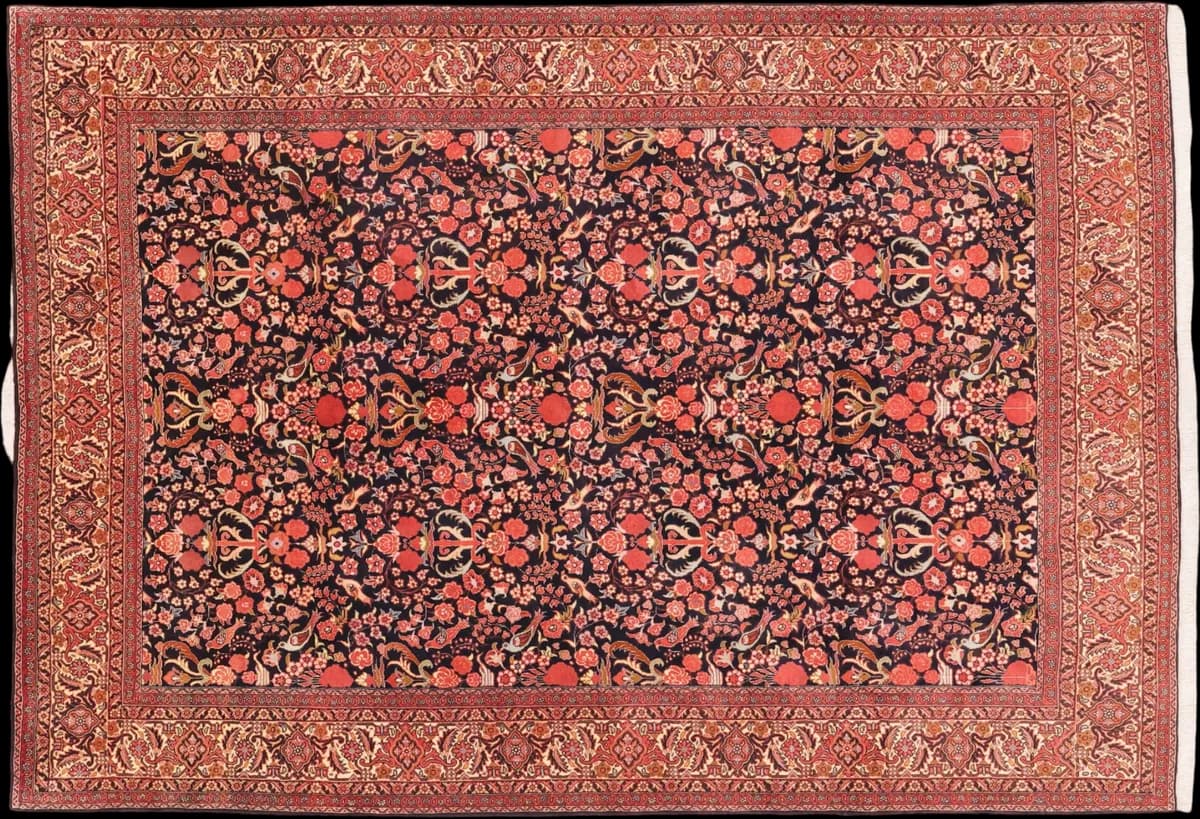
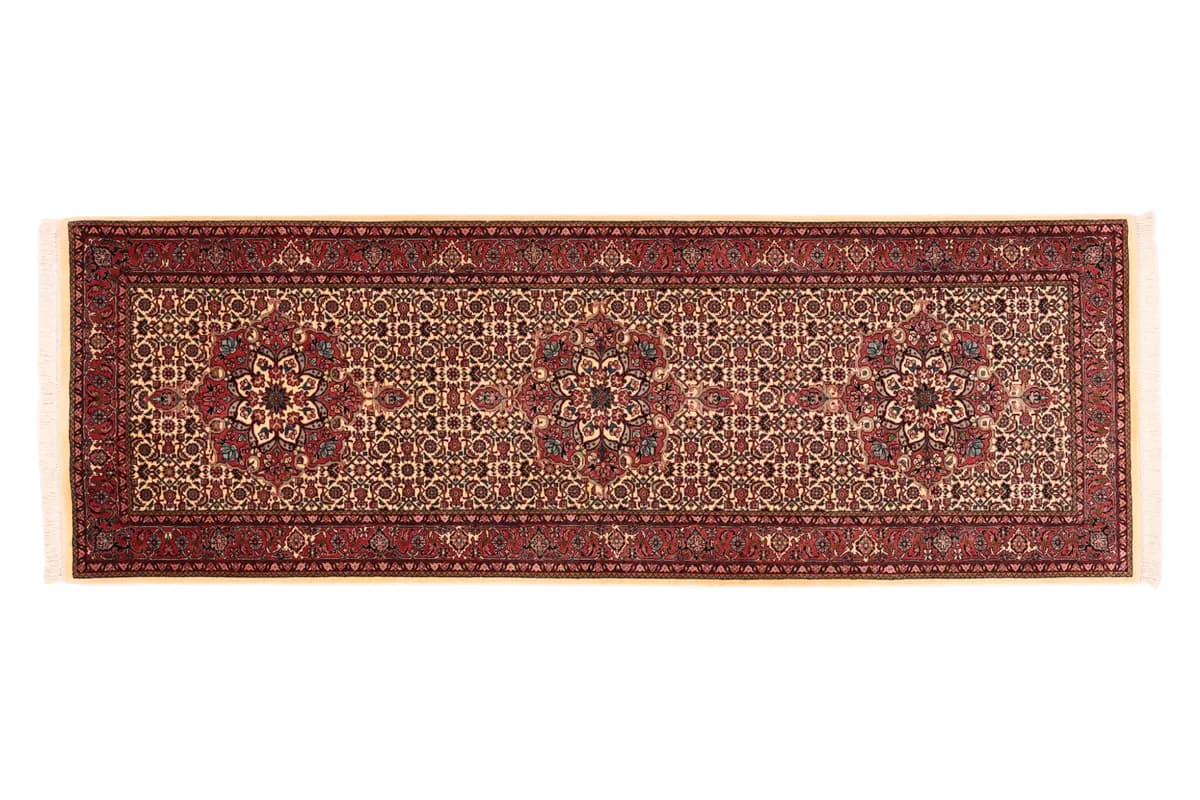
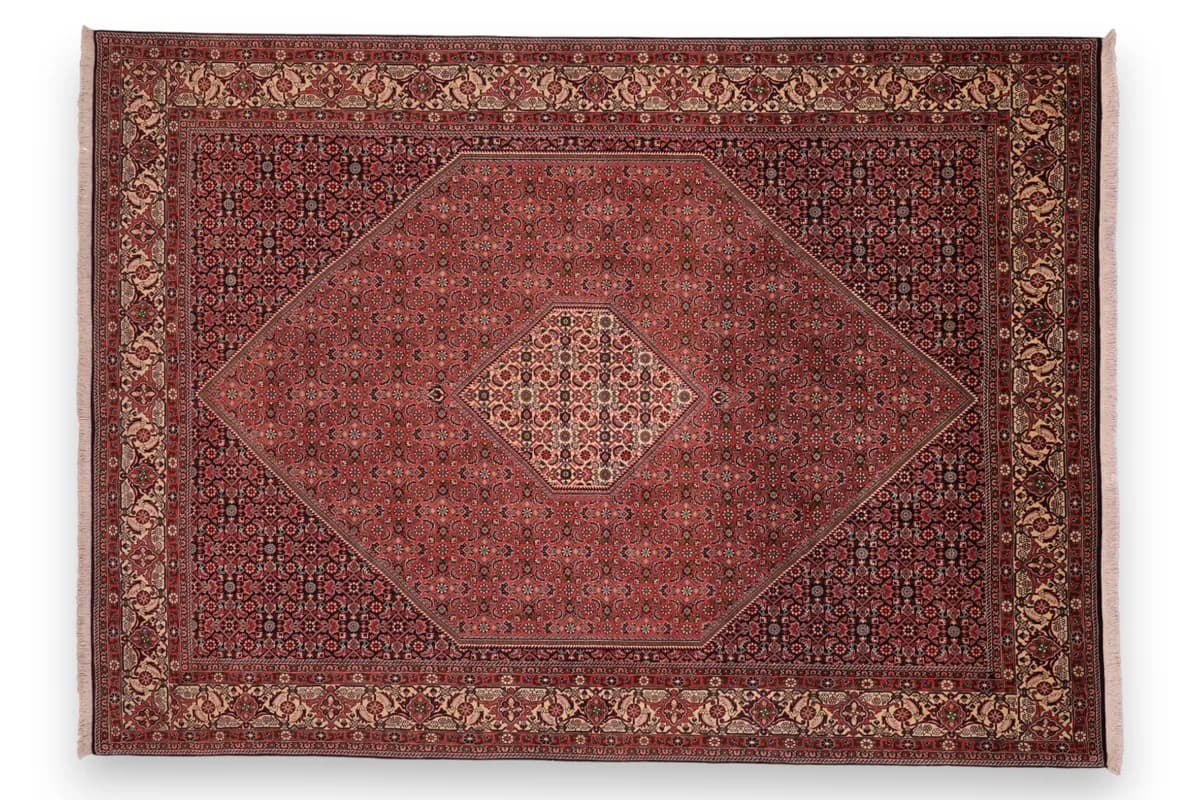
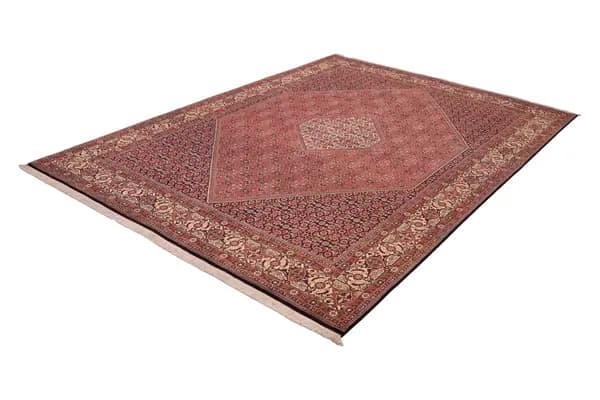
A Bijar, also written Bidjar, from the Kurdish region of western Iran, measuring 346 x 248 cm (11'4" x 8'2"). The type is known across the trade as one of the Iron Rugs of Persia, for a structure knotted so densely and pressed so firm that a finished piece can only ever be rolled, never folded.
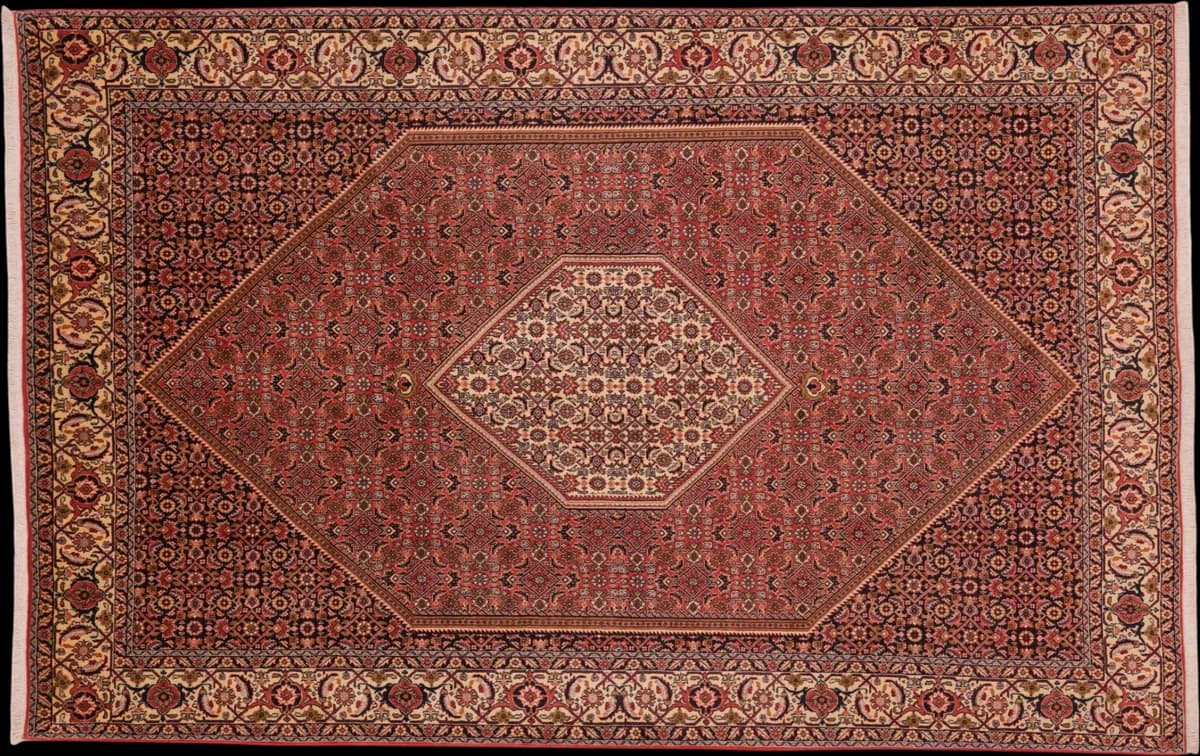
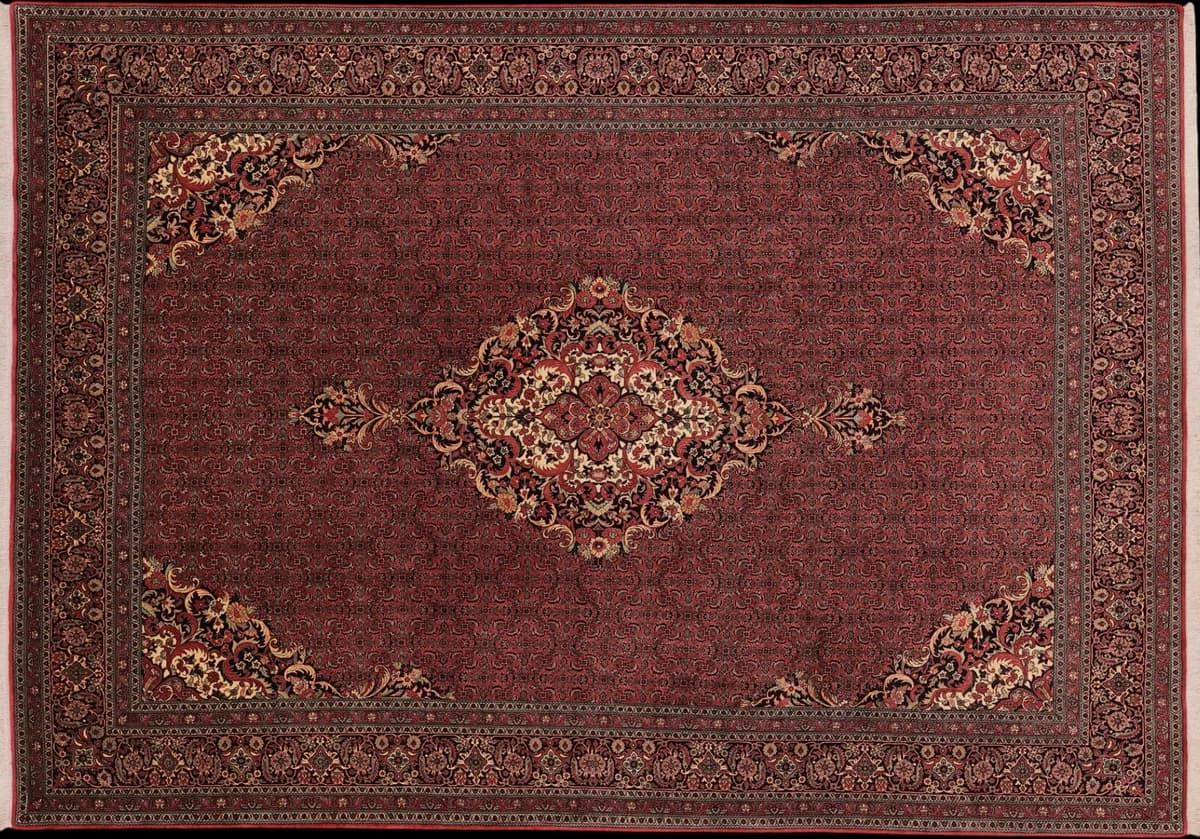
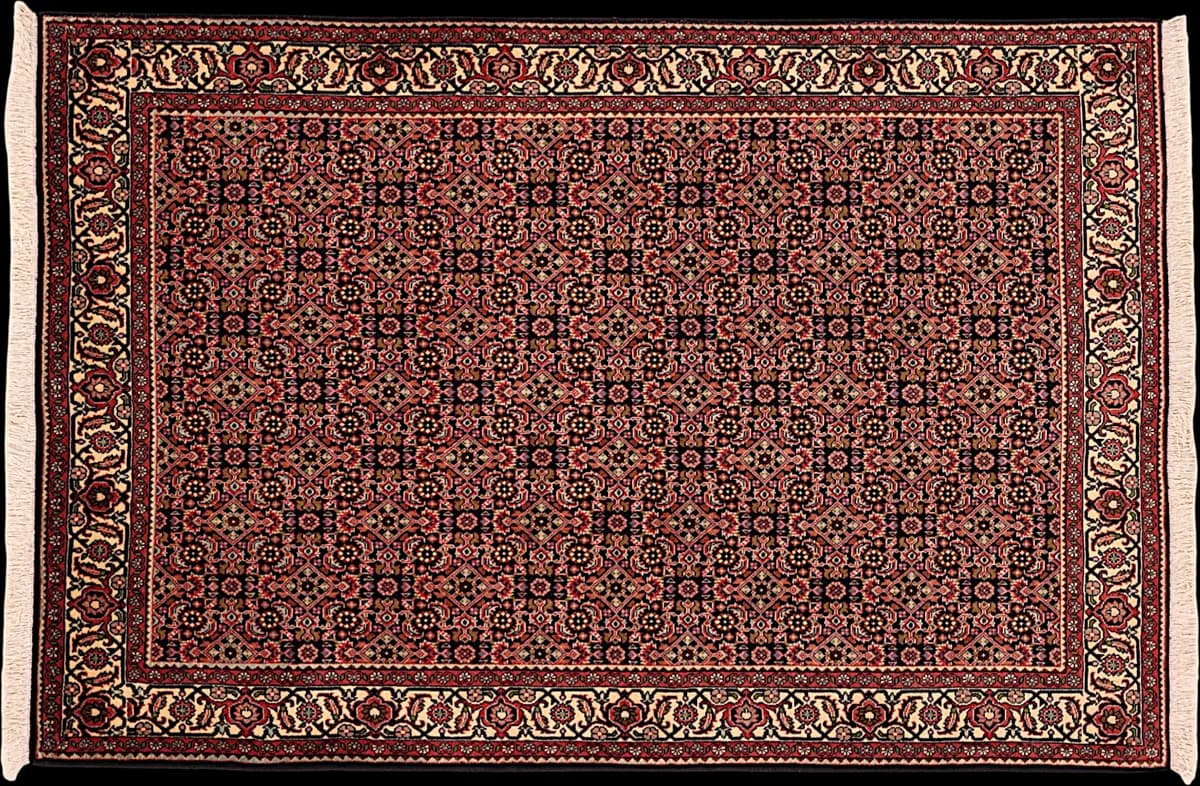
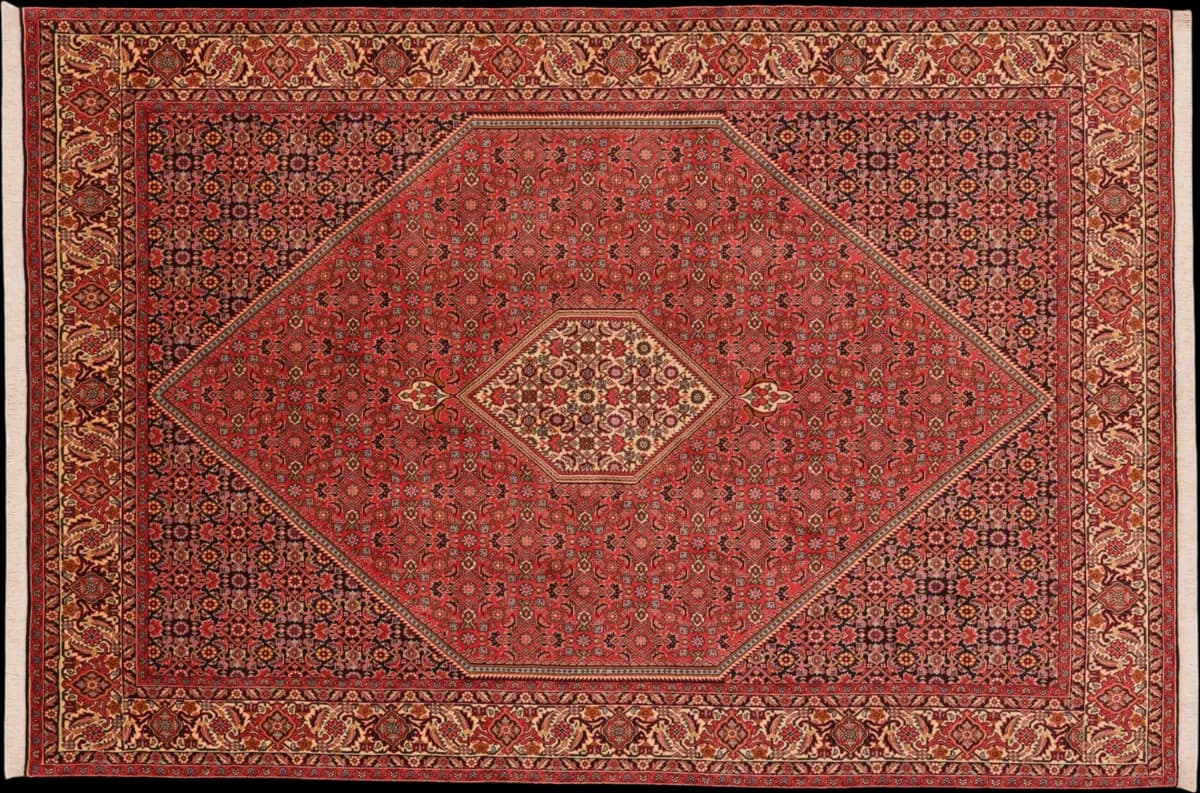
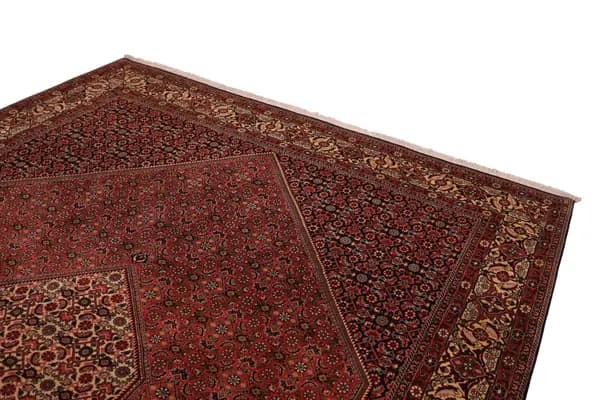
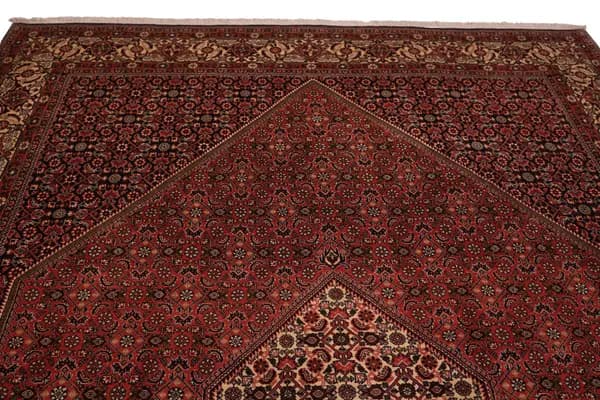
The field glows brick red with a salmon undertone, filled edge to edge with a fine lattice of rosettes and serrated Mahi leaves, small touches of teal and olive caught within it. From this ground rises a large lozenge medallion, and at its exact centre sits a second, smaller medallion in cream, echoing the border beyond. Deep navy spandrels hold the corners, the lattice reaching into them without losing its shape, giving the red real weight instead of letting it fade away. A wide cream border then carries a dark floral vine, framed by narrow red and navy guard stripes.
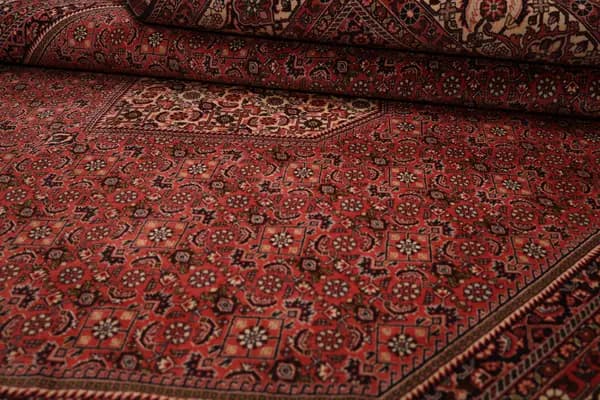
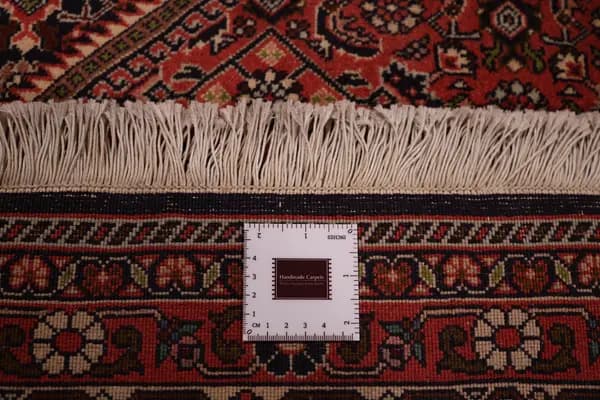
The pile is hand-spun wool, knotted onto a cotton foundation at 321,000 to 380,000 knots per square metre, among the tightest densities in the Persian tradition. That density is what lets the lattice stay this fine and stay crisp right into the corners, where a looser knot would blur it. Pressed to a pile height of 15 millimetres, the rug feels substantial and firm underfoot rather than soft — the quality behind the Bijar's reputation for lasting.
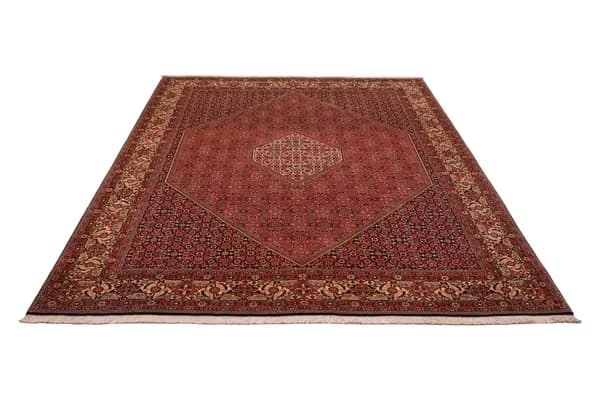
This suits a dining room or living room, large enough to sit under a table or anchor a substantial sofa group. The red warms a pale floor and holds its own against dark wood, the navy corners keeping it grounded rather than loud. Underfoot it is dense and firm, built for a room that gets used rather than protected. Through the day the wool's slight sheen catches the light differently, the lattice seeming to shift across the red without ever losing its shape.
More on Bidjar rugs: origin, making and how to recognise a genuine piece
Superior craftsmanship
At 346 × 248 cm (8.58 m²) this is a very large rug. It carries a whole seating group with every furniture leg on it, or a dining table with the chairs pushed back. In a small room it becomes the floor rather than a rug.
Yes, knotted by hand — knot by knot on a loom, not machine-made. The density is 321,000 to 380,000 knots per square metre; across 8.58 m² that is roughly 2.8 to 3.3 million individual knots, every one of them tied by hand.
Hand-spun wool still carries its own lanolin, which keeps liquid sitting on the surface for a moment: blot quickly, with clear water and a light cloth, working inwards and without rubbing. Otherwise regular vacuuming along the pile is enough. Turn the rug once or twice a year so light and footfall reach it evenly.
We are in the Hamburg Speicherstadt. Come and see this rug in daylight, or write to us — a person answers.
Certificate included verifying origin, materials, and craftsmanship.
Ref: 913631