Exclusive
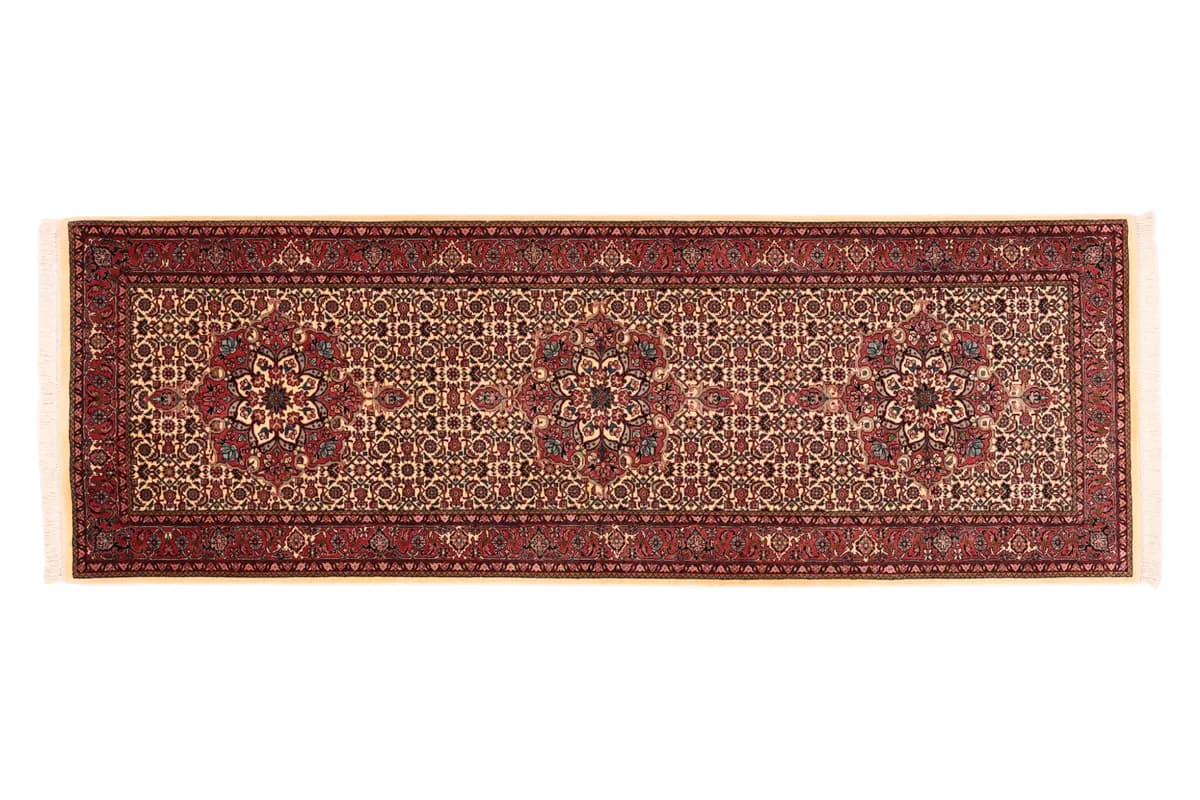
Bidjar | Exclusive | With Silk · with silk
241 × 83 cm
4.650 €
5.250 €
Incl. VAT
In Stock · Ready to Ship
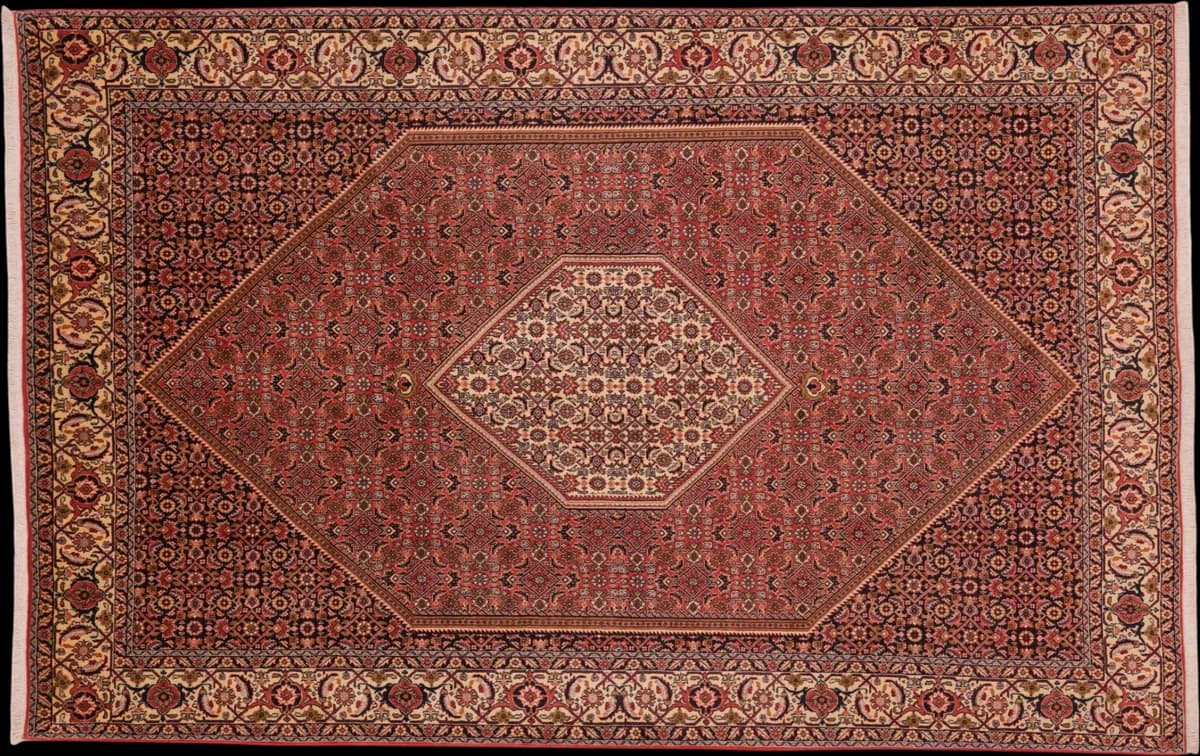
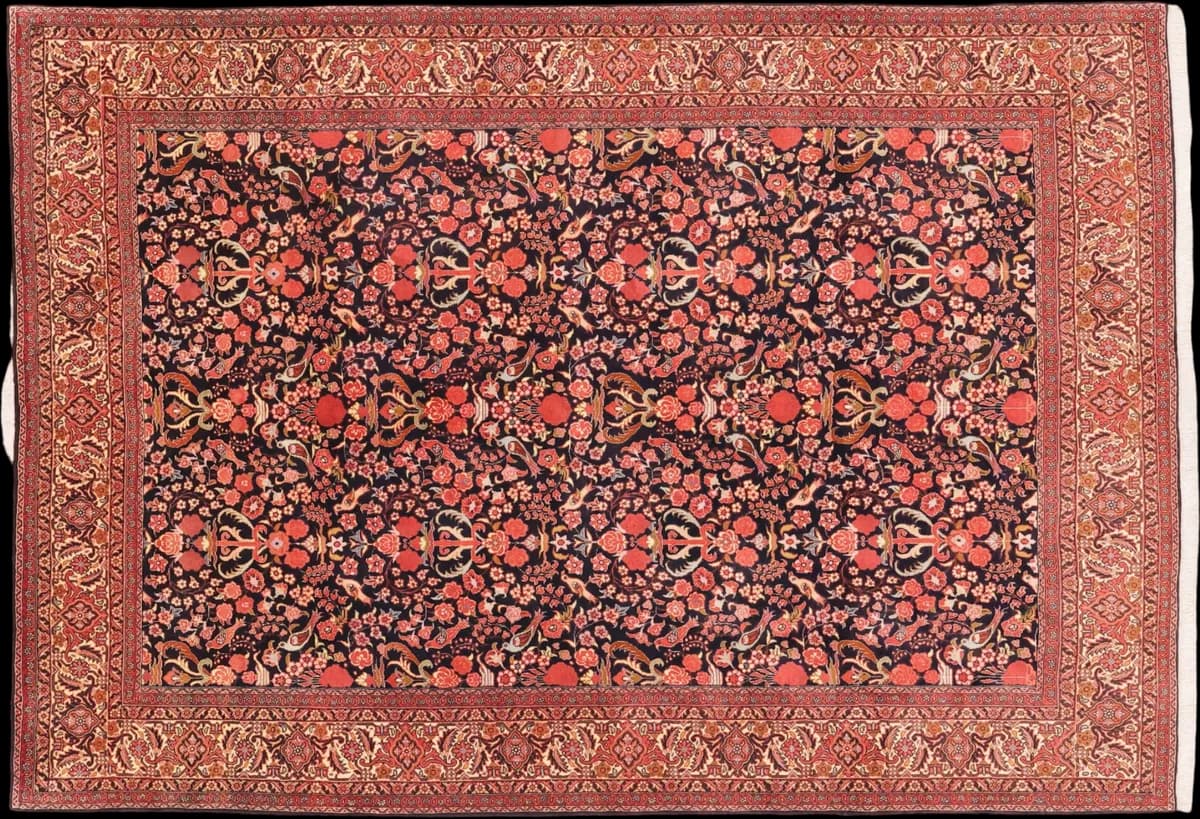
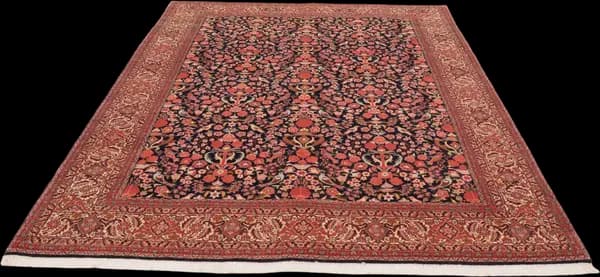
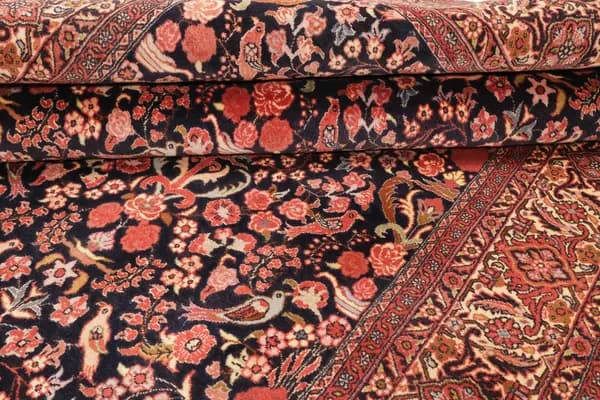
Bidjar, or Bijar, is the rug the Kurdish weaving regions of western Iran are known for above all others: a structure so densely packed that a piece this size, 290 x 203 cm (9'6" x 6'8"), cannot be folded, only rolled, and is nicknamed among collectors "the iron rug of Persia" for how long it holds its shape underfoot. This one departs from the type in its ground colour, and that departure is worth noticing before anything else.
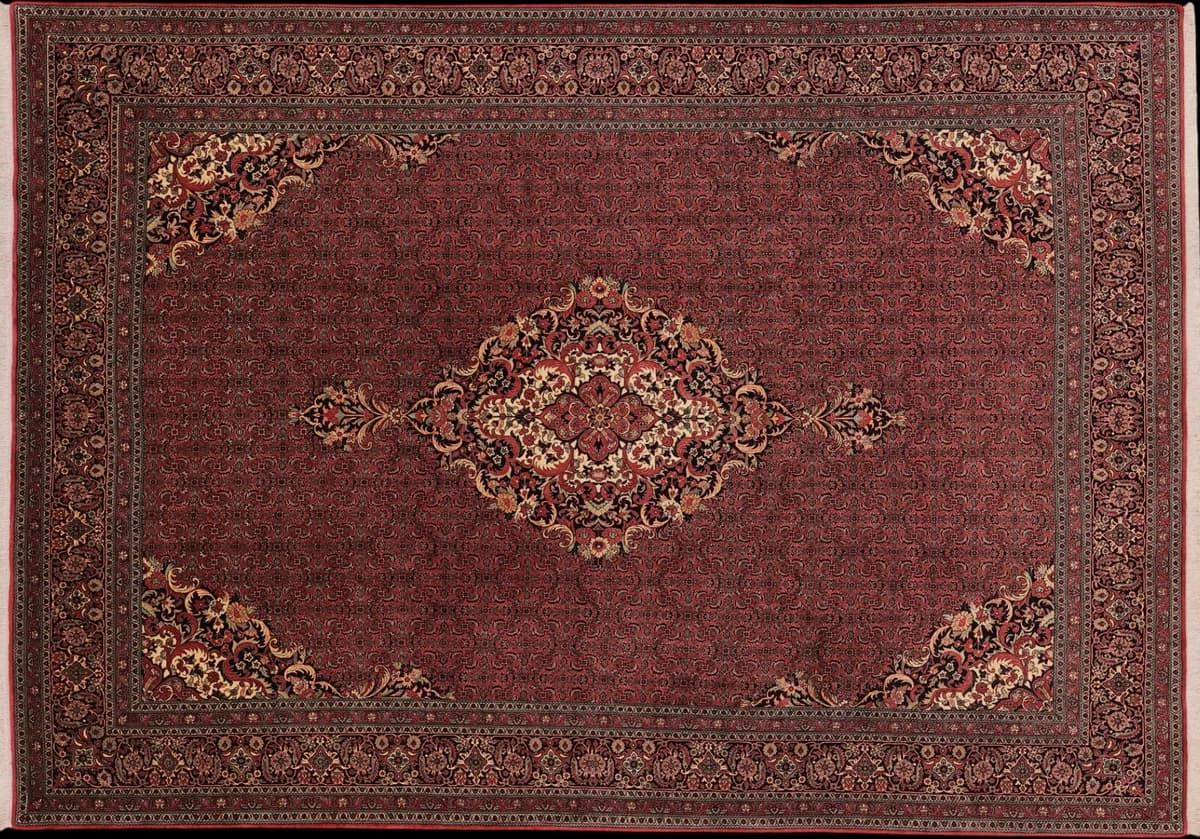
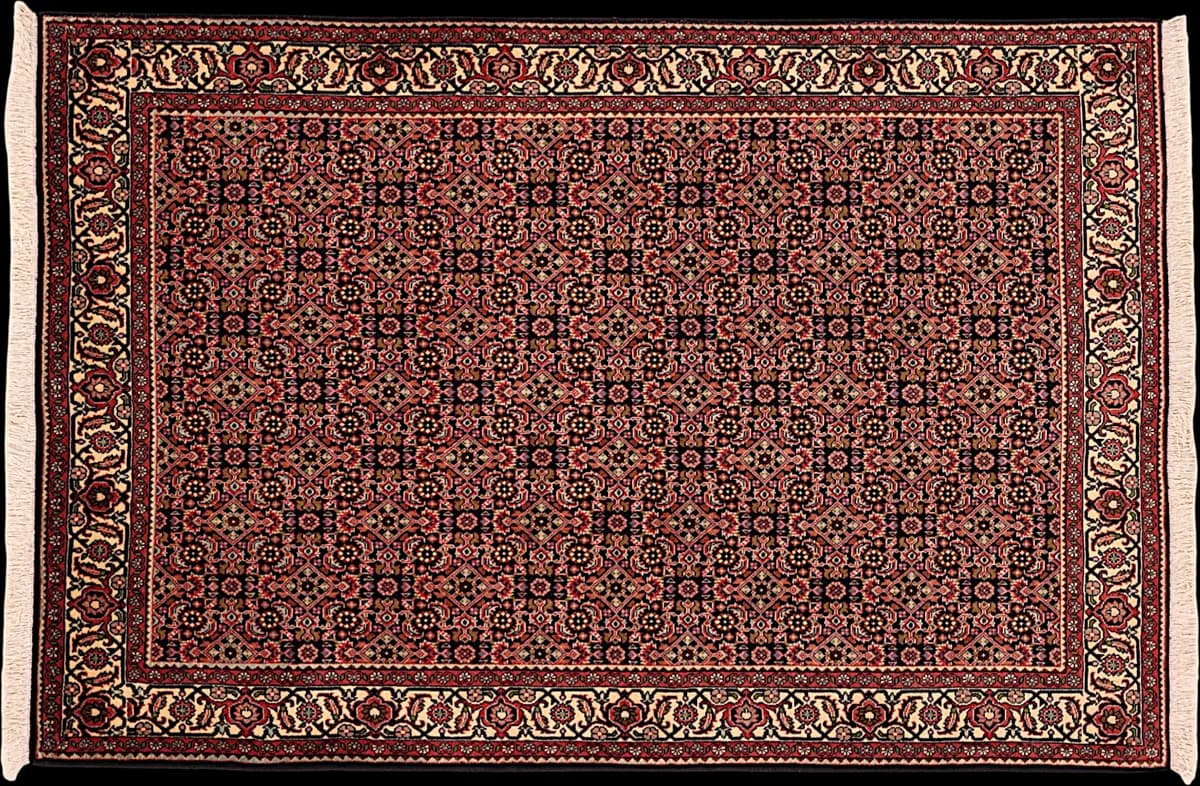
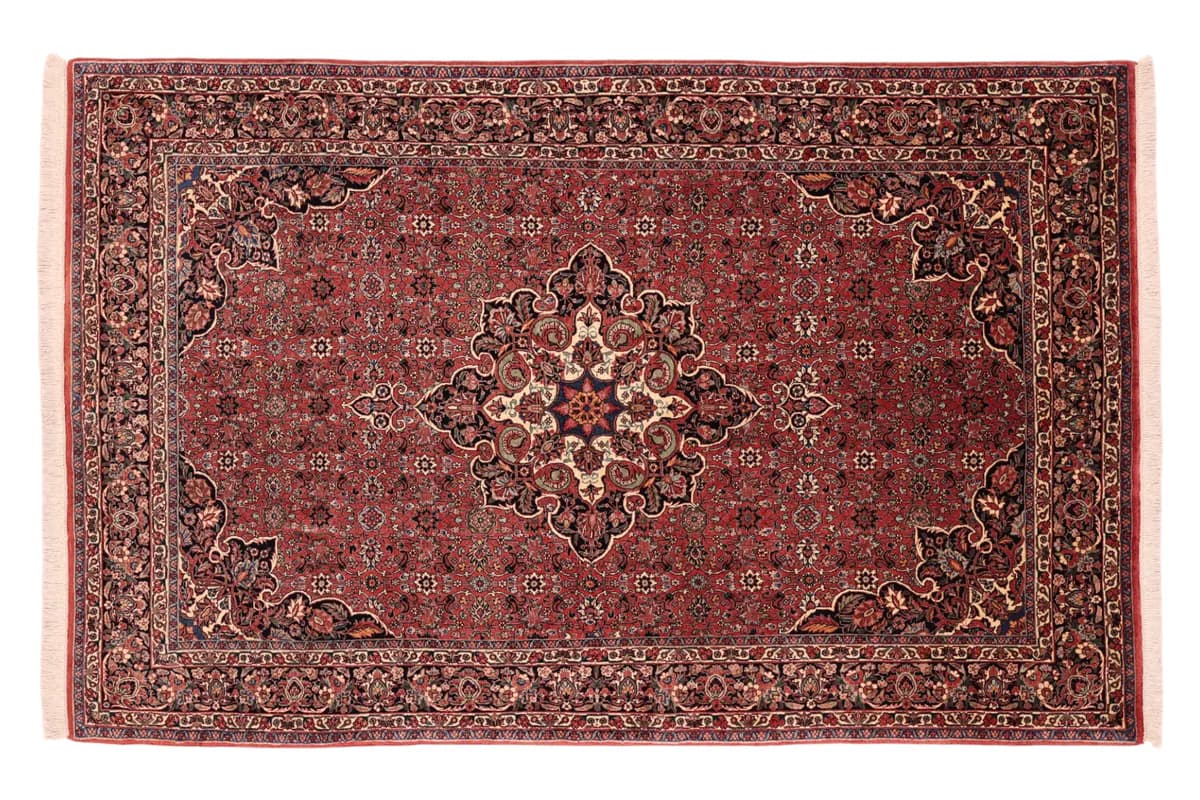
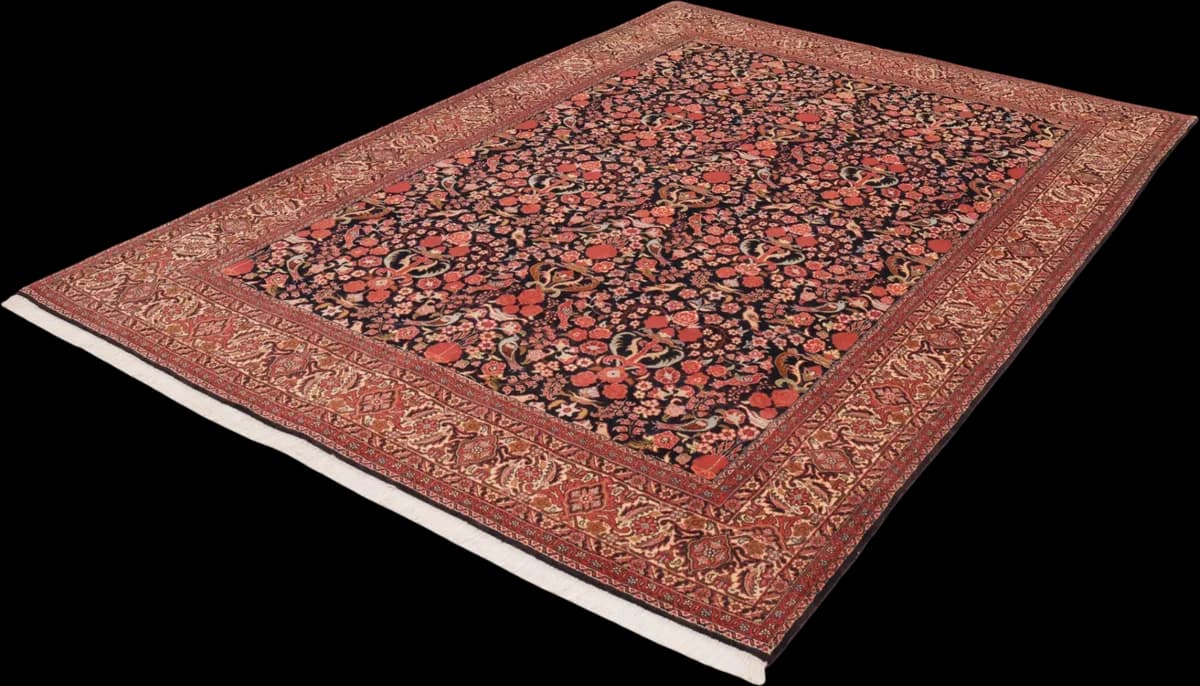
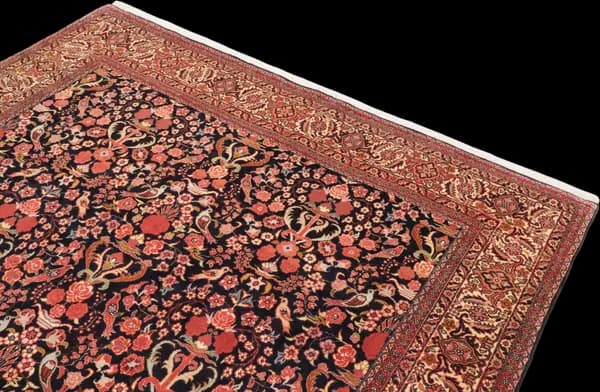
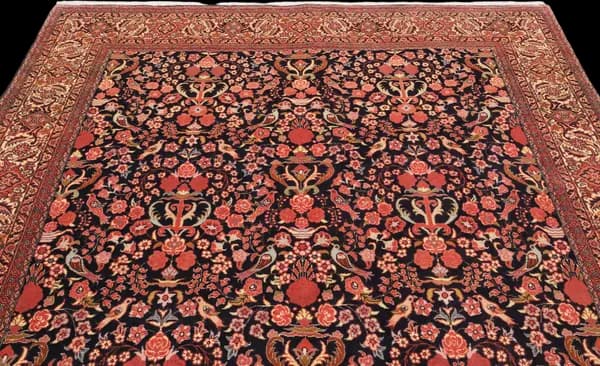
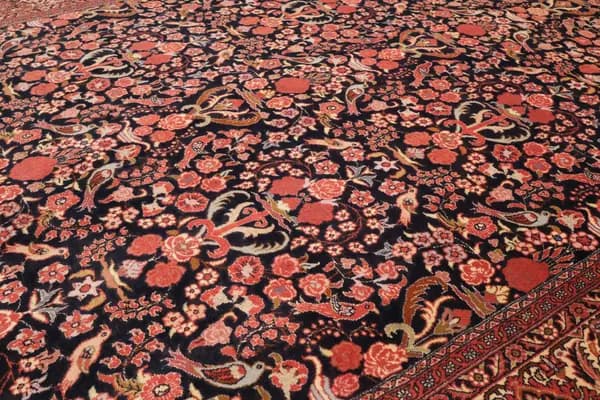
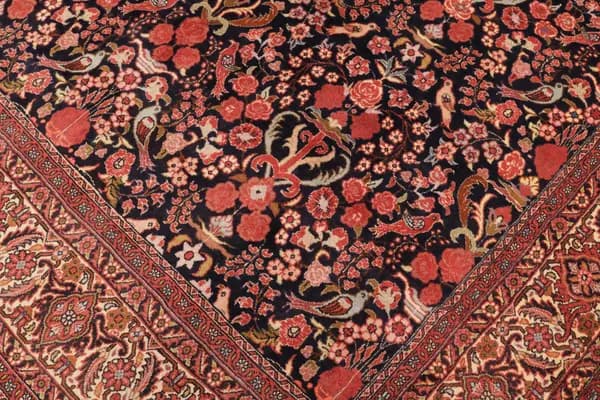
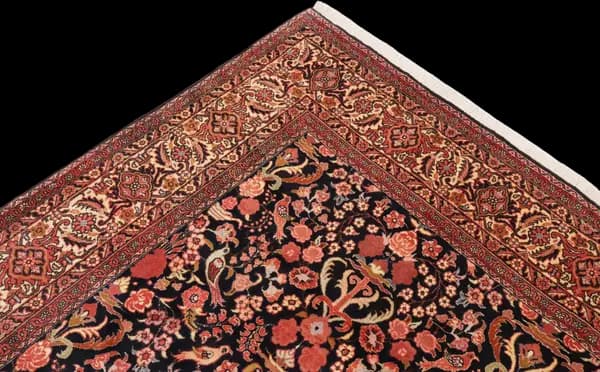
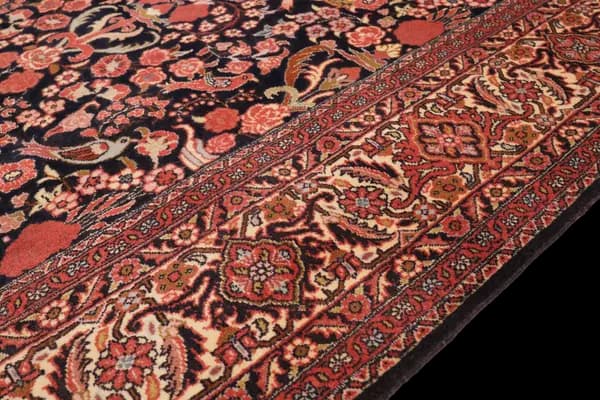
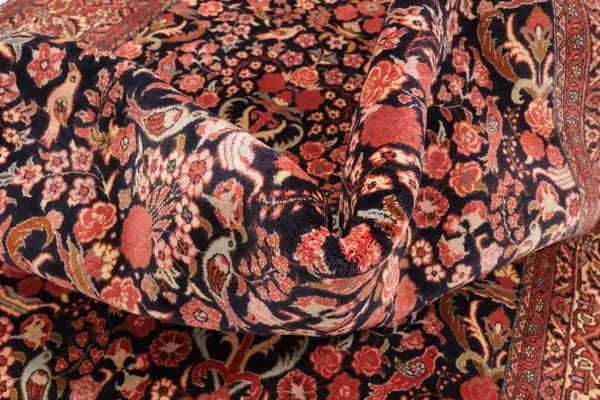
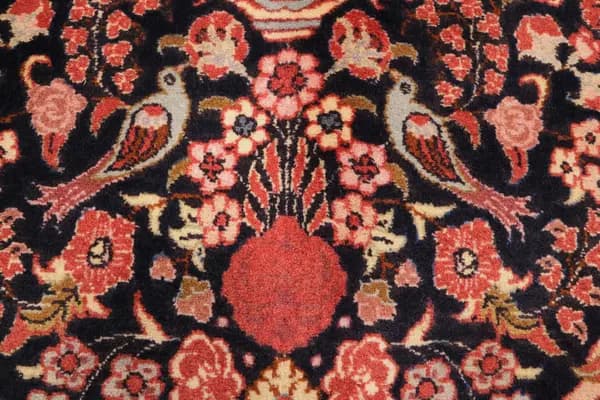
Most Bijars of this all-over pattern sit on red. Here the field is a deep, night navy, and against it the coral-red blossoms, palmettes and small stylised birds threaded through the sprays sit with far more force than the usual version allows, the rust, ivory, salmon and touches of gold and sage reading almost lit from within. There is no medallion; the flowers and birds simply repeat, dense and continuous, across the whole field. A wide ivory-and-red floral border, several thin guard stripes running inside it, holds the field in place and takes up roughly a fifth of the width, its pale ground answering the dark one it frames.
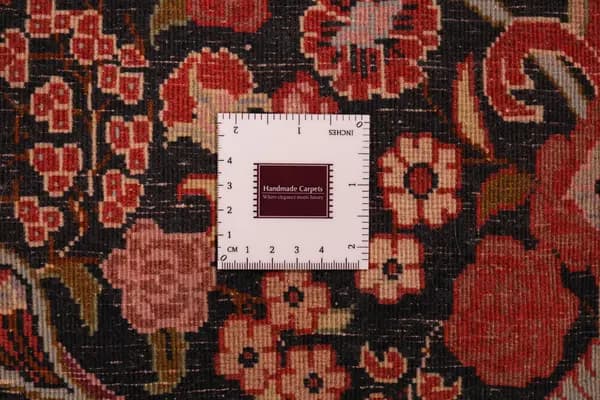
That density is not decorative talk but a fact about how the rug was knotted: at 321,000 to 380,000 knots per square metre, packed tighter than almost any other Persian weaving tradition, a Bijar's structure is pressed so firm that the wool itself carries weight in the hand. The pile here is handspun wool over a cotton warp, knotted entirely by hand, standing 15 mm deep with a slight, even sheen and a crisp surface rather than a soft one. It is that same tightness, worked from memory in the traditional Kurdish manner rather than from a drawn plan, that lets the navy stay so dark and the coral so sharp against it, with no give in the weave to blur an edge.
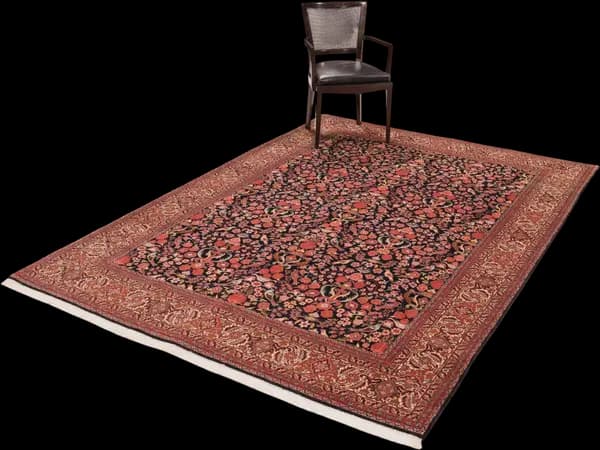
A rug this substantial, and this dense, belongs under a dining table or anchoring a seating group in a living room, where its 203 cm width gives real presence without needing a large floor. Against pale flooring the navy will hold its own rather than disappear, and the coral-red field will warm the room without softening into the background. Underfoot it is firm and solid, built for a room that gets used rather than kept for best, and as daylight crosses it through the day, the small gold touches and the sheen in the wool catch and shift, giving the birds among the flowers a way of coming forward that a flatter red ground never quite manages.
More on Bidjar rugs: origin, making and how to recognise a genuine piece
Superior craftsmanship
At 290 × 203 cm (5.89 m²) this is a large rug. It sits under a seating group with the front legs of sofa and chairs on it, or under a dining table for four. A table for six wants about 80 cm of clearance all round, and needs more.
Yes, knotted by hand — knot by knot on a loom, not machine-made. The density is 321,000 to 380,000 knots per square metre; across 5.89 m² that is roughly 1.9 to 2.2 million individual knots, every one of them tied by hand.
Hand-spun wool still carries its own lanolin, which keeps liquid sitting on the surface for a moment: blot quickly, with clear water and a light cloth, working inwards and without rubbing. Otherwise regular vacuuming along the pile is enough. Turn the rug once or twice a year so light and footfall reach it evenly.
We are in the Hamburg Speicherstadt. Come and see this rug in daylight, or write to us — a person answers.
Certificate included verifying origin, materials, and craftsmanship.
Ref: 914395