Azerbaijan
267 × 165 cm
2.970 €






2.100 €
Incl. VAT
In Stock · Ready to Ship
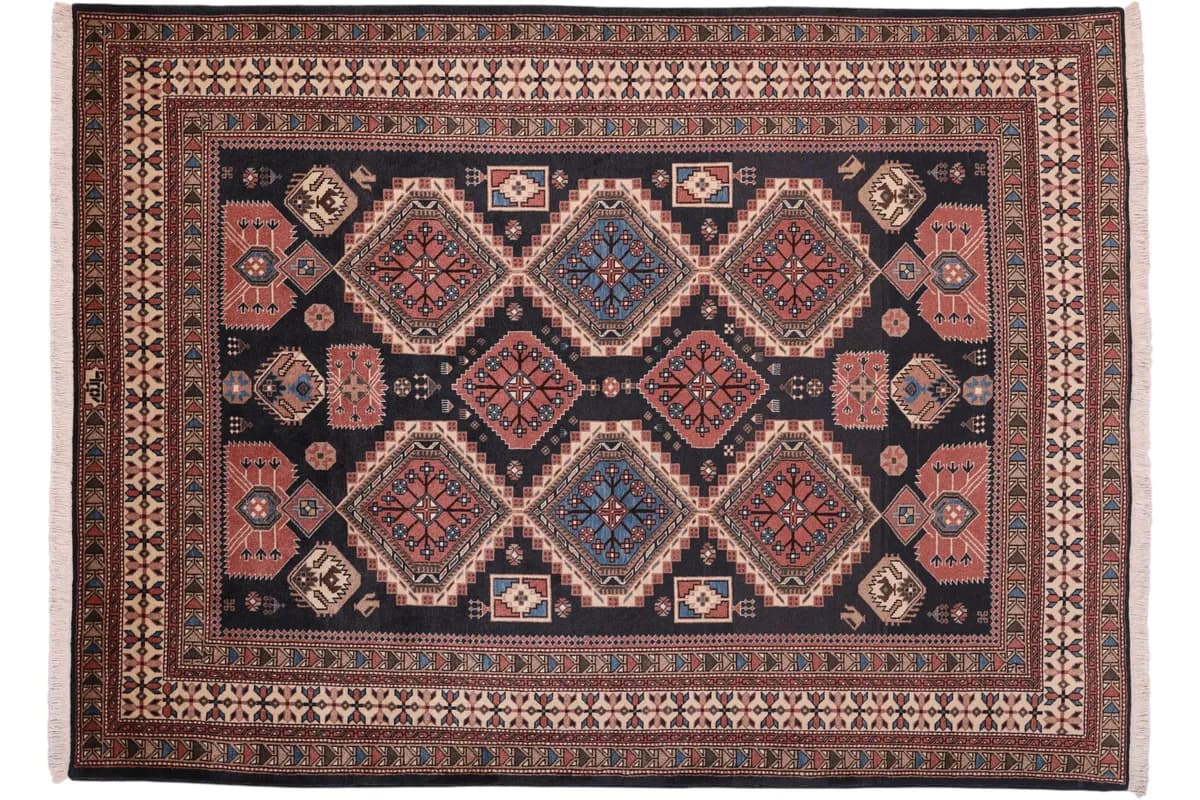
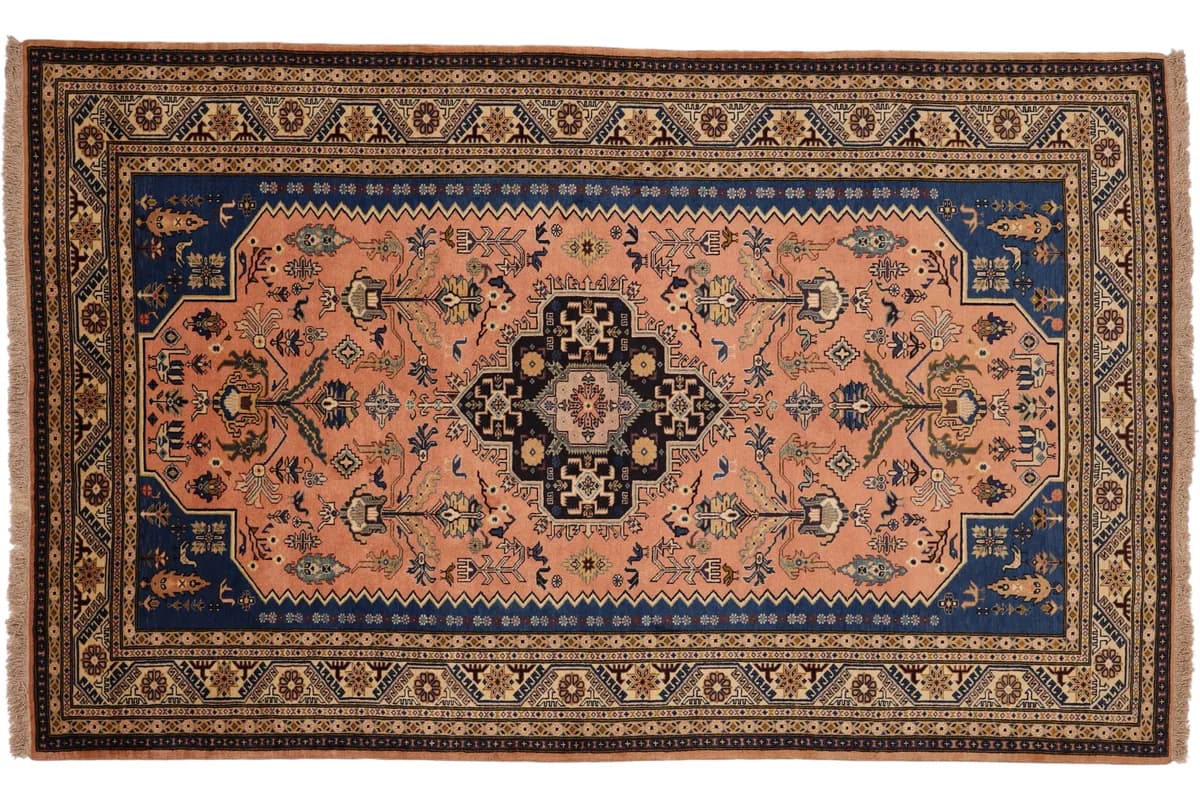
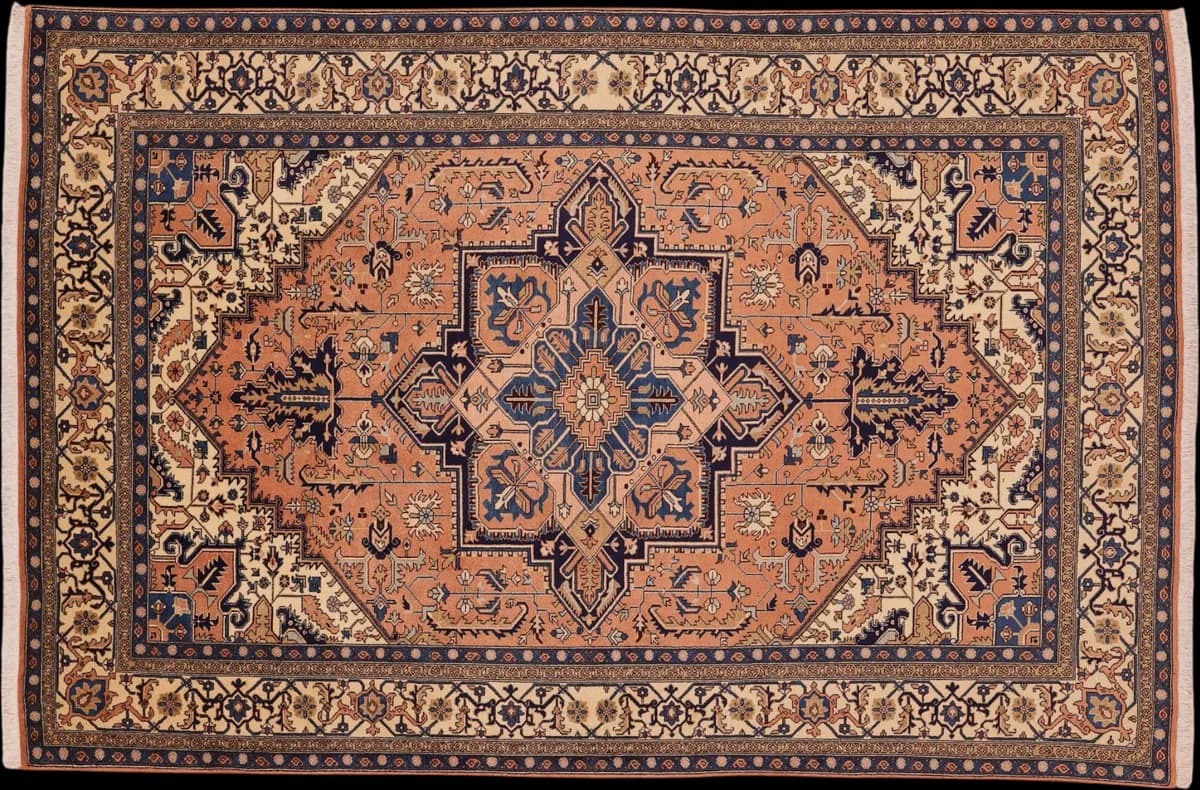
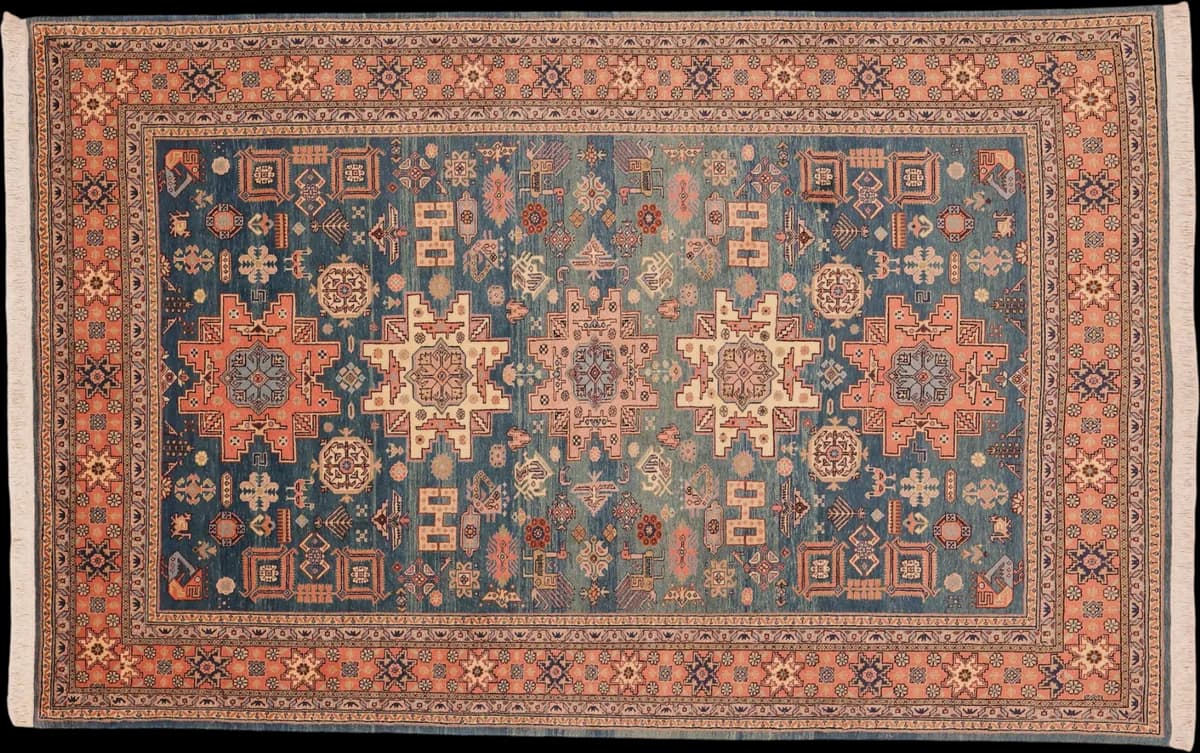
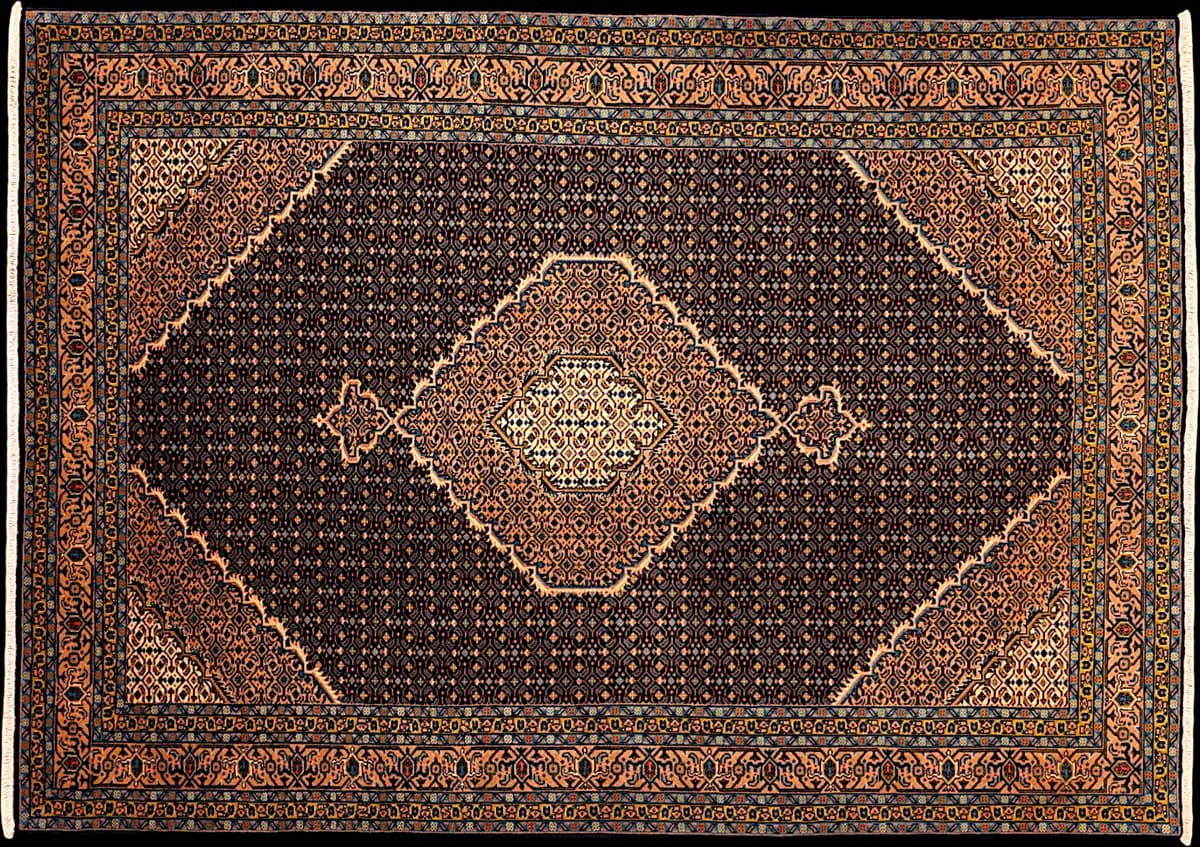
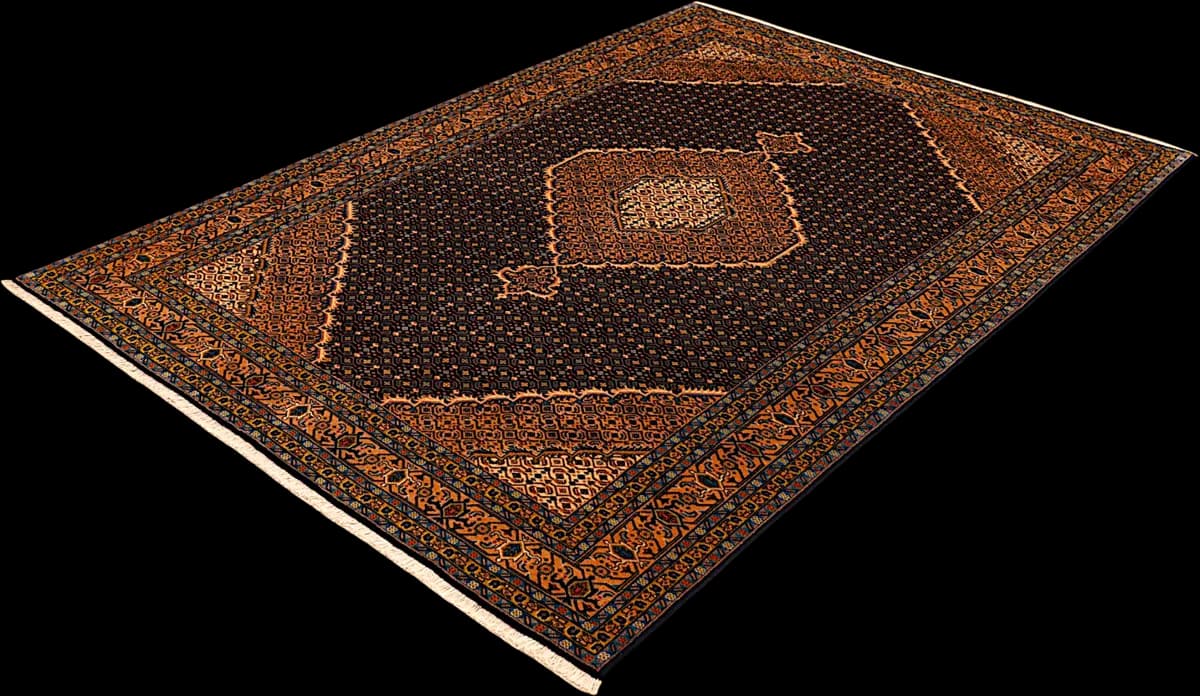
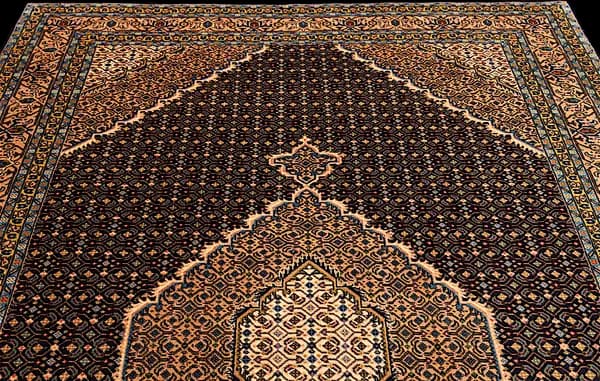
This is a Tabriz-school Mahi, a medallion carpet from Azerbaijan province in the north-west of Iran, one of seven weaving districts that share the region's taste for bold geometric medallions and angular arabesque borders set against deep, saturated grounds. It measures 280 x 200 cm (9'2" x 6'7"). Where the type usually runs to red, this piece is kept in navy and camel — a cooler, more restrained register for a very classic design.
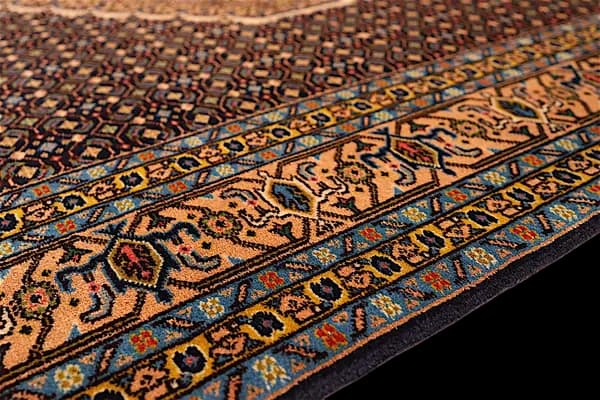
The field is a deep navy, almost blue-black, covered edge to edge with the tiny fish-and-rosette repeats of the Herati pattern, so fine that from a distance the ground reads simply as texture. Out of this rises a large lozenge medallion in camel and ivory, its outline stretched by small diamond pendants at each end rather than closing into a plain round or diamond shape. Camel spandrels echo the medallion into the corners, and a wide camel border, banded in navy, blue-grey and rust, closes the design at roughly a fifth of the rug's width.
Every knot here is tied by hand, the wool spun by hand and set into a cotton warp at a density of 128,000 to 160,000 knots per square metre — enough to hold the small Herati repeats sharp against the navy ground rather than letting them blur. The pile is cut low, to about 12 millimetres, which is what gives the surface its crisp, finely drawn line. Wool from this region is traditionally worked from sheep watered near copper-rich streams, said to give it an unusual durability — wool already spun to last.
This size suits a dining room or a living room, under a table or across a seating group. Navy holds its own against dark wood or a dark sofa, while the camel medallion keeps a pale floor from feeling cold underfoot. The weave itself is dense and firm, made for daily use rather than kept for best. In low evening light the camel warms first, and the fine lattice across the field only really shows itself once you are standing over it.
More on Azerbaijan rugs: origin, making and how to recognise a genuine piece
Traditional weave
At 280 × 200 cm (5.60 m²) this is a large rug. It sits under a seating group with the front legs of sofa and chairs on it, or under a dining table for four. A table for six wants about 80 cm of clearance all round, and needs more.
Yes, knotted by hand — knot by knot on a loom, not machine-made. The density is 128,000 to 160,000 knots per square metre; across 5.60 m² that is roughly 720,000 to 900,000 individual knots, every one of them tied by hand.
Hand-spun wool still carries its own lanolin, which keeps liquid sitting on the surface for a moment: blot quickly, with clear water and a light cloth, working inwards and without rubbing. Otherwise regular vacuuming along the pile is enough. Turn the rug once or twice a year so light and footfall reach it evenly.
We are in the Hamburg Speicherstadt. Come and see this rug in daylight, or write to us — a person answers.
Certificate included verifying origin, materials, and craftsmanship.
Ref: 763407