Azerbaijan, Tabriz and the difference
Iranian Azerbaijan is the group of provinces in the far north-west, on the borders with the Republic of Azerbaijan and Turkey. Tabriz is its largest city and one of the most famous rug metropolises in the world. Buy a rug labelled Tabriz and you are, as a rule, buying workshop production to a drawn cartoon.
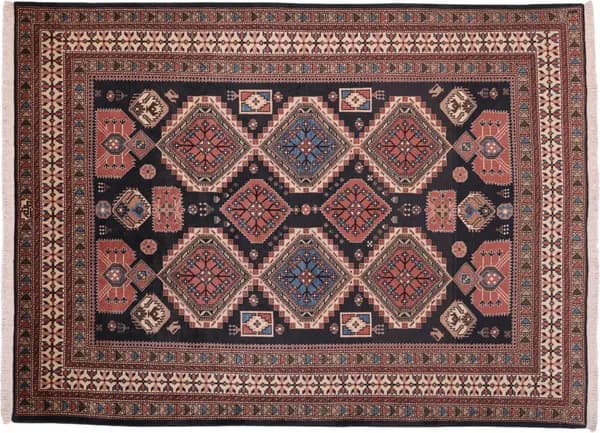
Rugs traded as Azerbaijan come instead from the wider country: from villages and small workshops of the province, working without the strict design apparatus of the city. Technically they stand between village and manufactory — cleaner and more even than pure tribal work, freer than a Tabriz.
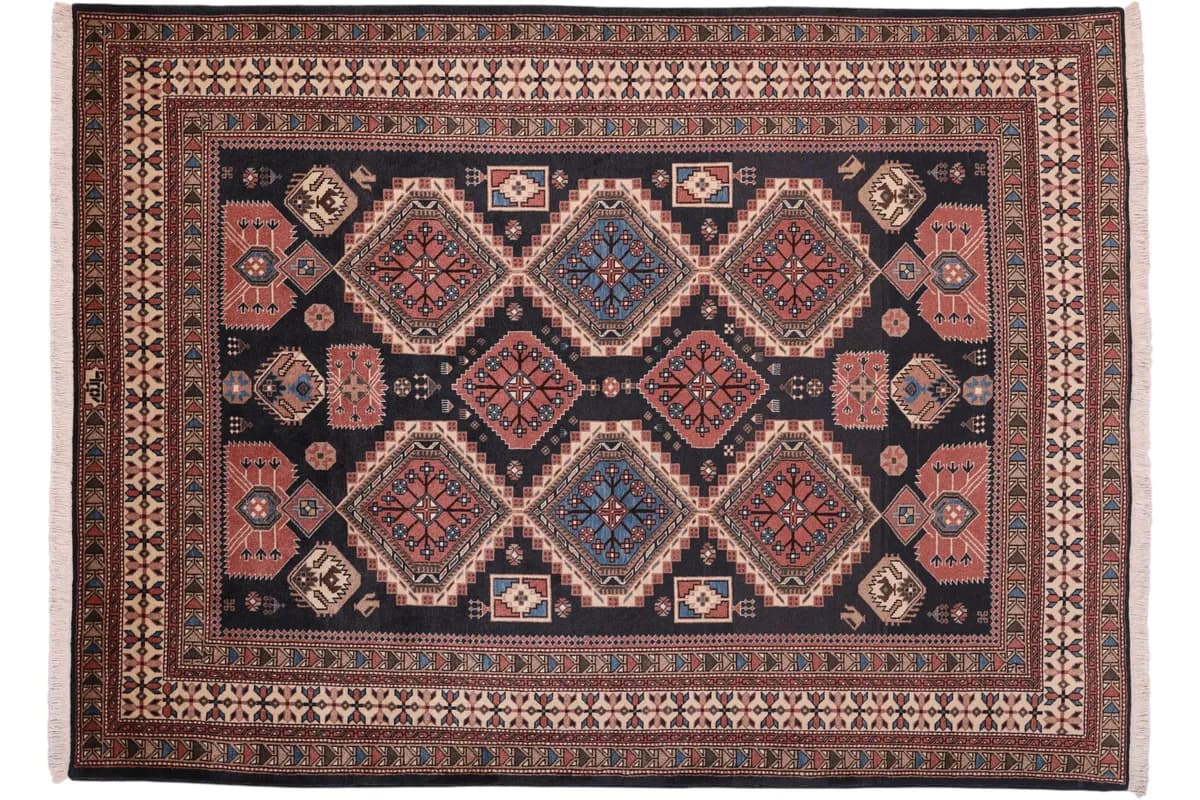
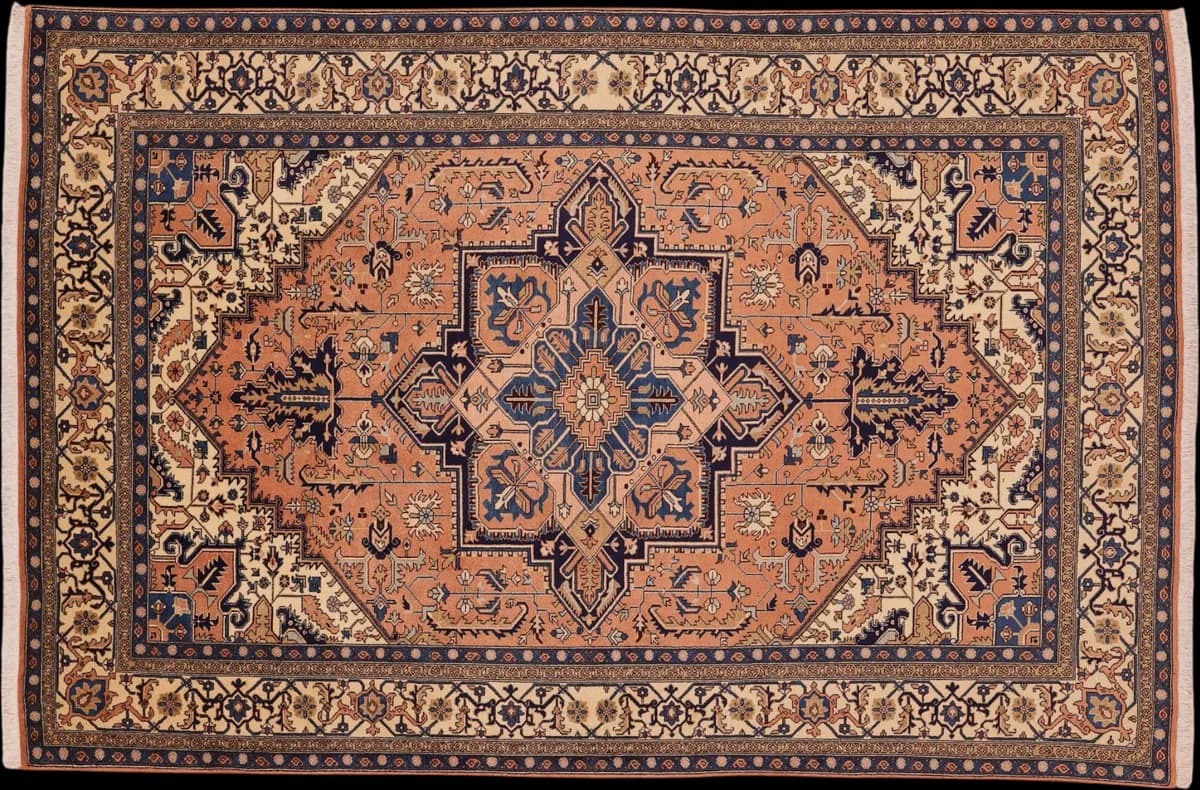
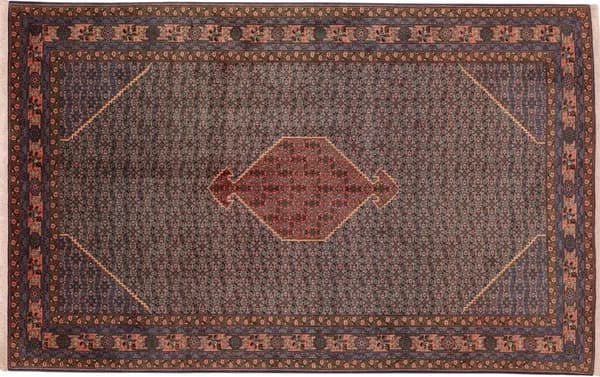
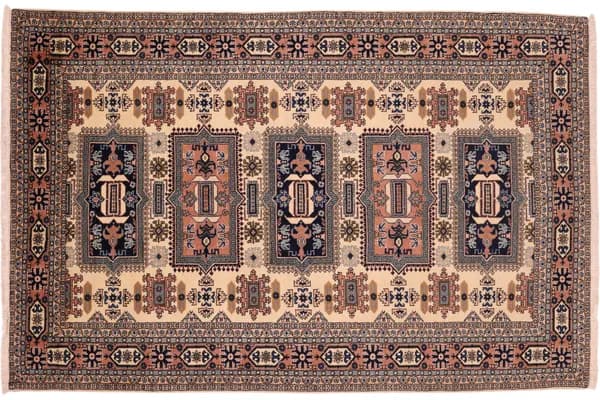
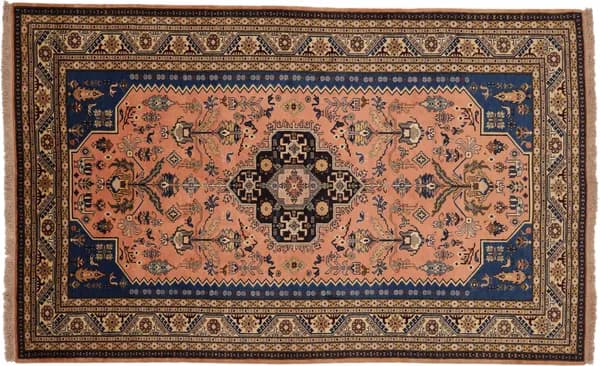
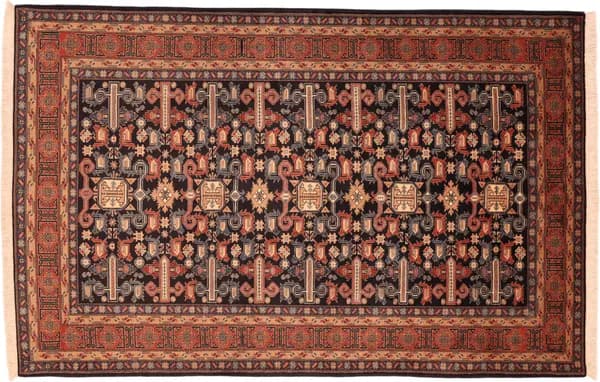
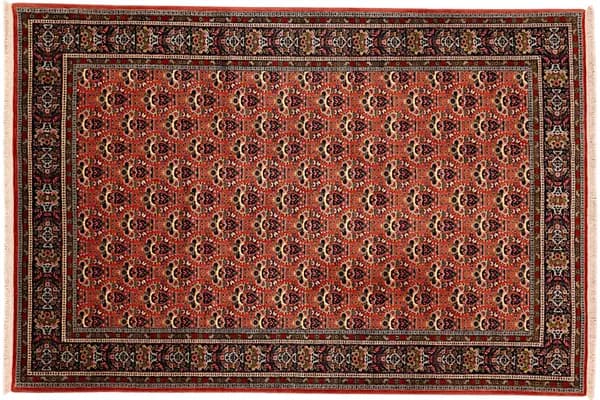
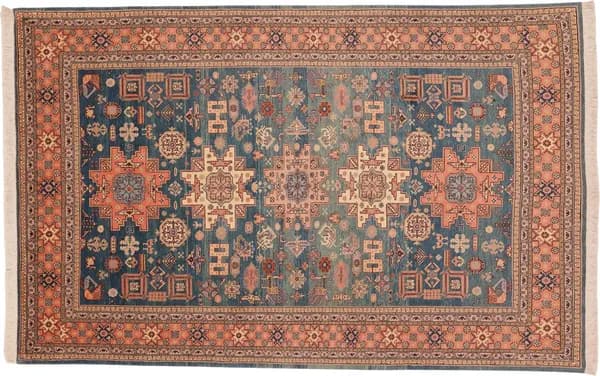
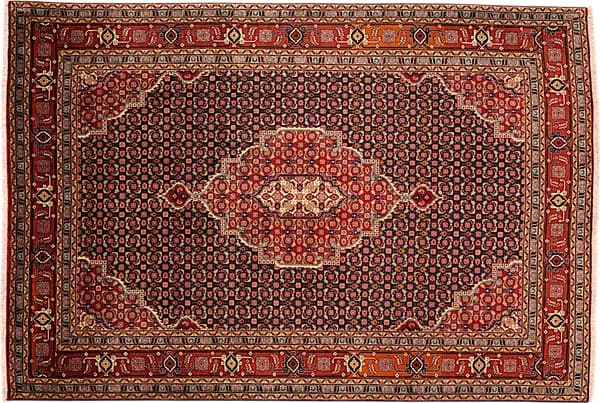
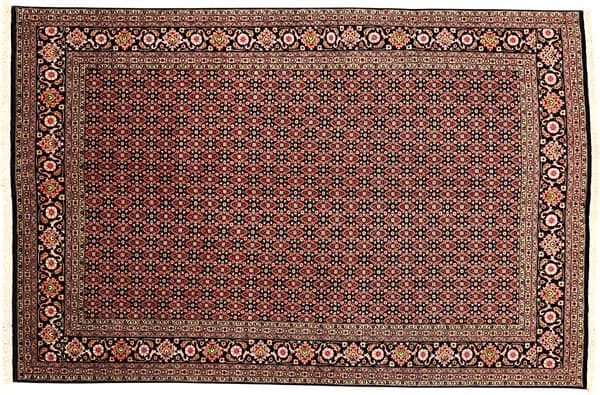
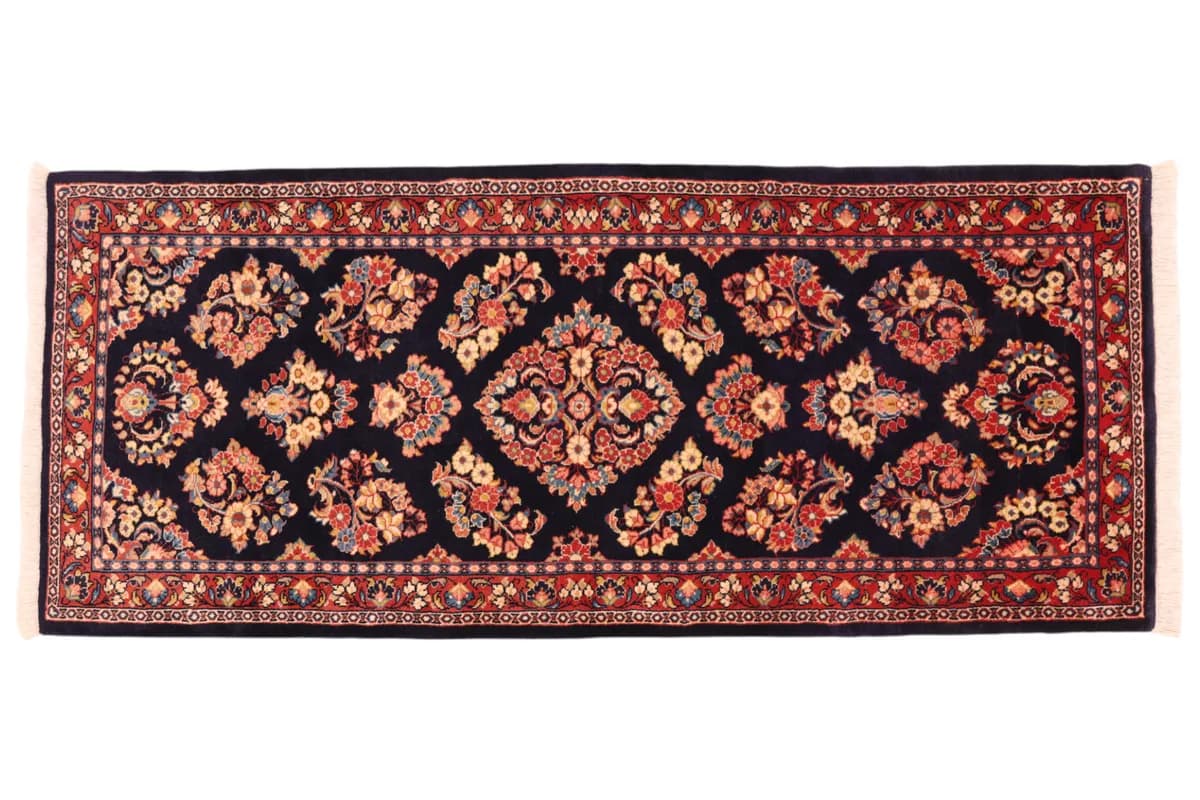
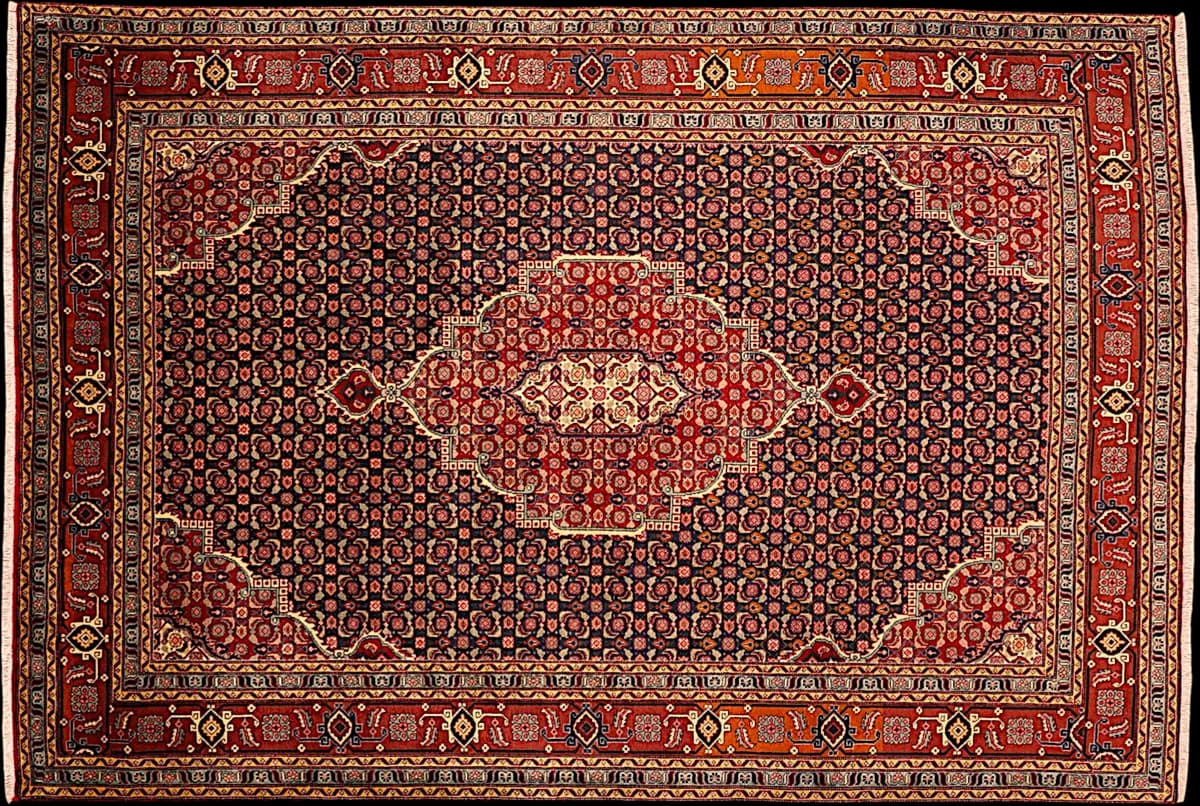
That also explains the drawing. Where Tabriz frequently shows a central medallion with elaborated corner spandrels, an Azerbaijan is more often an all-over field — an even grid of ornament with no centre, running across the whole surface.
What the flat pile means
Eight millimetres is little. For comparison: Kurdish types sit at twelve, a Gabbeh at eighteen. The low pile is a deliberate decision and has three practical consequences.
First the drawing: the shorter the pile is sheared, the sharper the contours stand. An all-over field with small-scale ornament needs that sharpness or it blurs.
Second the handle: the surface is smooth and feels cooler than a high-pile rug. Third the height: a flat rug builds up little and passes under doors that close close to the floor — a point you only notice when a thick rug catches.
- Eight millimetres of pile — sharp contours, smooth surface, low build-up.
- All-over fields instead of a central medallion.
- Cotton warp, recognisable by light, smooth fringes.
- Larger formats from four to over eight square metres are the rule.
- Mostly twenty to forty years old, with a settled patina.
Which room an Azerbaijan suits
The formats argue for whole rooms. Above five square metres the rug carries a seating group with every furniture leg on it, or a dining table with the chairs pushed back — allow around 80 centimetres of clearance beyond the table edge.
The flat pile makes it the practical rug for rooms with traffic. Chairs can be moved without sinking in, and a wheelchair or a desk chair runs better over eight millimetres than over eighteen.
Because the pattern is continuous and has no centre, the rug tolerates furniture. A sofa covering a third takes nothing from the composition — unlike a medallion rug, whose middle carries the design.
Care
Vacuum along the pile, without a rotating brush. On a short pile there is no deep dirt for a brush to work loose — it only attacks the surface.
Blot spills at once with clear water and a light cloth, working from the outside in and without rubbing. On a short-sheared pile a roughened patch stays visible.
Turn the rug once or twice a year. On large rugs in living rooms this is the most effective single step, because otherwise the window side fades visibly faster than the room side.
Azerbaijan or Tabriz?
Both come from the same province in north-western Iran. The difference is country against city — and it shows in drawing, fineness and price.
| Criterion | Azerbaijan | Tabriz |
|---|---|---|
| Type | village and workshop work of the province | city manufactory to a cartoon |
| Pattern | predominantly all-over | often medallion with spandrels |
| Knot density | 201,000 – 250,000 / m² | considerably higher, often over 500,000 |
| Pile height | around 8 mm | very short sheared |
| Price level | moderate | higher, depending on fineness |
Common questions
Is an Azerbaijan rug Iranian or from Azerbaijan?
The pieces traded here come from Iranian Azerbaijan, the province group in north-western Iran. The name therefore denotes an Iranian region, not the neighbouring state of the same name.
Why is the pile so much flatter than on Kurdish rugs?
Because the drawing requires it. An all-over field with small-scale ornament needs sharp contours, and those are only achieved with a short-sheared pile. At twelve or fifteen millimetres the pattern would blur.
Does an Azerbaijan work under a dining table?
Yes, and it is particularly suited to it. The formats are large enough and the flat pile lets chairs run without sinking in. What matters is the clearance of around 80 centimetres beyond the table edge.
How does it differ from a Heriz?
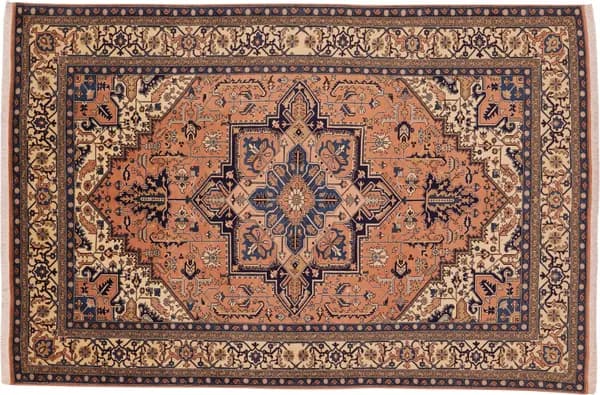
Heriz also lies in Iranian Azerbaijan and is a specific, very well-known place name with a characteristically large angular medallion. Rugs traded as Azerbaijan come from the wider province and more often show all-over fields.
Are the rugs new or used?
New, not used: at RUGSOCIÉTÉ no piece has had an owner before you. In the trade, most Azerbaijan rugs were knotted twenty to forty years ago; the age is listed in the details of each rug. In that time natural dyes have taken on a quiet, slightly warmer tone and the pile has acquired an even sheen.