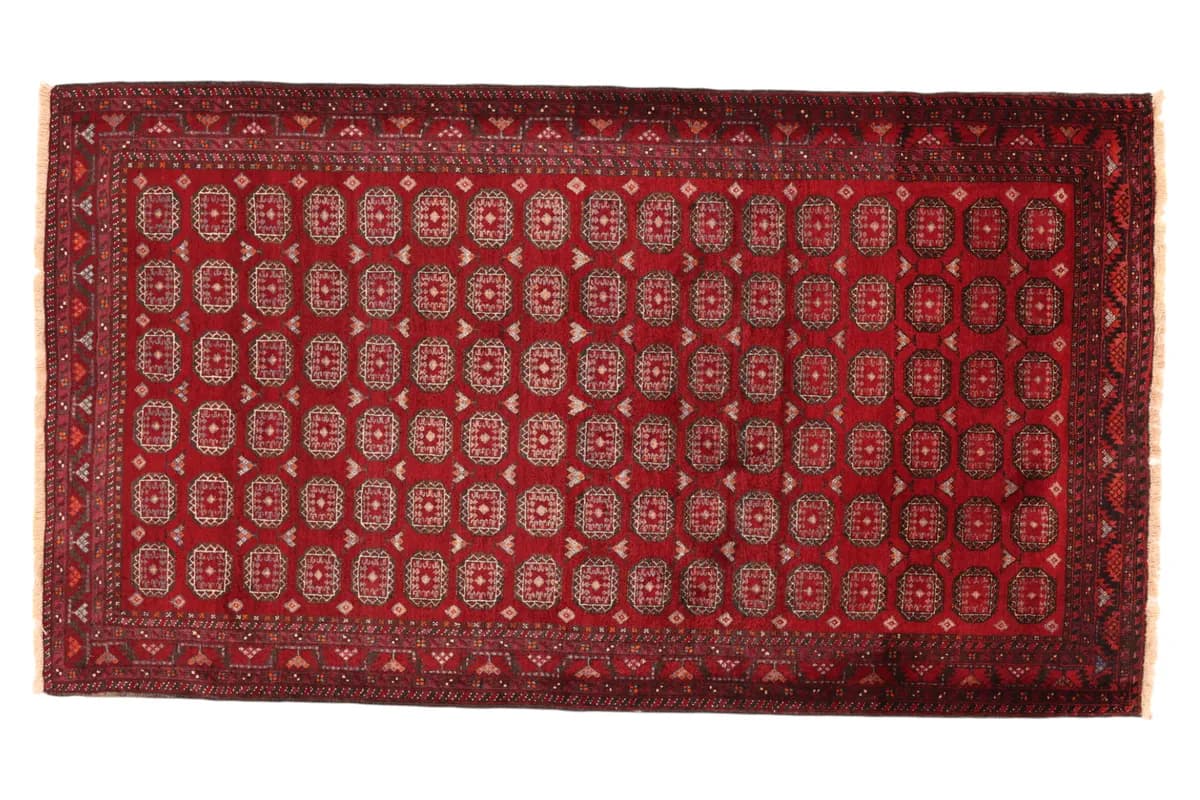
Belutsch
193 × 108 cm
518 €
649 €
Incl. VAT
In Stock · Ready to Ship
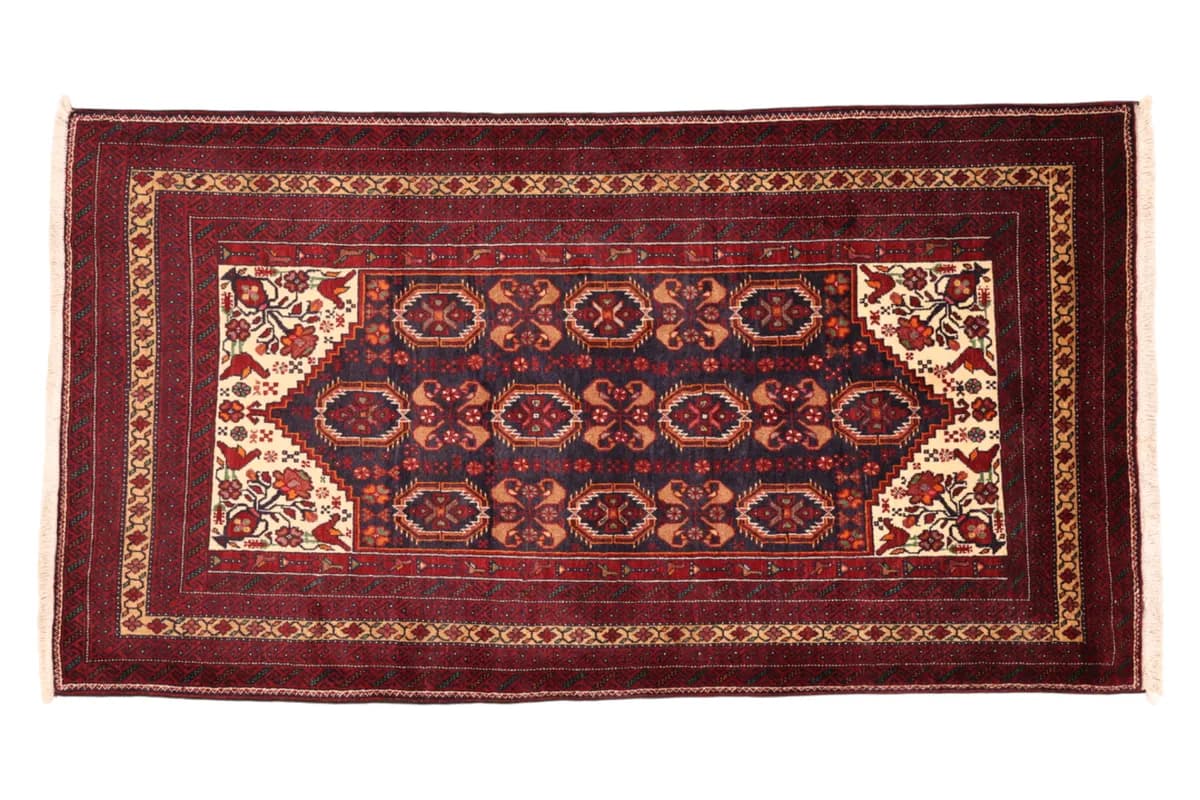
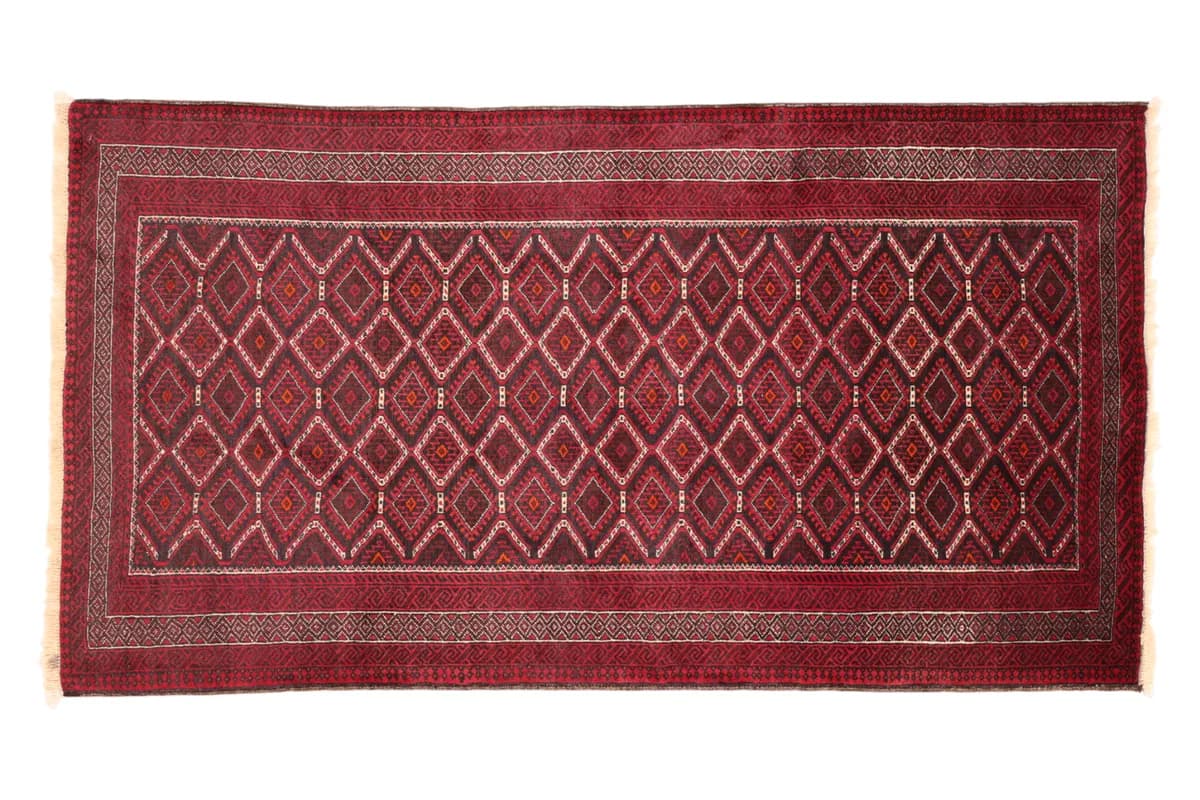
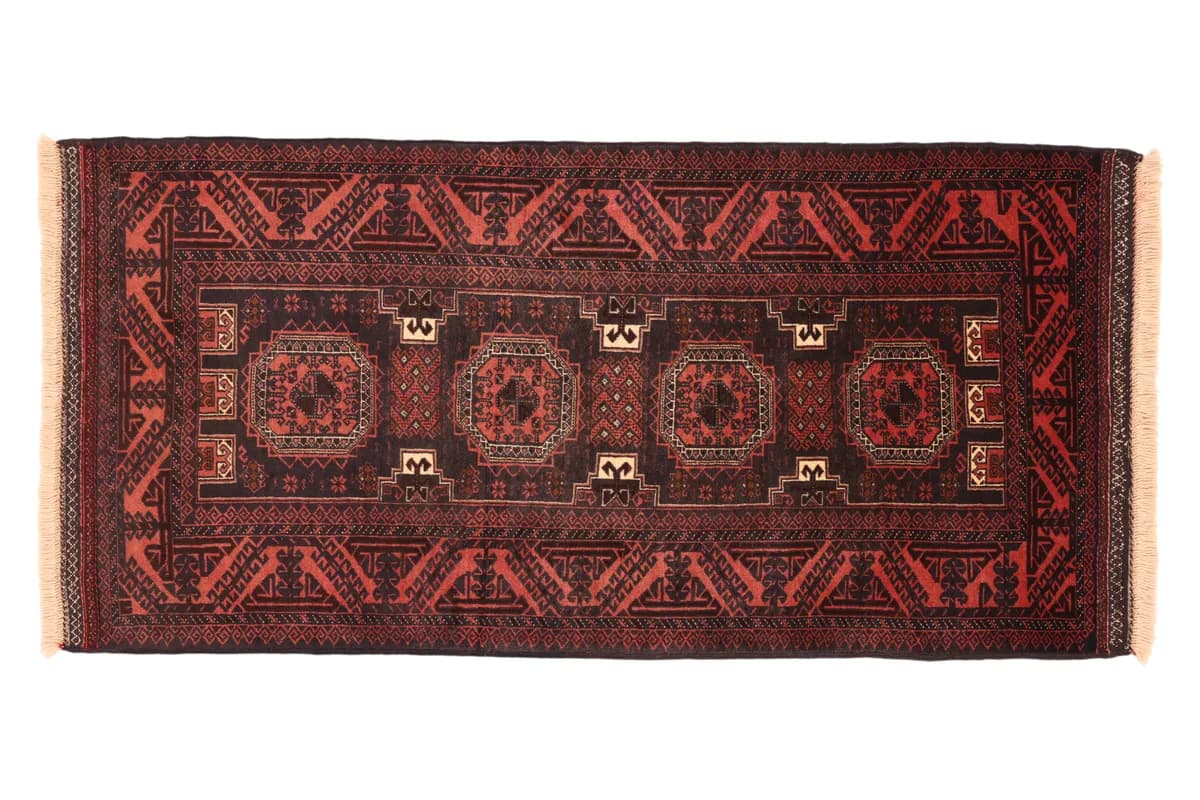
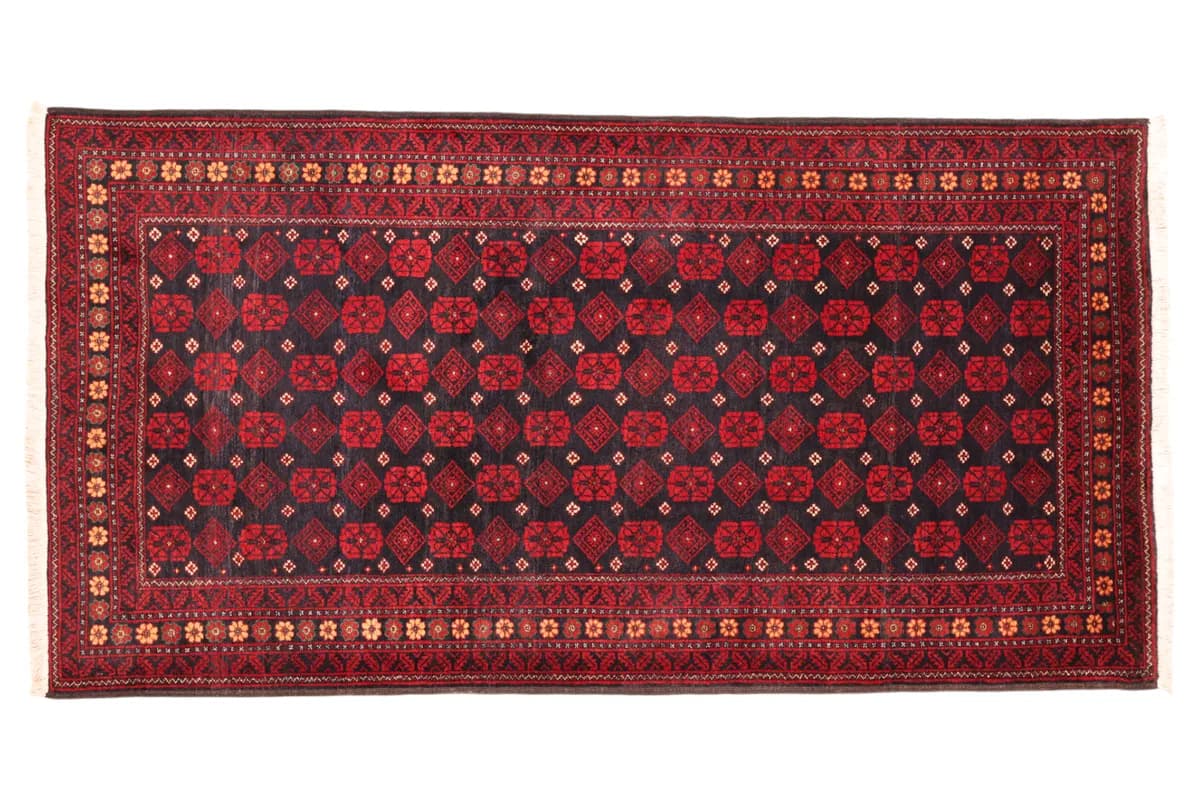
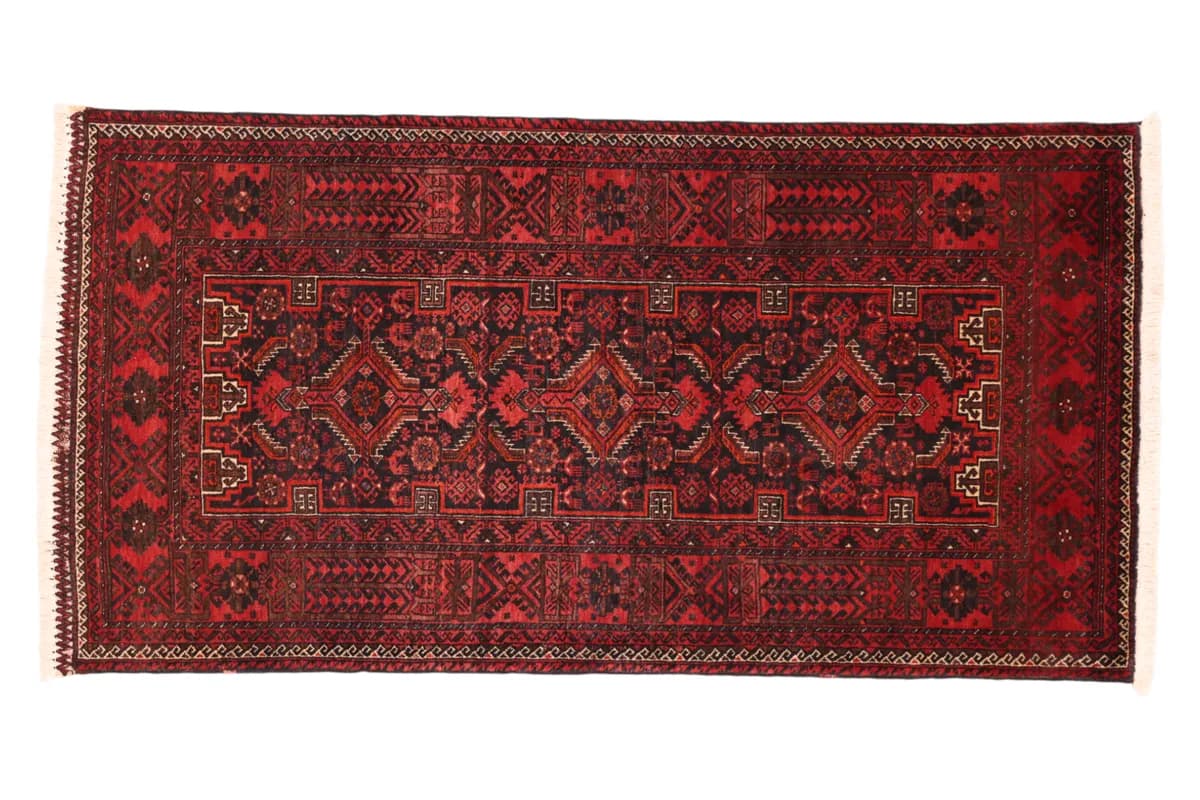
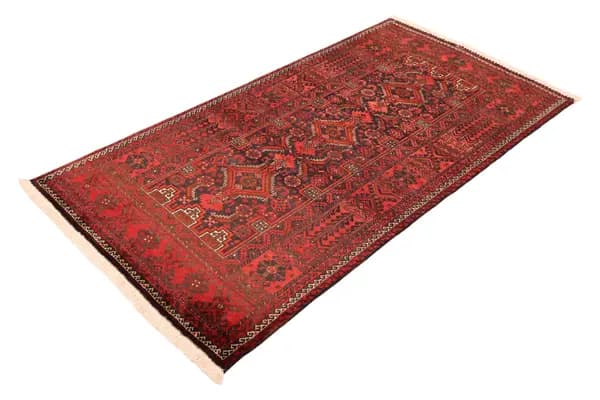
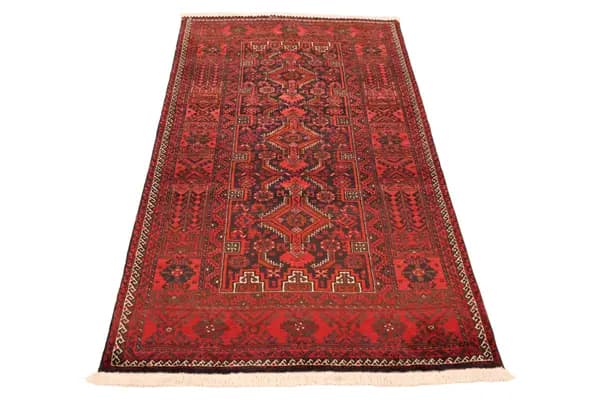
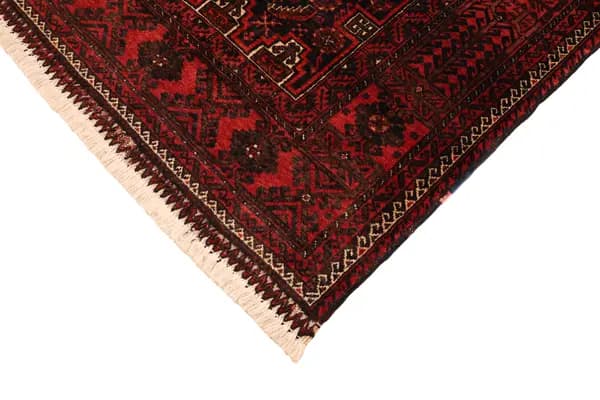
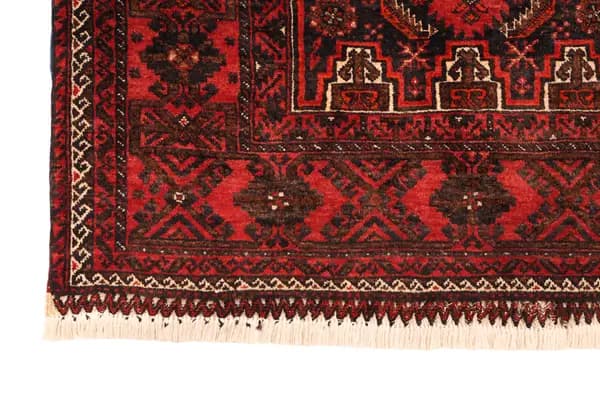
A Baluch rug, a nomadic weaving from the borderlands of southeastern Iran, measuring 190 x 99 cm (6'3" x 3'3"). Baluch weavers are known for deep, earthy colour and bold, angular geometry, carried from memory rather than a drawn plan, and for a groundedness that has kept these rugs in demand for generations. This piece is not the familiar single-niche prayer design; instead it carries a Seh Torandj arrangement, three medallions in sequence, which gives it more structure than most tribal fields.
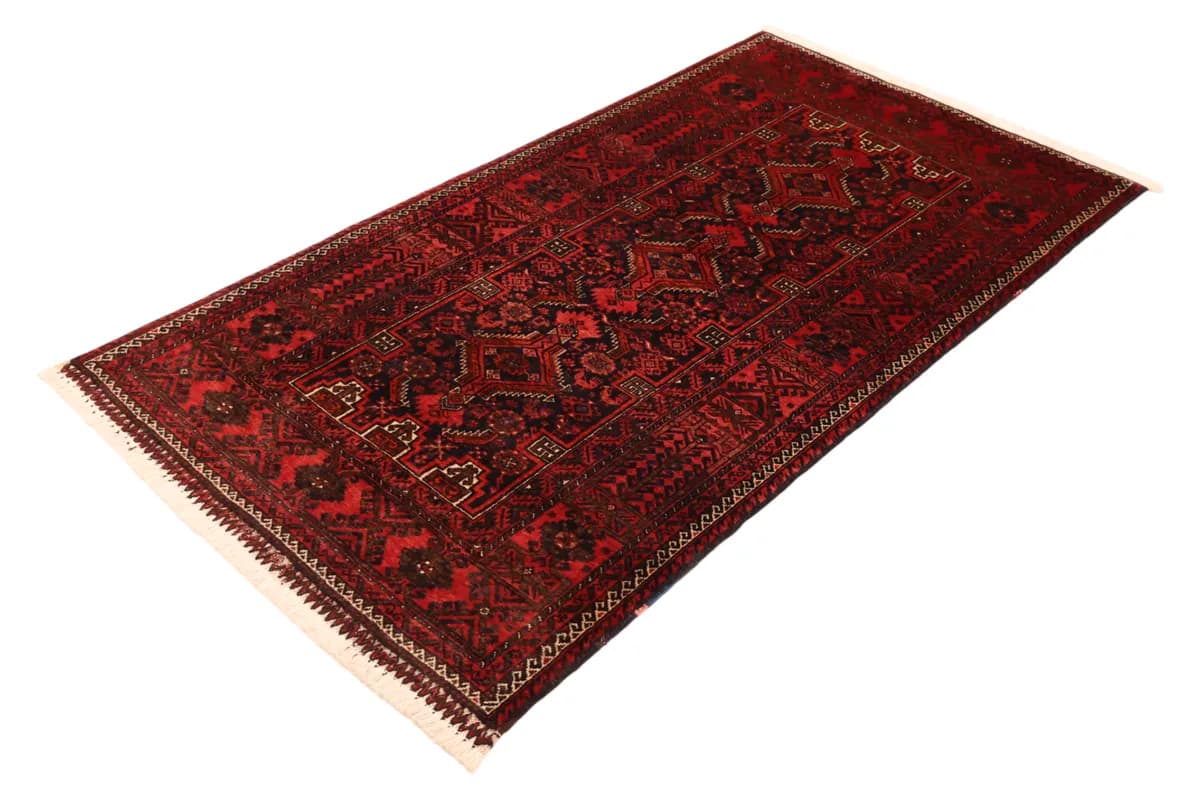
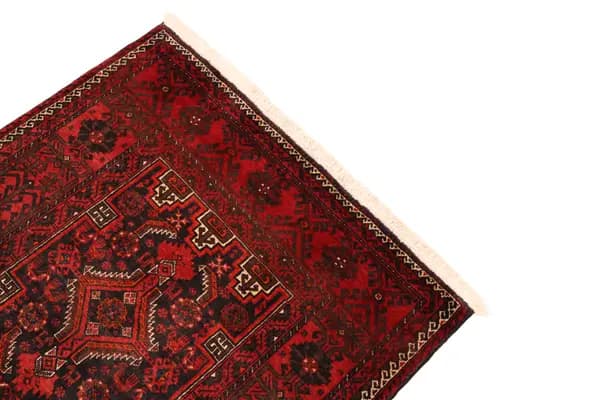
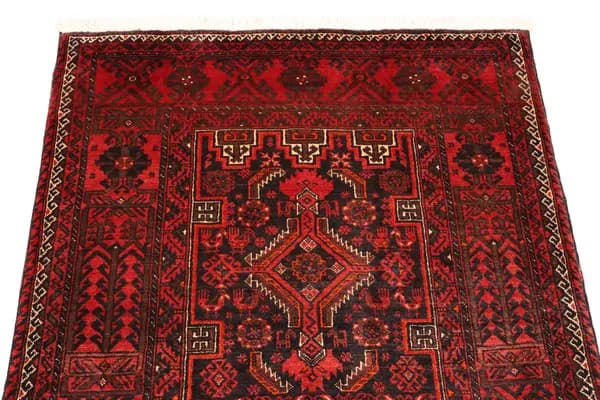
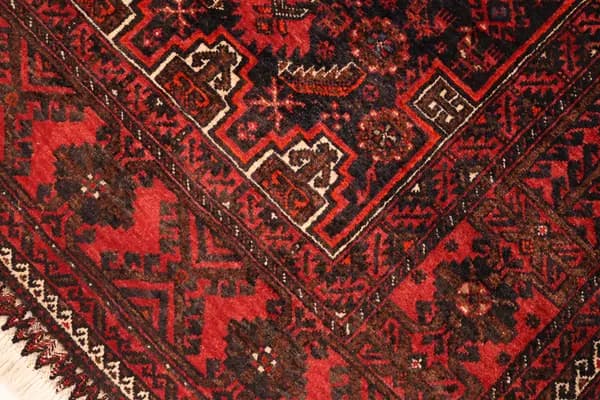
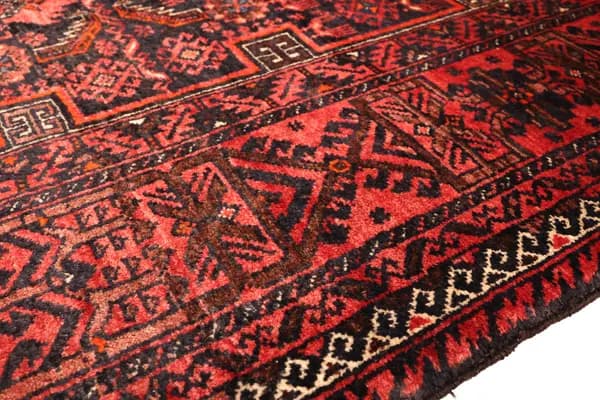
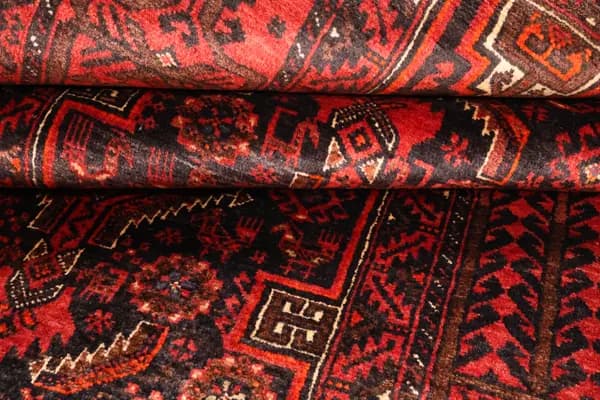
The first impression is a deep, saturated brick red. Down the centre runs a column of three linked lozenge medallions, each set on a ground so dark, near black against indigo, that it forms its own frame within the rug. Around them the red field carries small geometric filler motifs, orderly rather than scattered. A wide red border closes the composition, patterned with hooked diamonds in ivory and brown, held in place by several narrower guard stripes.
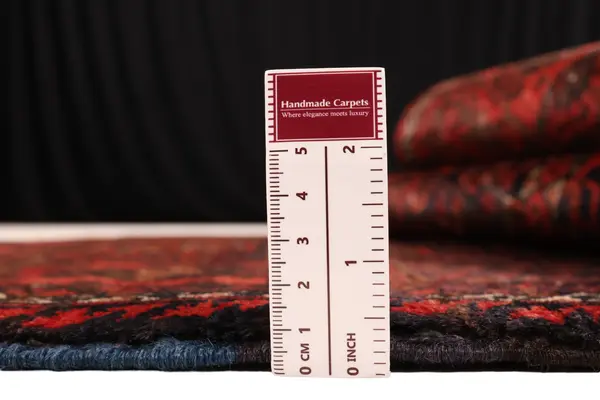
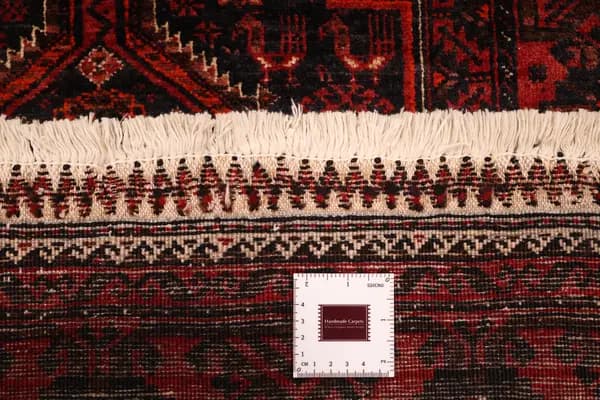
The wool is hand-spun, and it shows: rather than a smooth, lustrous surface, the pile has a slight ribbed texture, matte and slightly uneven, the mark of yarn spun by hand rather than machine. At 128,000 to 160,000 knots per square metre and a 6 mm pile, the weave is dense enough to hold that fine hooked border cleanly while still reading as tribal rather than workshop work. What took real deliberation was the layout itself: three medallions, evenly spaced and aligned, are harder to hold in the head than a repeating pattern, and getting them to sit square to one another over months at a portable loom is a quiet piece of discipline behind an otherwise wild palette.
At 190 x 99 cm this is a rug for a hallway, a landing, or the floor beside a bed, somewhere a narrow format is an advantage rather than a limitation. Against pale floorboards the red and indigo will hold their own instead of fading into the room, and in a hallway with little daylight the deep red keeps its warmth rather than going flat. Underfoot it is dense and firm, built for a passage that gets walked rather than admired from a distance. Morning light will catch the ribbed texture of the wool first, then settle into the medallion column, and it is that quiet sequence of three that keeps drawing the eye back.
More on Baluch rugs: origin, making and how to recognise a genuine piece
Traditional weave
At 190 × 99 cm (1.88 m²) this is a small rug. It works beside a bed, in a reading corner, in front of a fireplace or as a mat by a door. It does not furnish a room; it makes a point in one.
Yes, knotted by hand — knot by knot on a loom, not machine-made. The density is 128,000 to 160,000 knots per square metre; across 1.88 m² that is roughly 240,000 to 300,000 individual knots, every one of them tied by hand.
Hand-spun wool still carries its own lanolin, which keeps liquid sitting on the surface for a moment: blot quickly, with clear water and a light cloth, working inwards and without rubbing. Otherwise regular vacuuming along the pile is enough. Turn the rug once or twice a year so light and footfall reach it evenly.
We are in the Hamburg Speicherstadt. Come and see this rug in daylight, or write to us — a person answers.
Certificate included verifying origin, materials, and craftsmanship.
Ref: 801539