Lori-Pars
243 × 174 cm
2.040 €






1.395 €
Incl. VAT
In Stock · Ready to Ship
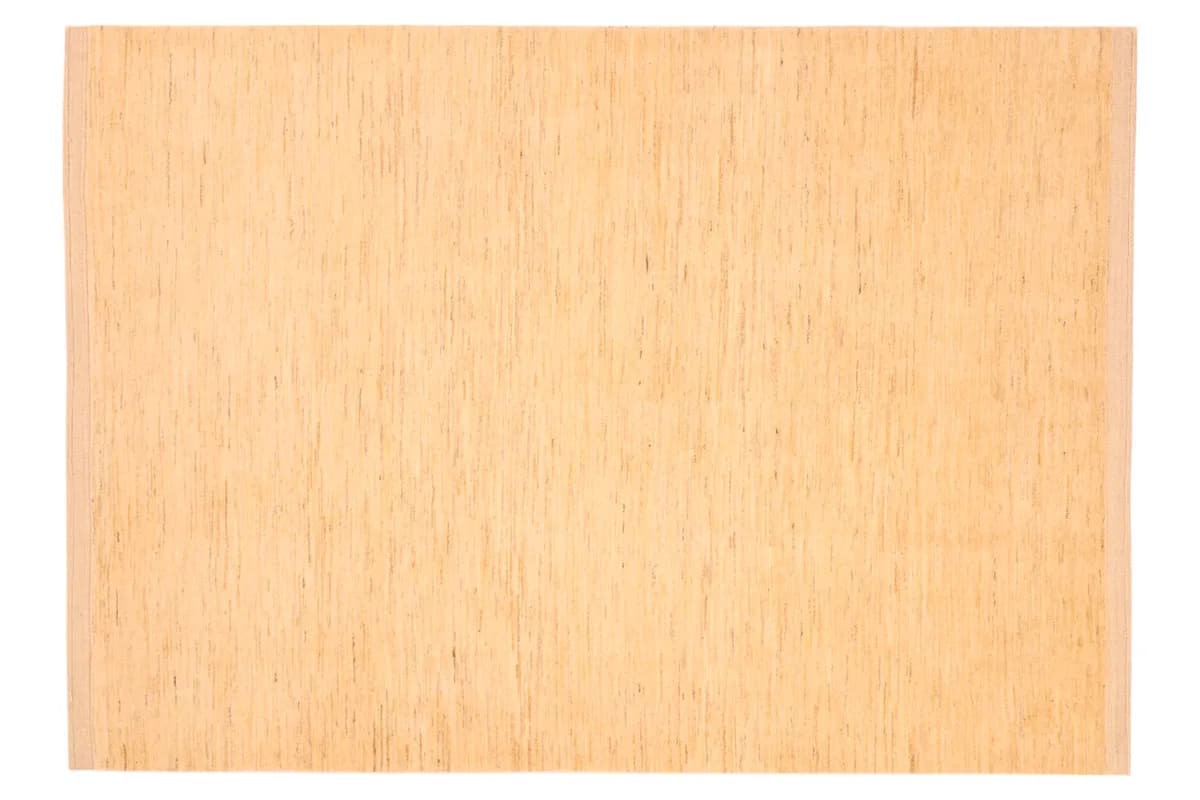
A Lori-Pars from the Zagros mountains in southern Iran, 193 x 156 cm (6'4" x 5'1"), a tribal weaving from the same nomadic tradition as the Gabbeh, a rug type usually known for bold, simplified motifs in confident, saturated colour. This piece takes that tradition and turns the volume down.
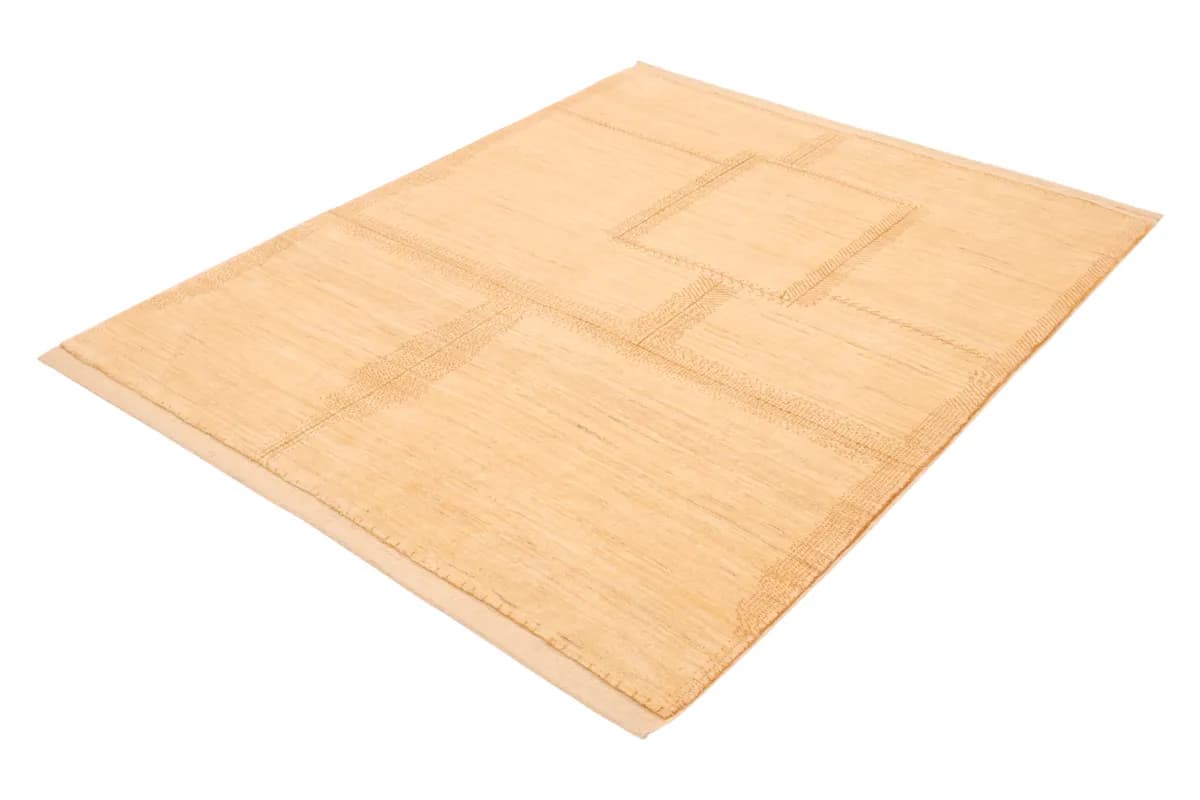
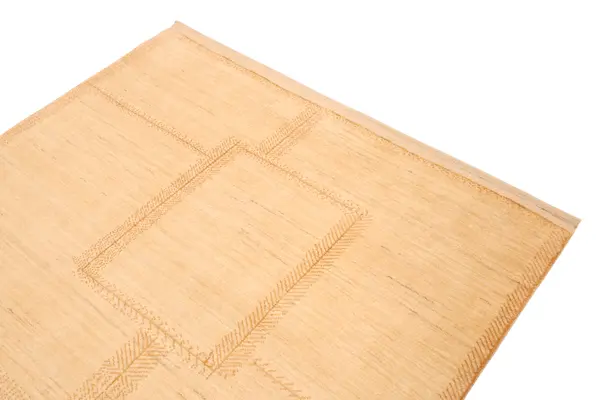
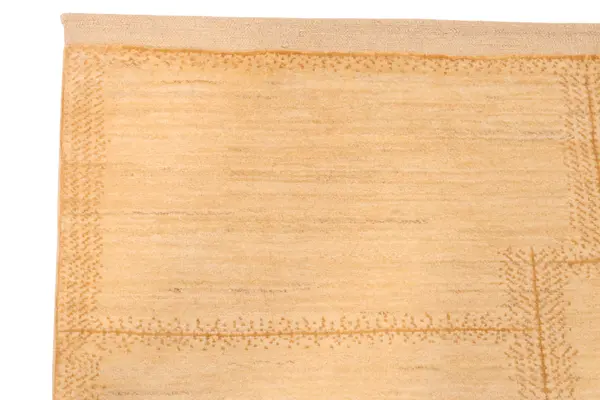
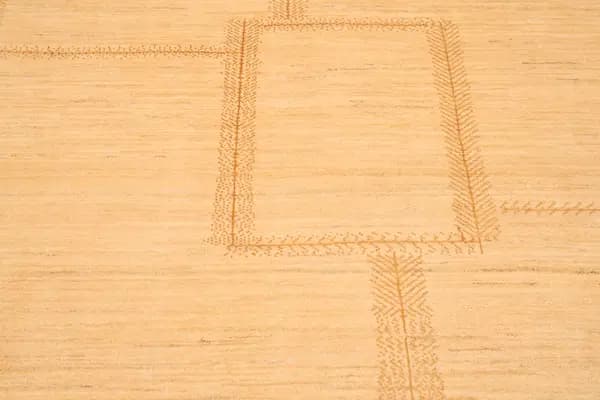
The field is a warm sandy beige, close to gold in places, and at first glance reads as almost plain. Look again and a grid of rectangles emerges, drawn only in thin golden-ochre outline, no fill, no contrasting ground. The rectangles are not aligned to any repeat; they sit where the weaver placed them, open and irregular, so the effect is of compartments loosely gathered rather than a measured lattice. There is no medallion, no classical border. The field simply softens at the edge into a narrow rim in the same tone, so the pattern feels less like a design applied to a rug and more like something that surfaced from within the wool itself.
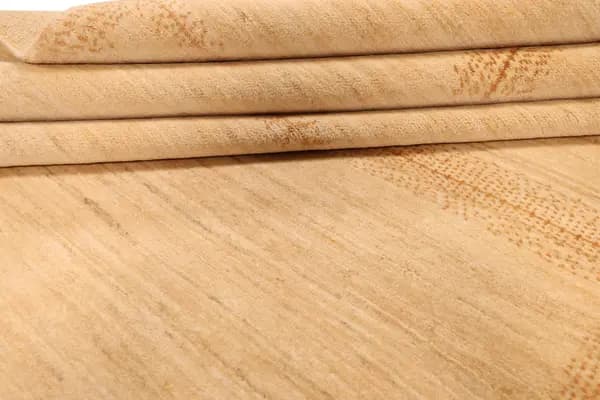
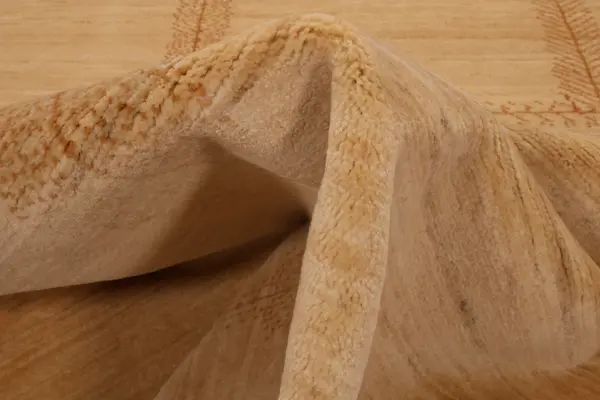
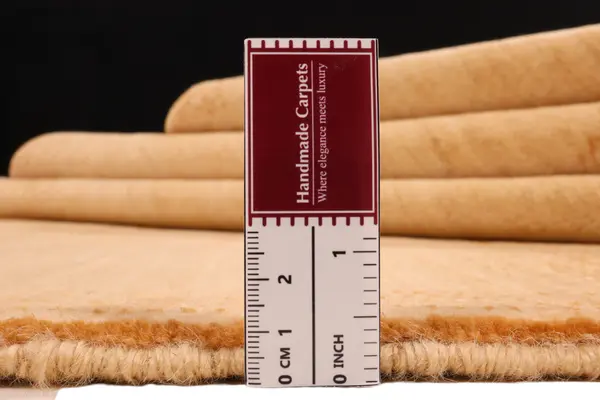
This is a nomadic weaving, knotted from memory rather than from a drawn plan, which is exactly why the grid refuses to repeat evenly. At 201,000 to 250,000 knots per square metre the density sits well within the range that lets a weaver work freehand and still hold a clean line, and the hand-spun wool of the pile carries faint vertical striations that no machine-spun yarn would show. The pile is kept low, around 11 mm, and cut fairly flat, which is part of why the surface reads as quiet and graphic rather than plush — depth is not the point here, the drawing is.
At just under two by one and a half metres, this is a rug for a smaller room to itself: a study, a bedroom, or a seating corner rather than a full dining spread. Against a pale floor the sandy field will sit close in tone and let the gold lines carry the room; against darker wood or furniture it will hold its own warmth without competing. Underfoot it is firm and even, a weave built for daily use rather than careful protection, and it will take a chair leg or a regular footstep without complaint. As the light in the room moves across it through the day, the thin gold lines catch and fade in turn, so the same quiet field never quite looks the same twice.
More on Lori-Pars rugs: origin, making and how to recognise a genuine piece
Fine quality weave
At 193 × 156 cm (3.01 m²) this is a medium rug. It works in front of a sofa, in front of a bed or in a study. It is too small for a dining table — there you want about 80 cm of clearance so a chair does not tip over the edge when pushed back.
Yes, knotted by hand — knot by knot on a loom, not machine-made. The density is 201,000 to 250,000 knots per square metre; across 3.01 m² that is roughly 610,000 to 750,000 individual knots, every one of them tied by hand.
Hand-spun wool still carries its own lanolin, which keeps liquid sitting on the surface for a moment: blot quickly, with clear water and a light cloth, working inwards and without rubbing. Otherwise regular vacuuming along the pile is enough. Turn the rug once or twice a year so light and footfall reach it evenly.
We are in the Hamburg Speicherstadt. Come and see this rug in daylight, or write to us — a person answers.
Certificate included verifying origin, materials, and craftsmanship.
Ref: 883734