Exclusive
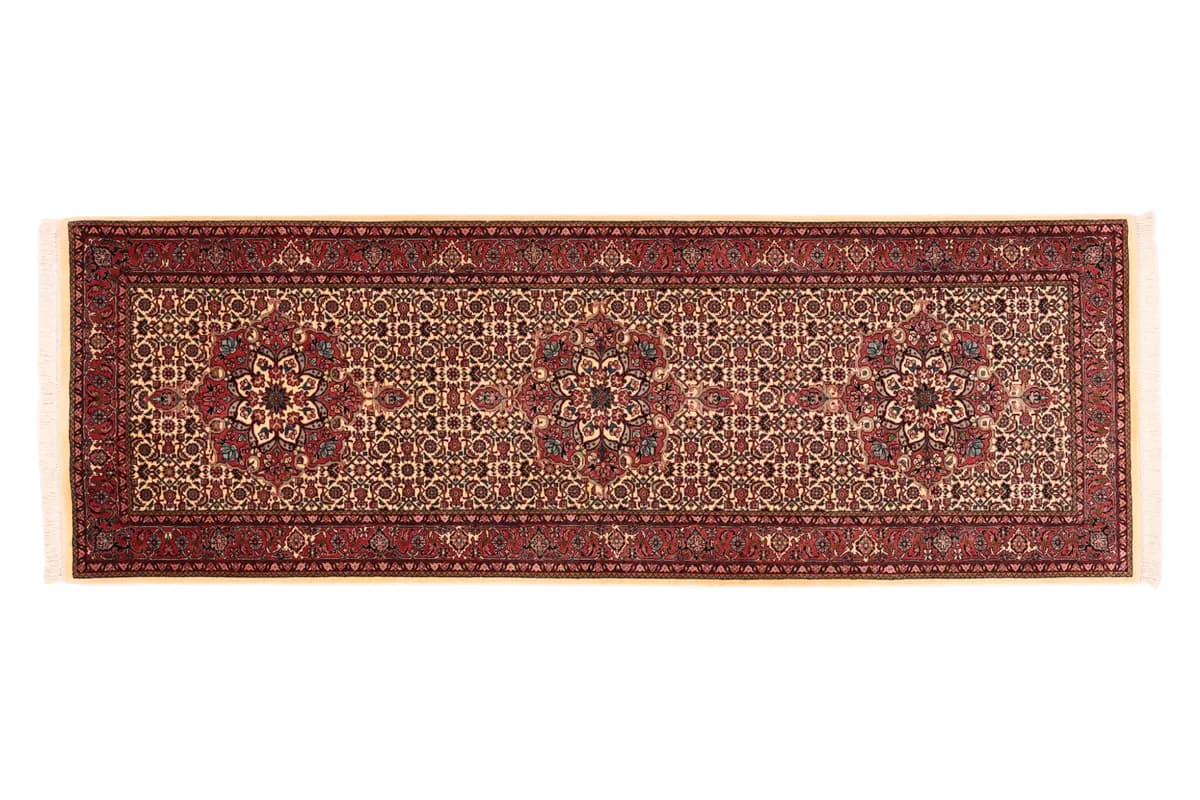
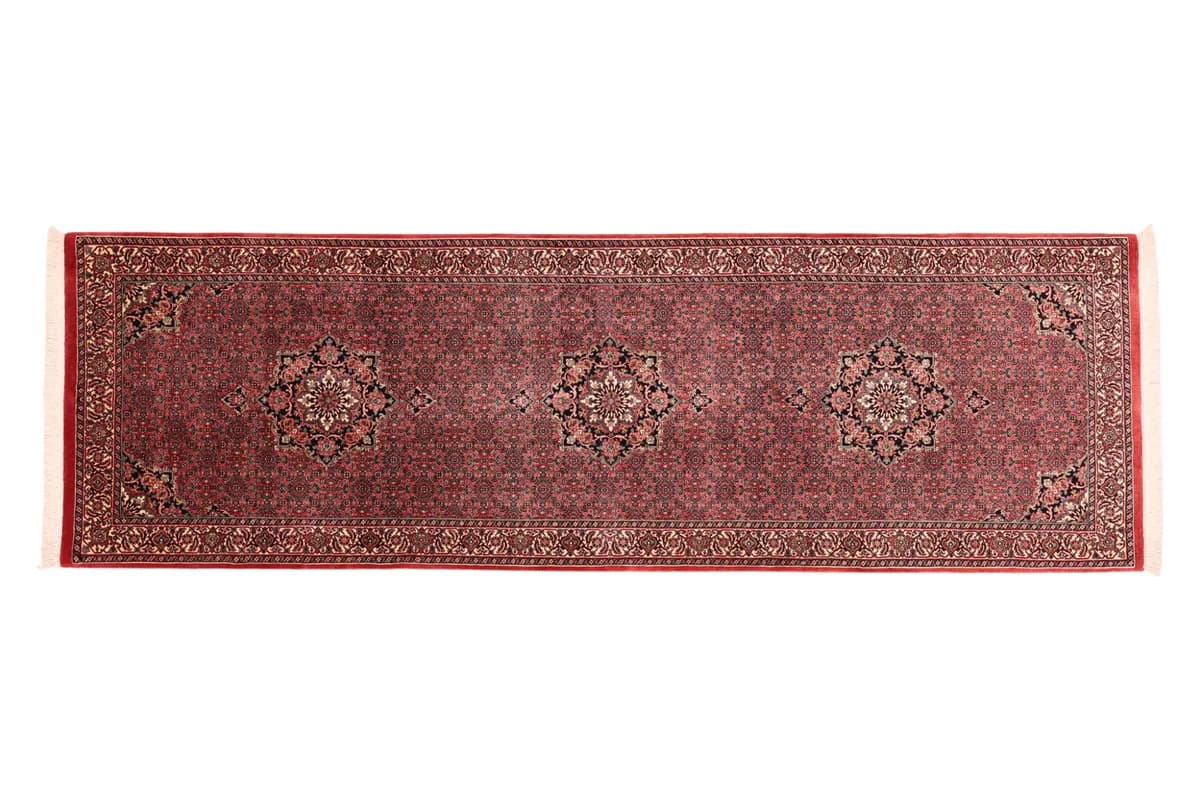
Bidjar | Exclusive | With Silk · with silk
314 × 99 cm
7.200 €
10.800 €
Incl. VAT
In Stock · Ready to Ship
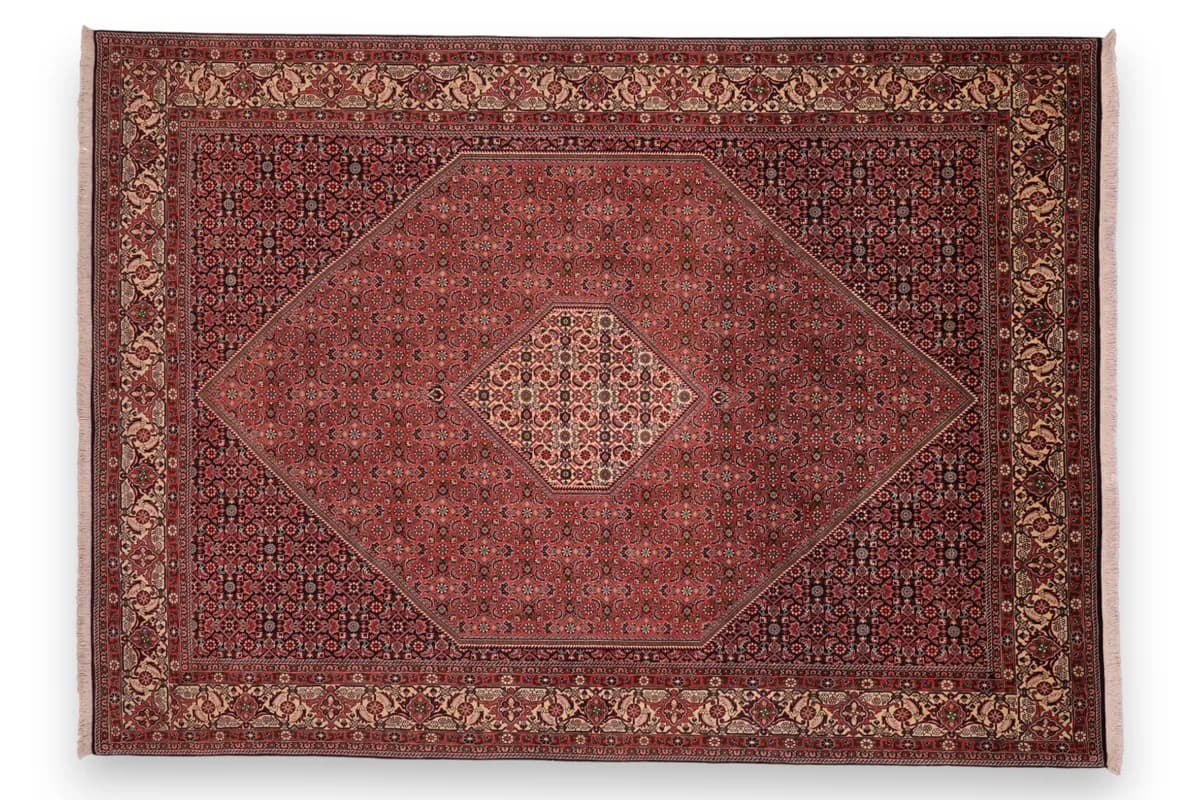
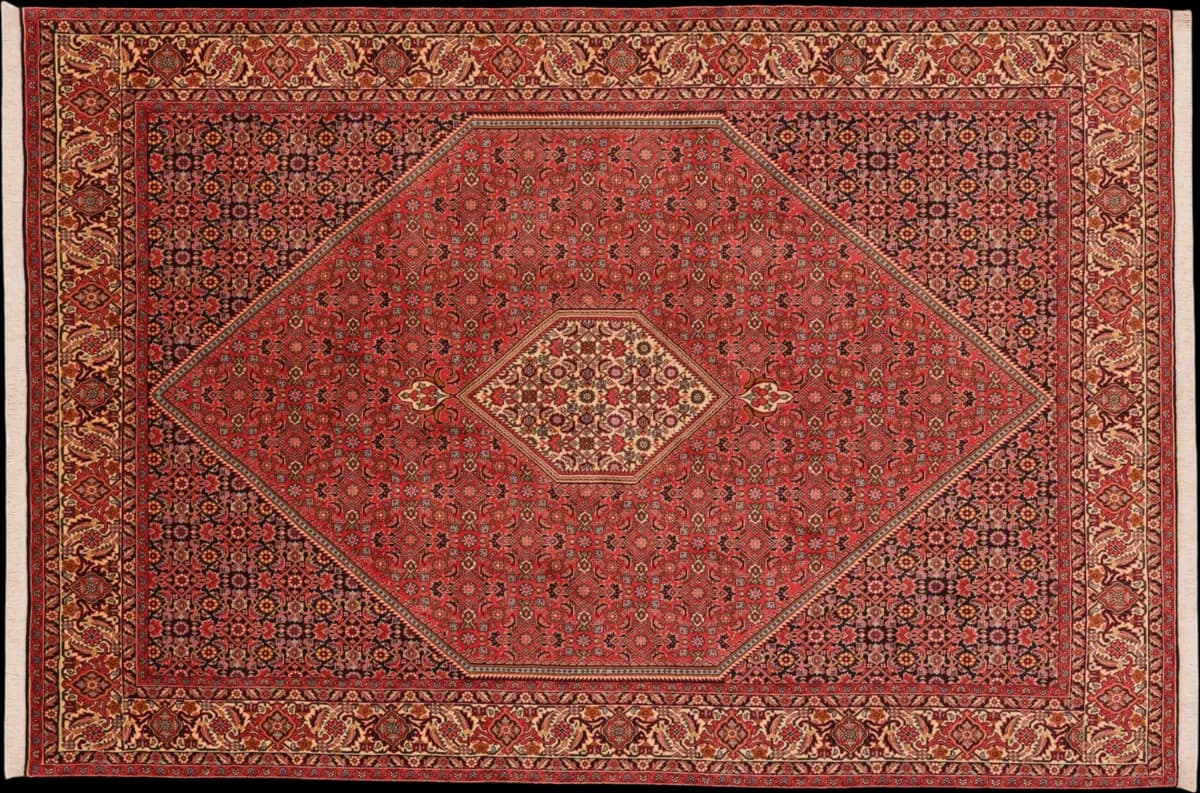
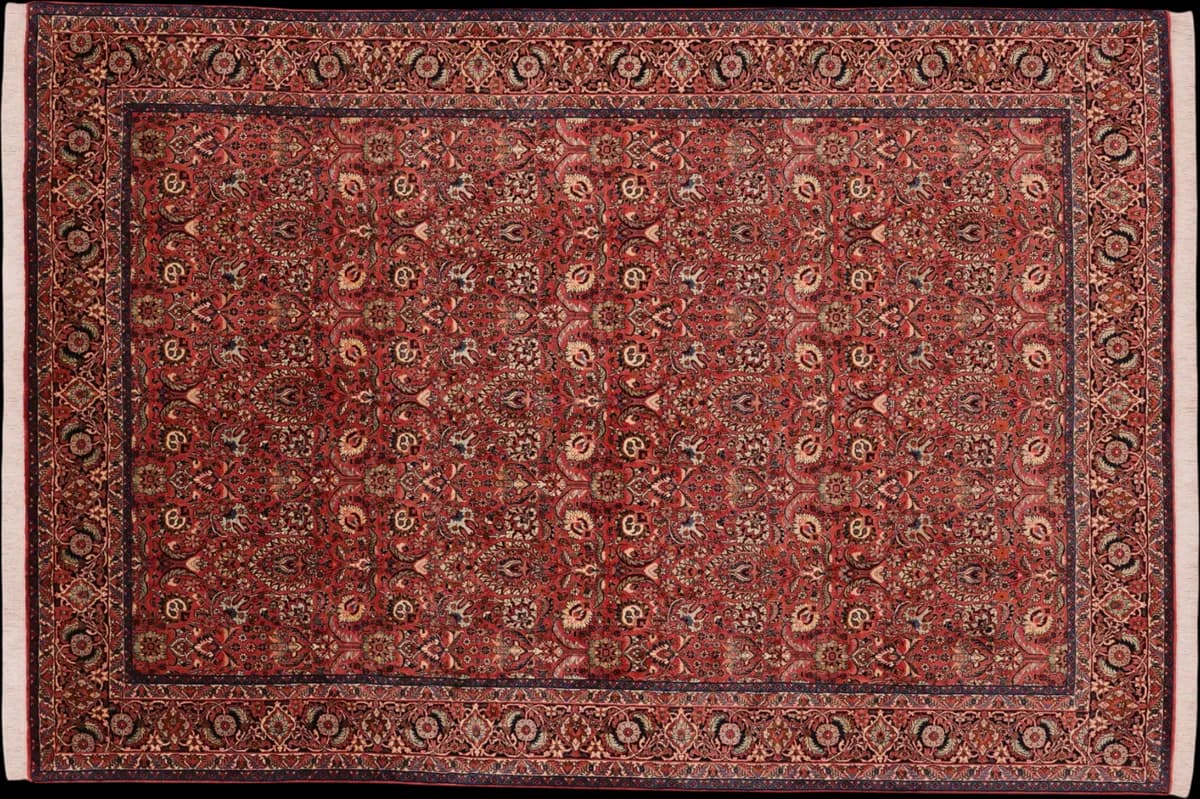
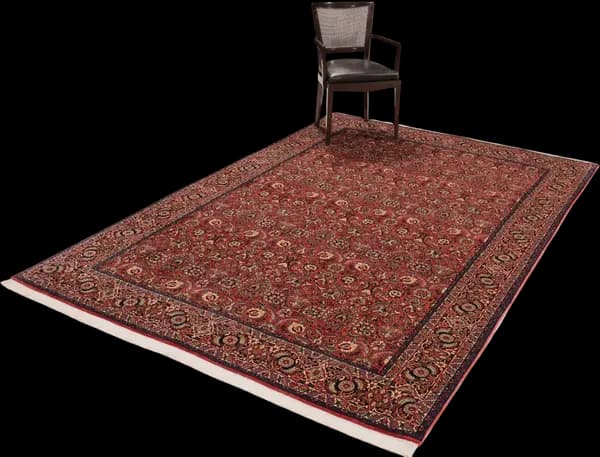
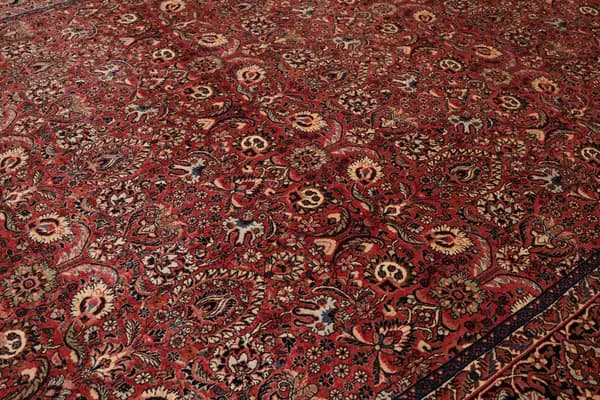
A Bidjar from the Kurdish region of western Iran, 293 x 200 cm (9'7" x 6'7"). Kurdish weavers built these on looms so dense and tightly pressed that the finished piece cannot be folded, only rolled, and the type has long been known as the Iron Rug of Persia for the way it holds its shape and its edge decade after decade.
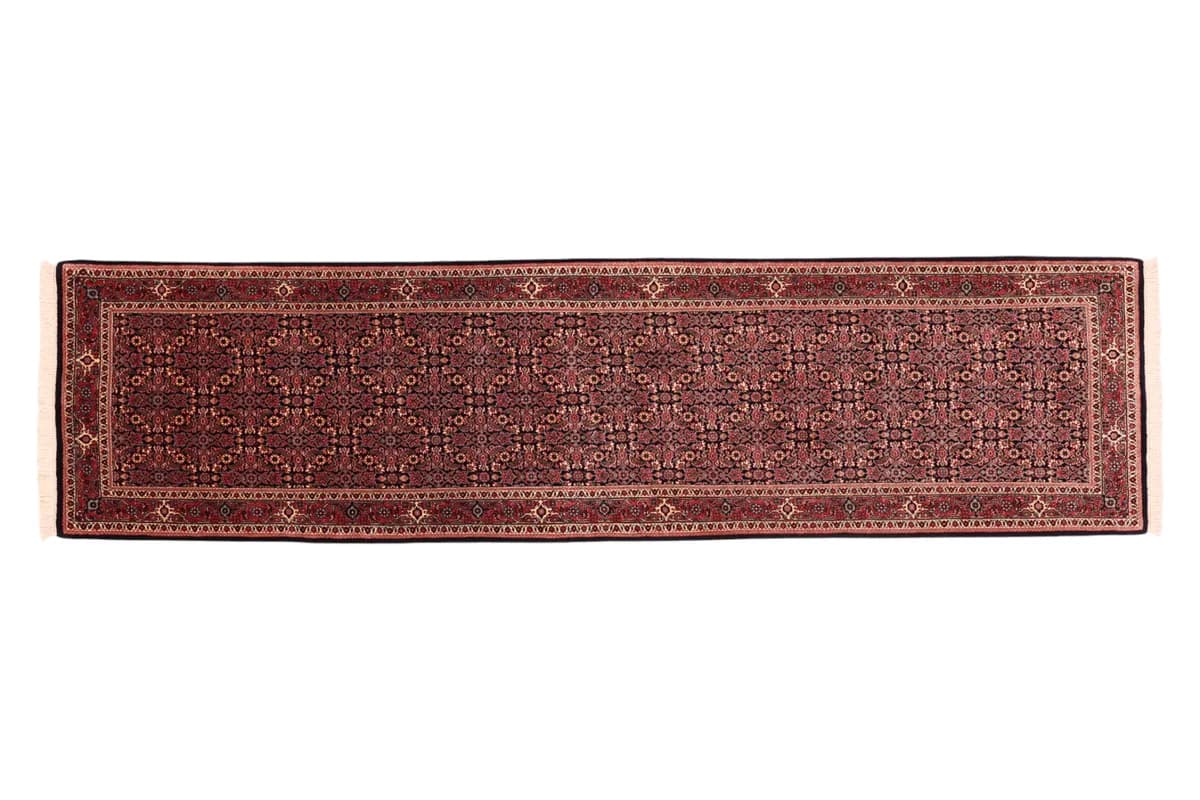
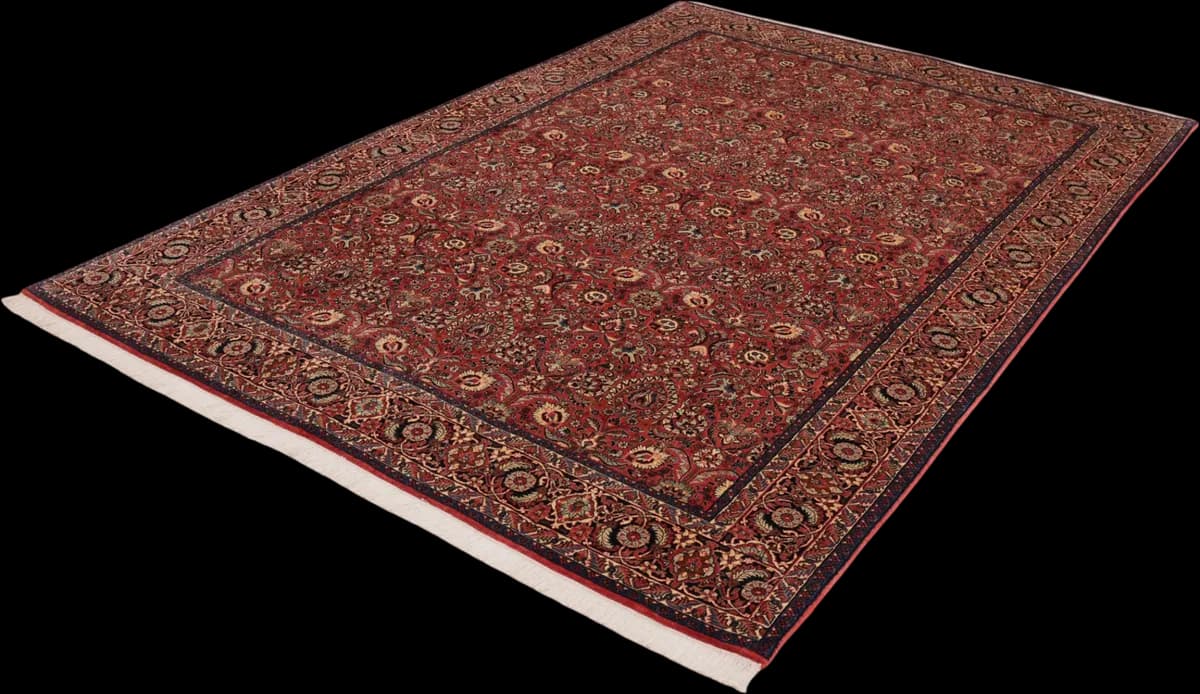
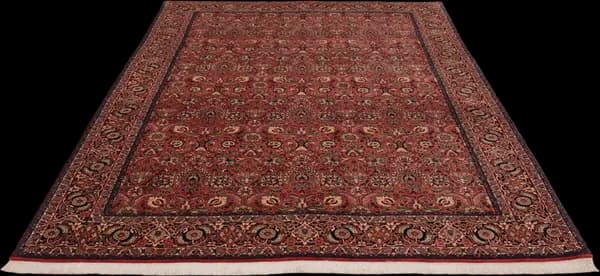
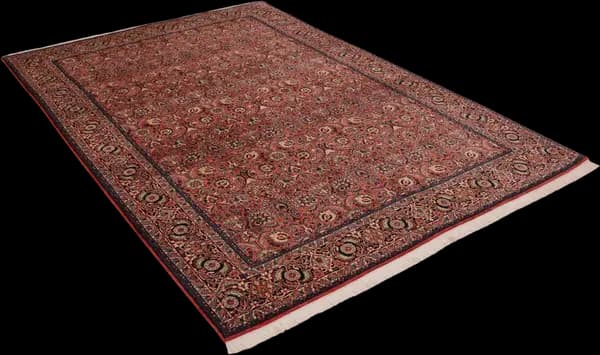
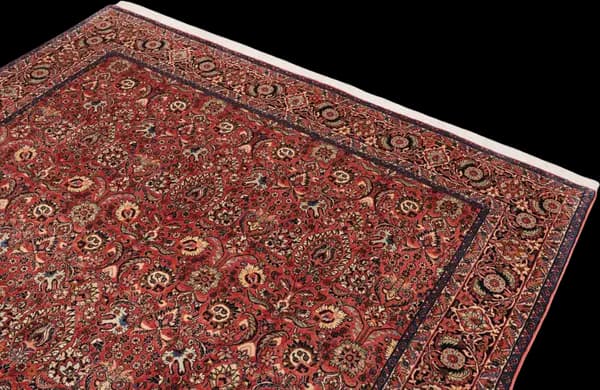
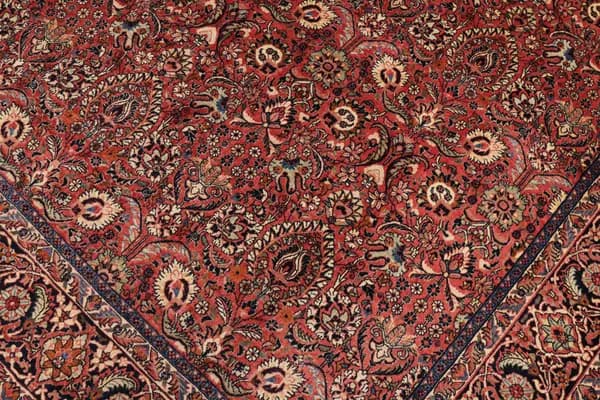
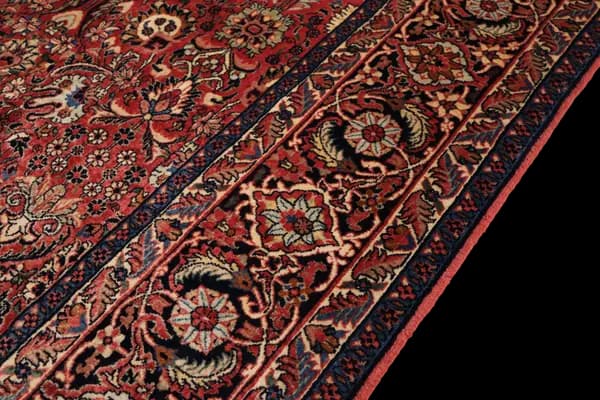
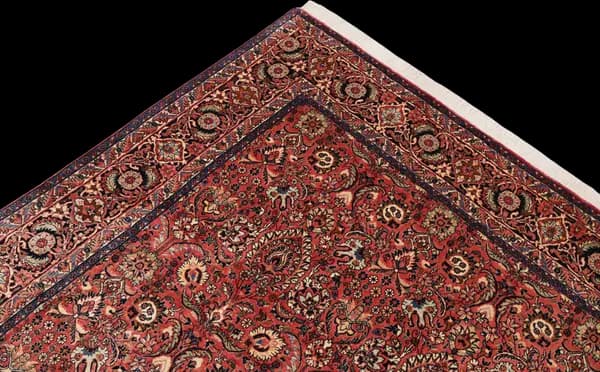
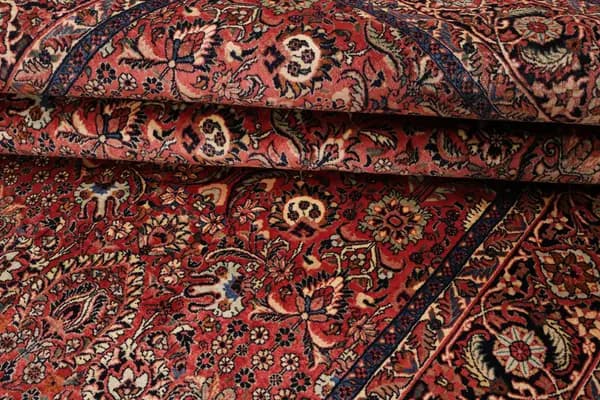
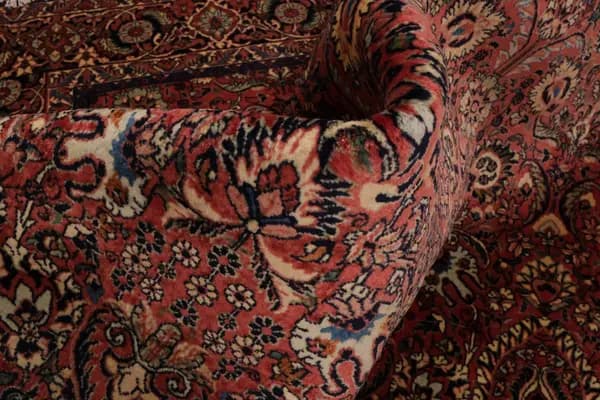
The overall impression is a deep brick red, covered edge to edge in a fine diamond lattice with no medallion to gather the eye. This is the Mahi, or Herati, pattern: small rosettes and serrated leaves repeating across the entire field in even ranks, cream and ivory against the red, with touches of sage green, dusty blue and dark brown carried through the lattice lines. A wide navy border closes the field, filled with its own rosettes, palmettes and vine scroll, and a slim ivory guard stripe separates the two, so the pattern reads as one continuous, even surface rather than a composition built around a centre.
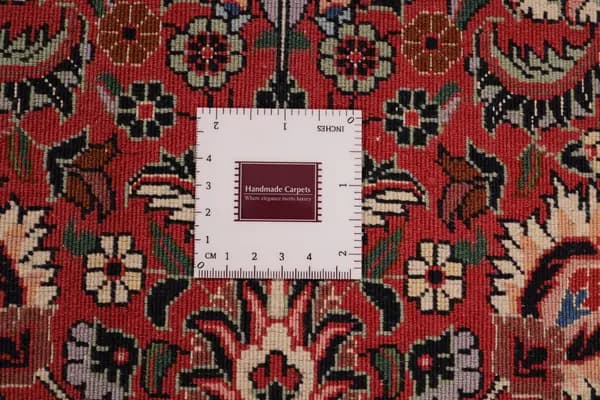
That evenness is a product of the weave itself. The pile is wool with an admixture of silk, which spins finer than wool alone and lets the knotter draw the small rosettes and serrated leaf edges with real sharpness rather than letting them blur into the field. At 441,000 to 500,000 knots per square metre, this sits among the densest knotting in the whole Persian tradition, which is what allows a repeat this fine to stay crisp across nearly six square metres without a single motif drifting off plan. It also means months of steady work at the loom, knot by knot, before the piece left it.
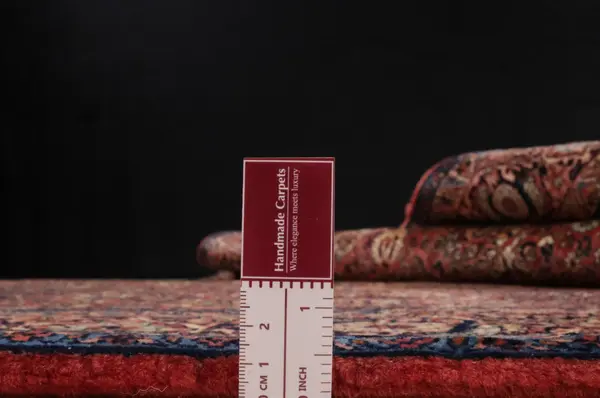
At 293 by 200 centimetres this is a dining room or living room piece, the kind that sits under a table or anchors a seating group, and because the pattern has no centre to disrupt, furniture standing on it never interrupts a focal point the way it would on a medallion rug. The brick red holds its own against dark wood and warms a pale floor, while the navy border keeps the whole thing grounded rather than busy. Underfoot it is dense and firm, a 15 mm pile built to take daily use rather than to be kept for best. Sunlight crossing it in the afternoon catches the wool's slight sheen along the lattice lines, and the ivory rosettes lift with it.
More on Bidjar rugs: origin, making and how to recognise a genuine piece
Superior craftsmanship
At 293 × 200 cm (5.86 m²) this is a large rug. It sits under a seating group with the front legs of sofa and chairs on it, or under a dining table for four. A table for six wants about 80 cm of clearance all round, and needs more.
Yes, knotted by hand — knot by knot on a loom, not machine-made. The density is 441,000 to 500,000 knots per square metre; across 5.86 m² that is roughly 2.6 to 2.9 million individual knots, every one of them tied by hand.
This pile contains silk and is more delicate than pure wool. Vacuum without a rotating brush and along the pile, do not beat it, and keep it out of permanent direct sun. Blot spills at once with a light cloth, never rub. For a proper clean a silk-blend rug belongs in expert hands — we handle that for pieces bought from us.
We are in the Hamburg Speicherstadt. Come and see this rug in daylight, or write to us — a person answers.
Certificate included verifying origin, materials, and craftsmanship.
Ref: 892423